STILL JOY — FROM UKRAINE INTO THE WORLD @ BIENNALE ARTE 2026
A Collateral Event at the 61st International Art Exhibition — La Biennale di Venezia
The Victor Pinchuk Foundation and the PinchukArtCentre present Still Joy — From Ukraine into the World as an official Collateral Event of the 61st International Art Exhibition — La Biennale di Venezia. It will be held at the Palazzo Contarini Polignac in Venice from May 9th until August 1st, 2026.
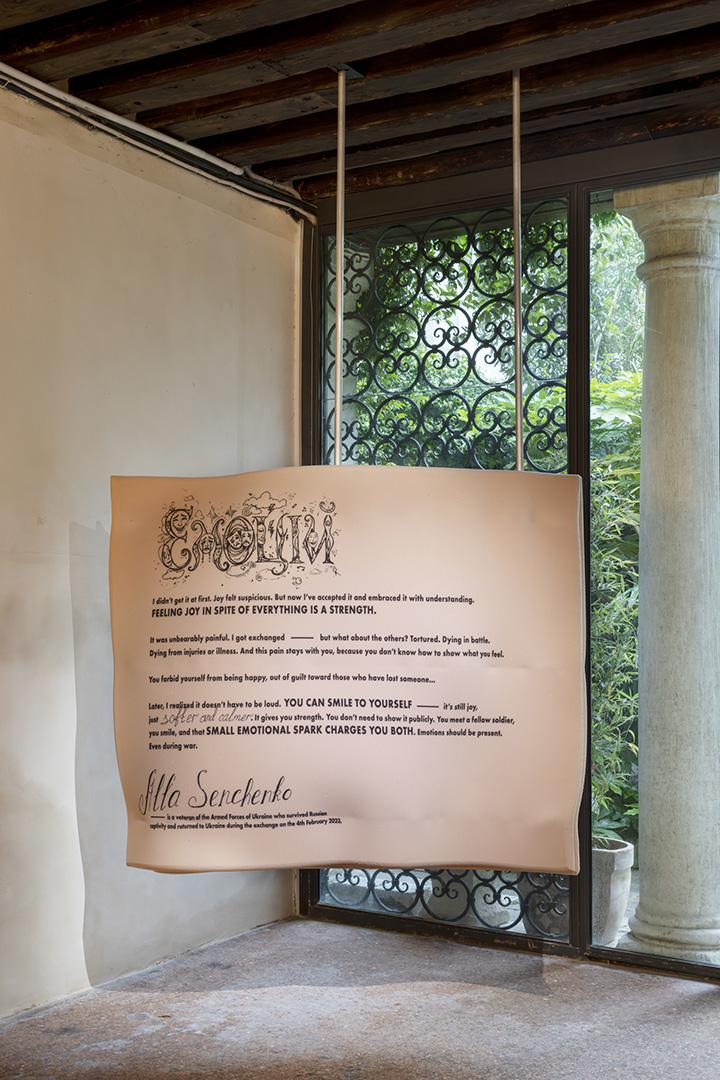
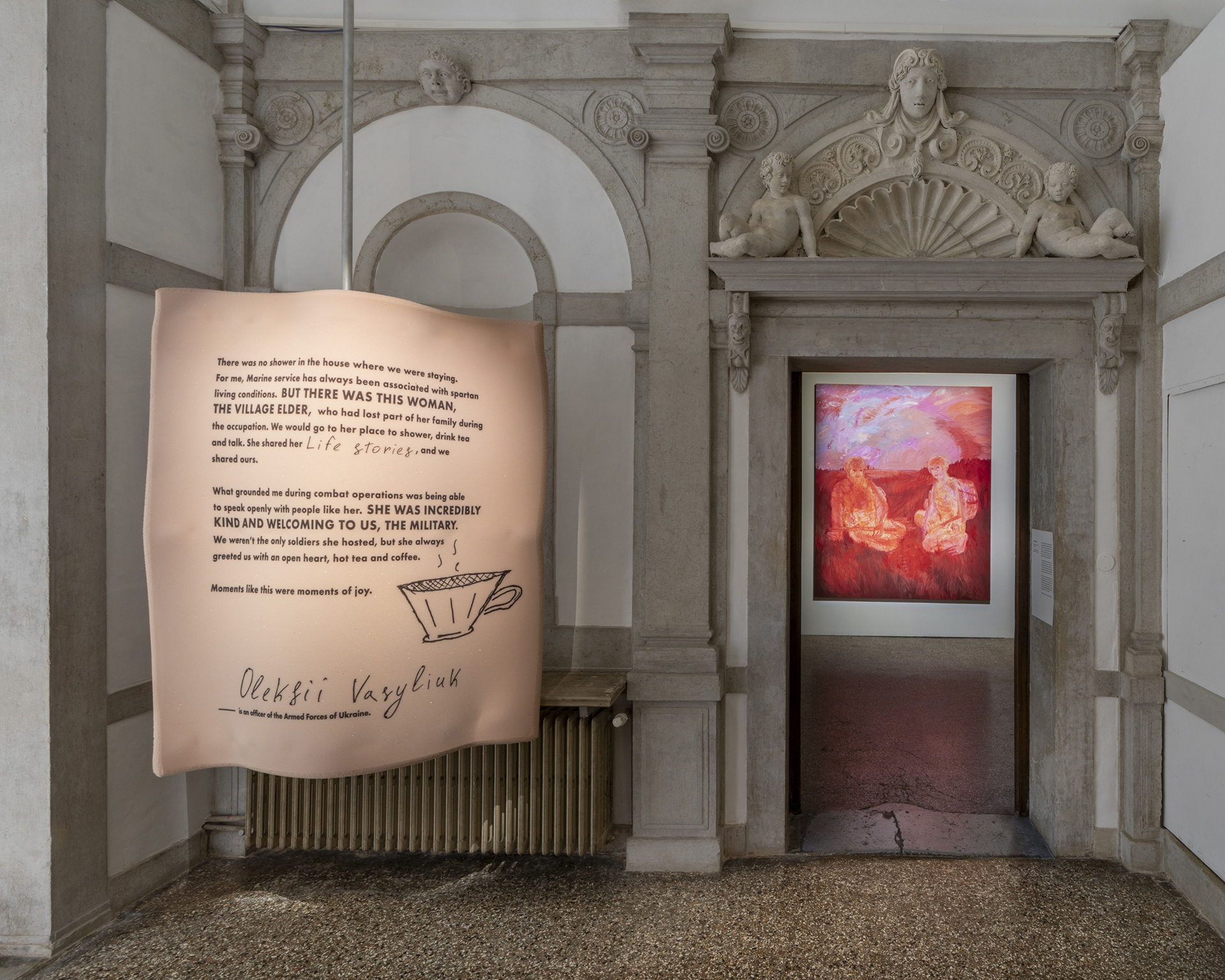
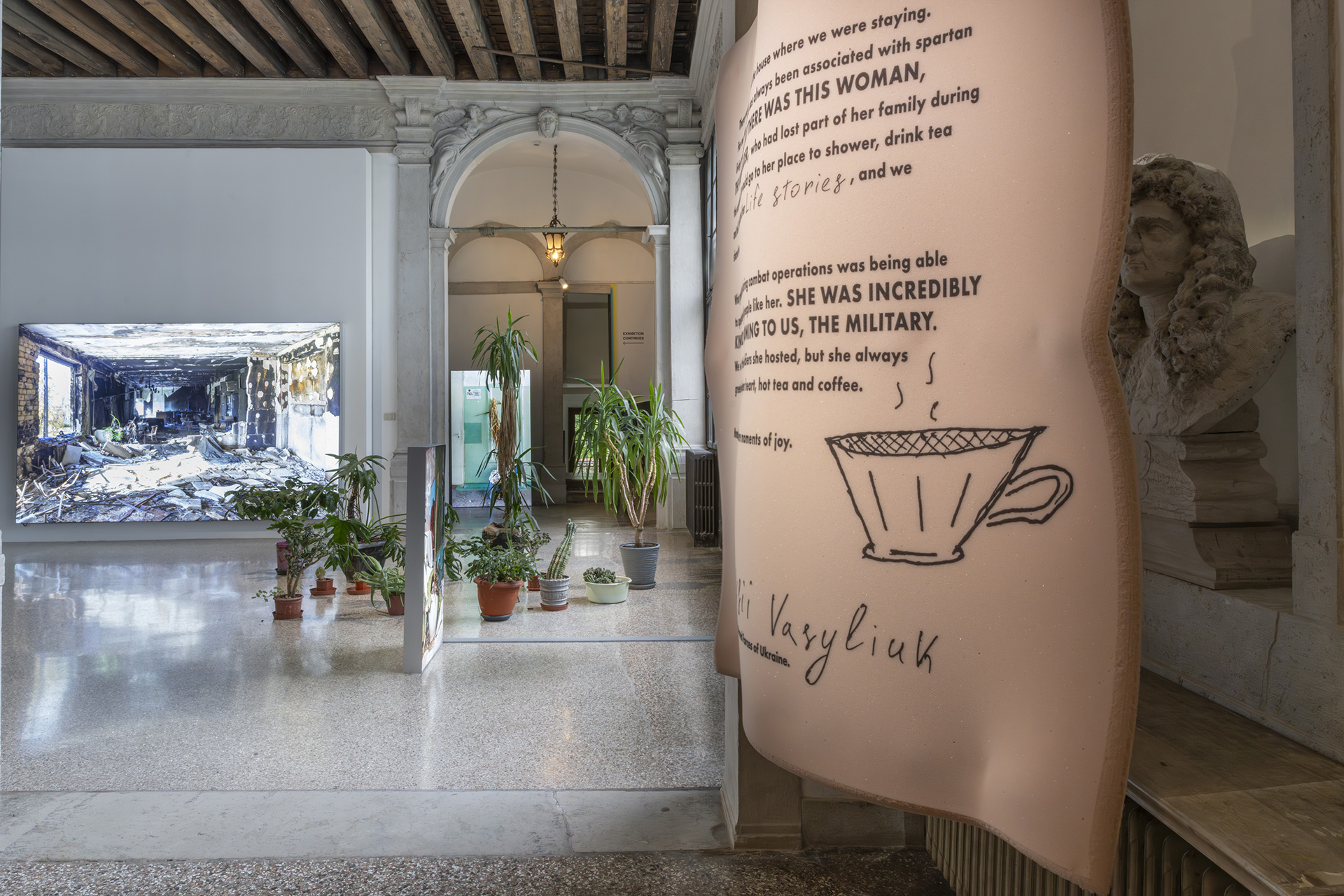
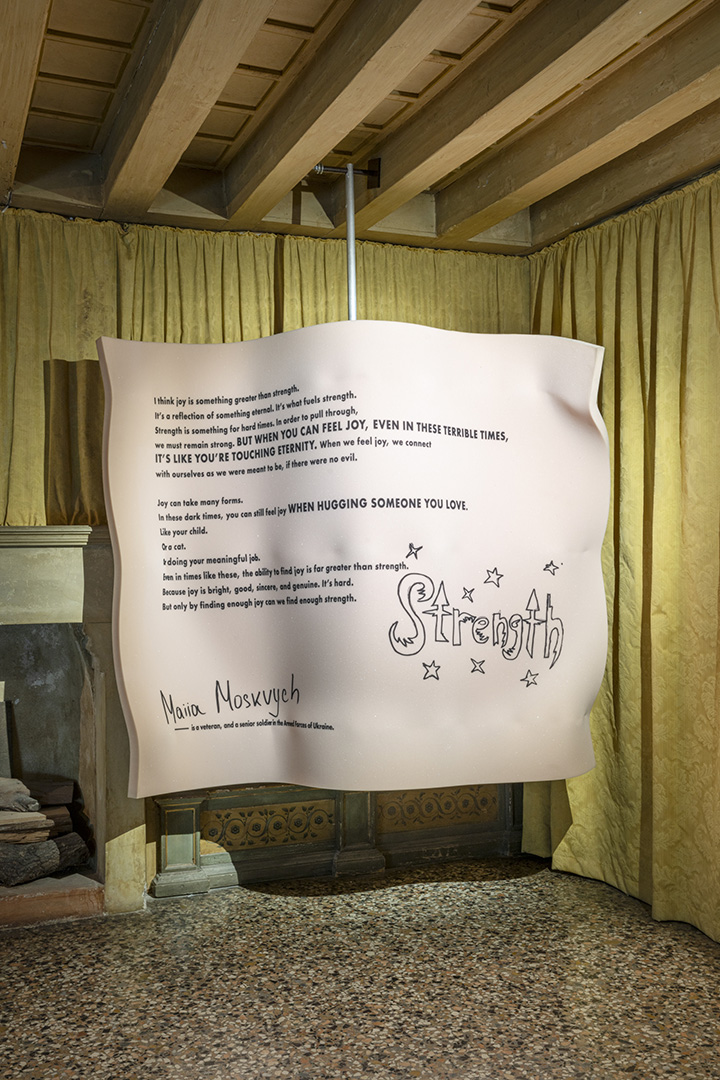
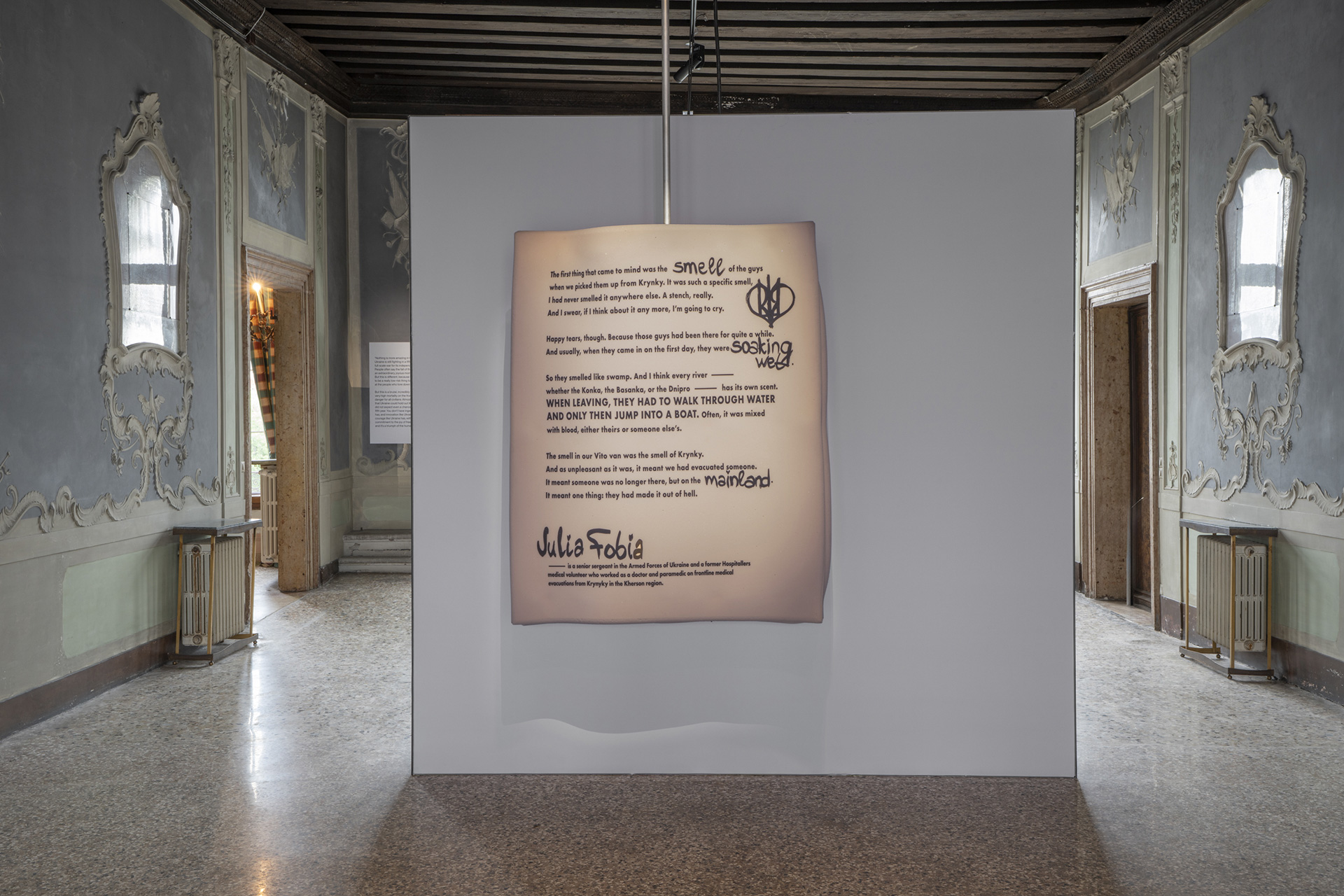
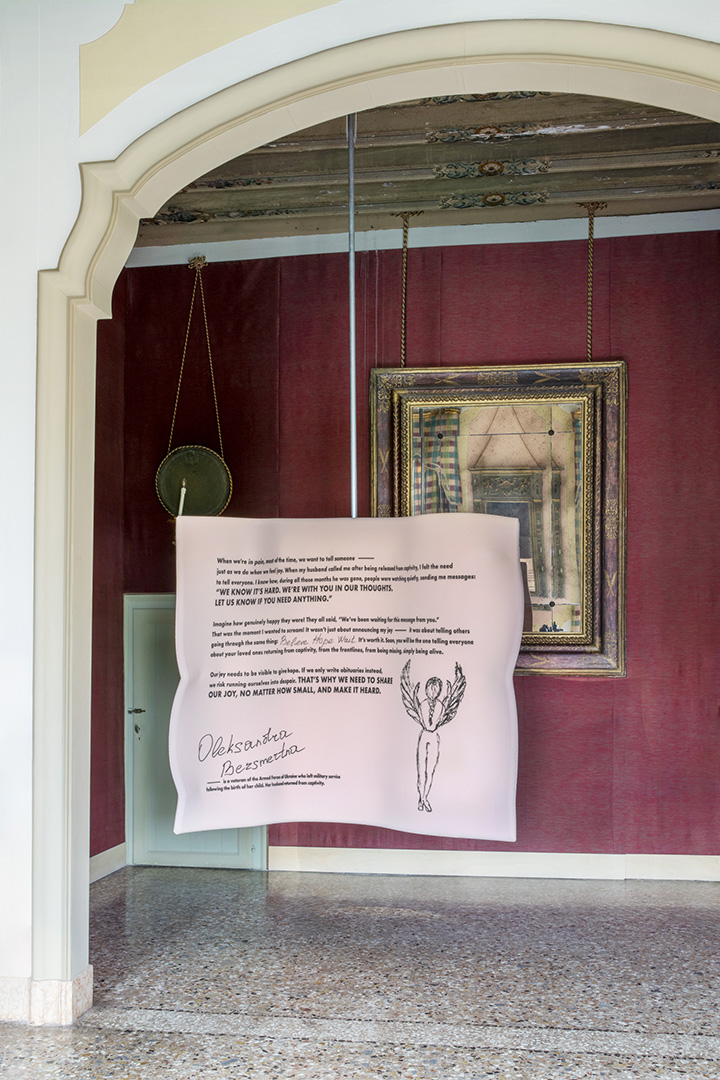
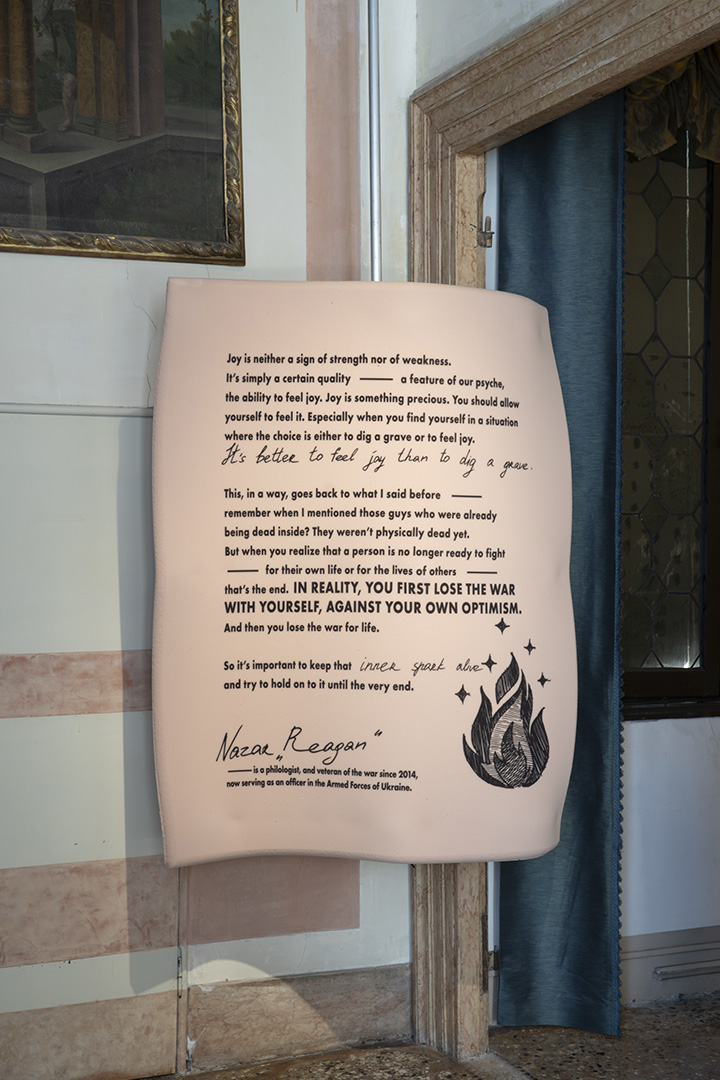
Still Joy — From Ukraine into the World brings together leading international and Ukrainian artists reflecting on the concept of joy as both a vital force and a radical act of humanity. The exhibition’s starting point and a disruptive agent are the testimonies collected by story-gatherer Hlib Stryzhko, a marine and veteran, a prisoner of war. These stories are anchoring fragments of reality within the exhibition.
Participating artists include: Kateryna Aliinyk (UKR), Piotr Armianovski (UKR), Janet Cardiff & George Bures Miller (CAN), Julian Charrière (CH), Tacita Dean (UK), Ryan Gander (UK), Gabrielle Goliath (SA), Nikita Kadan (UKR), Zhanna Kadyrova (UKR), Alevtina Kakhidze (UKR), Roman Khimei & Yarema Malashchuk (UKR), Pavlo Kovach (UKR), Bogdana Kosmina (UKR), Katya Lesiv (UKR), Kateryna Lysovenko (UKR), Simone Post, (NLD) Ashfika Rahman (Bangladesh), Daniel Turner (USA), Álvaro Urbano (ESP), Lesia Vasylchenko (UKR), Oleksiy Sai & Yury Gruzinov (UKR).
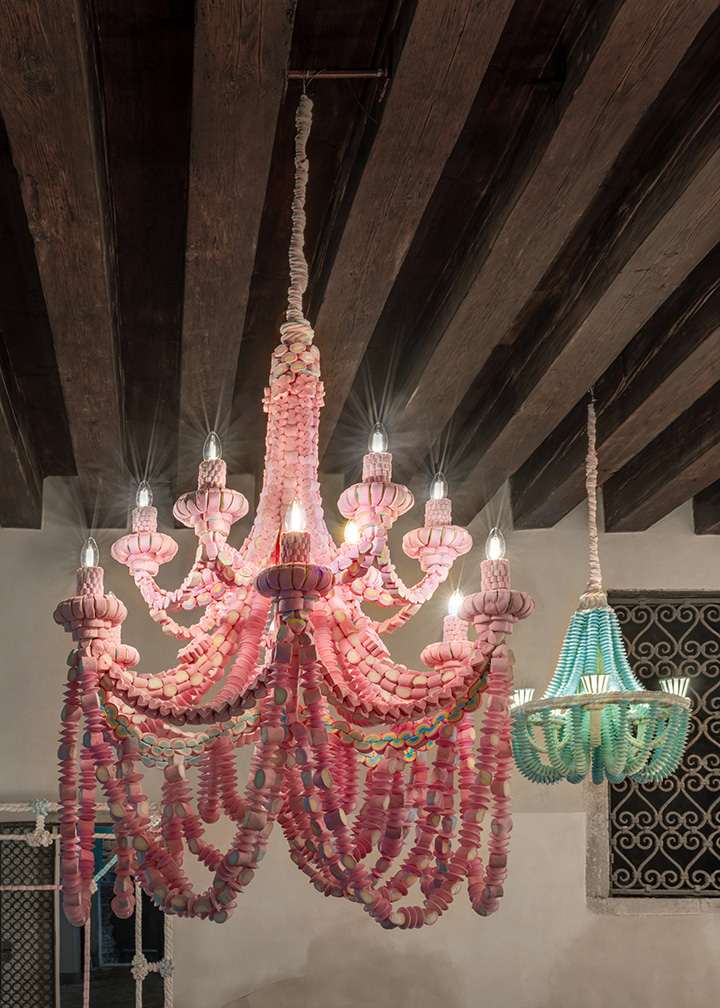
The exhibition begins with a video installation of rave scenes in Kyiv, captured before and during the full-scale war, by prominent Ukrainian artist duo Malashchuk & Khimei. Nearby are Aliinyk’s landscape paintings, where small animal life vibrates under a soft moonlit glow, and a video essay by Armianovski, blending the reality of war and discovering dreams seen by the Ukrainian city of Mariupol. The first section culminates in a new site-specific, immersive installation by Simone Post, reimagining the palazzo’s interior through an ephemeral architectural structure made of candy, inviting visitors into a moment of childlike joy.
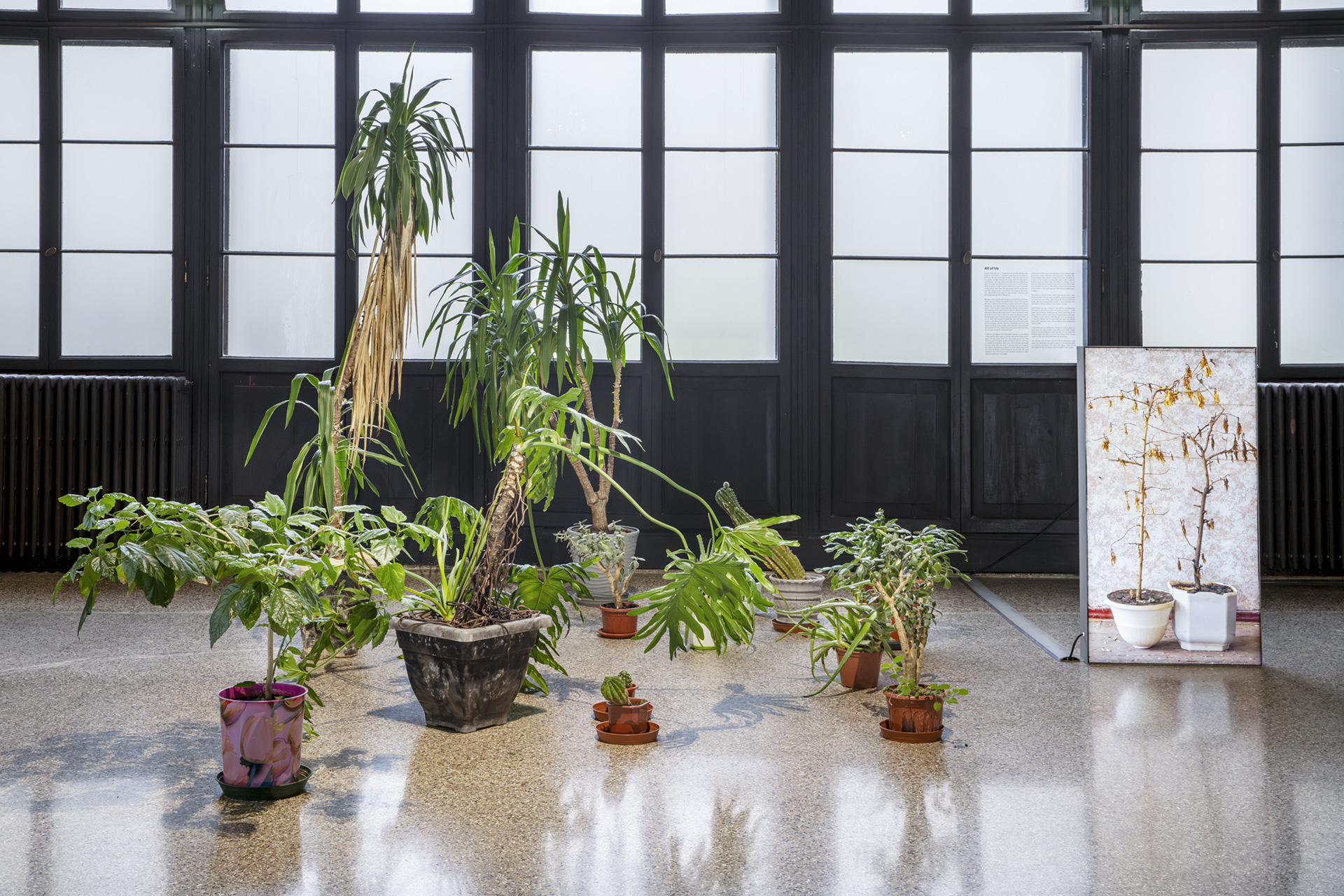
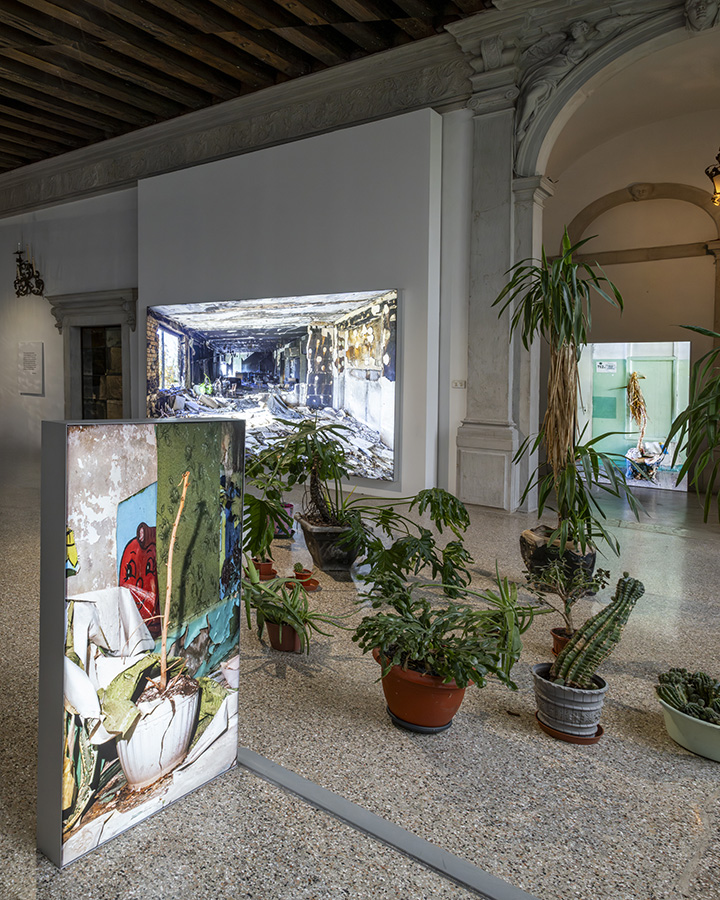
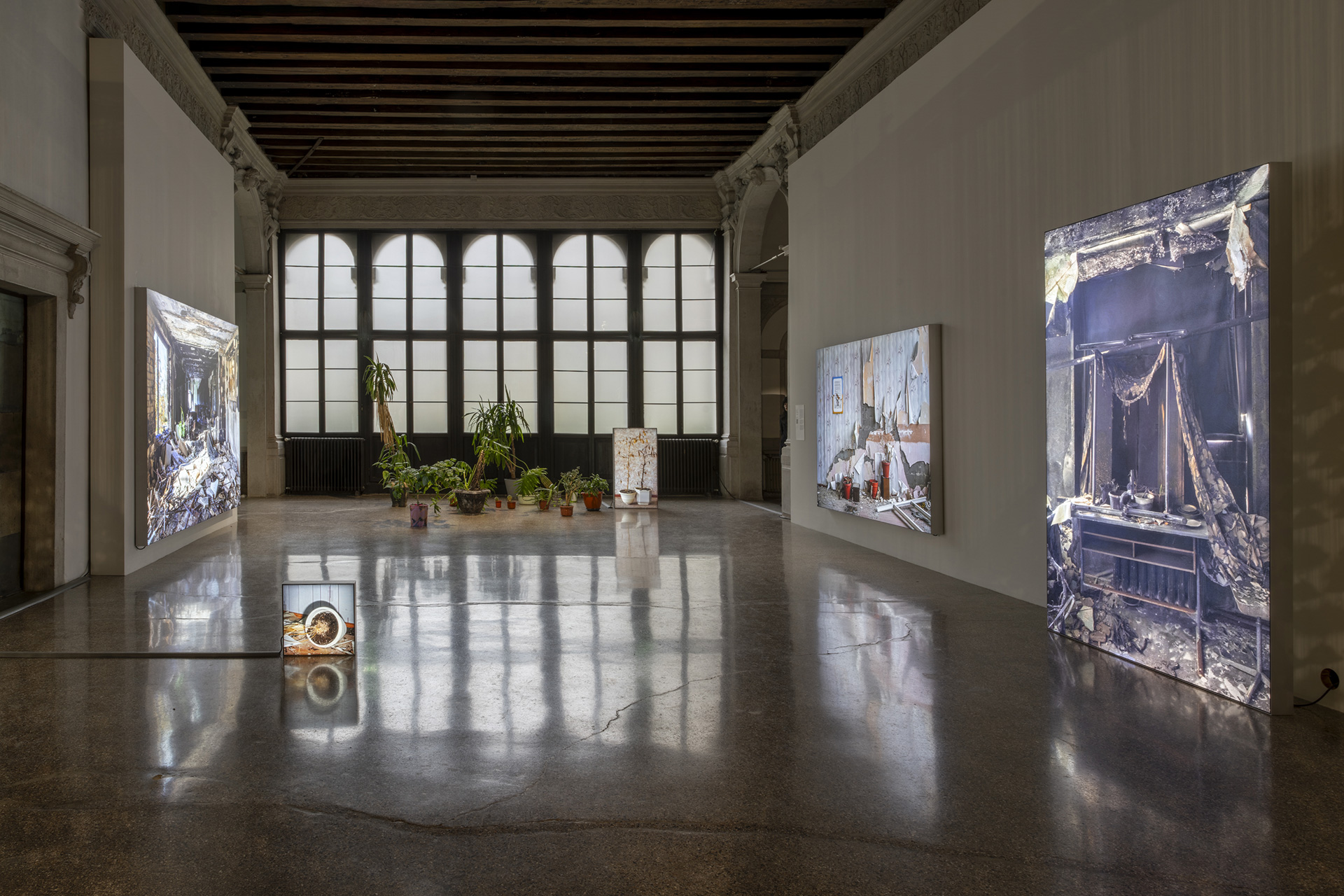
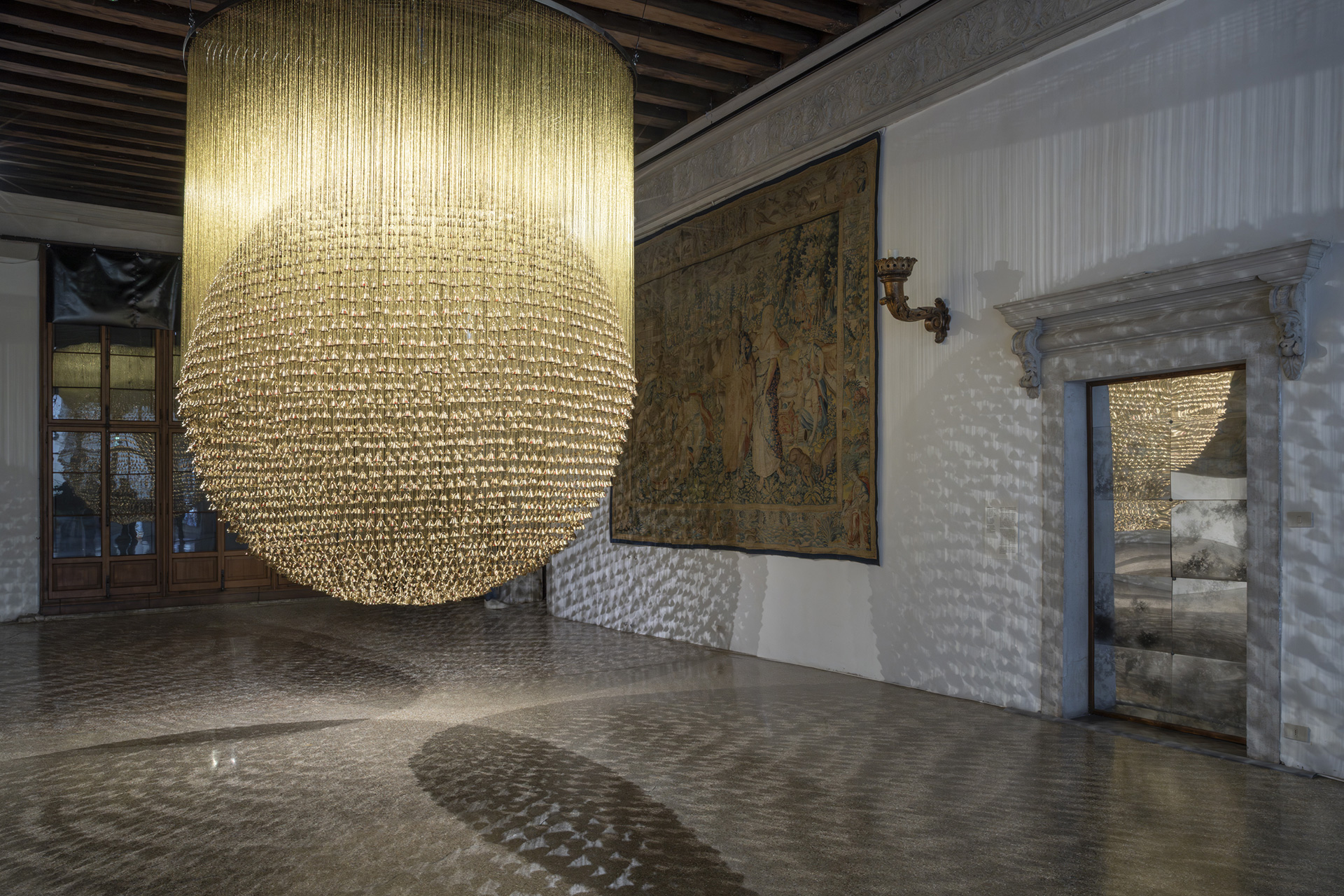
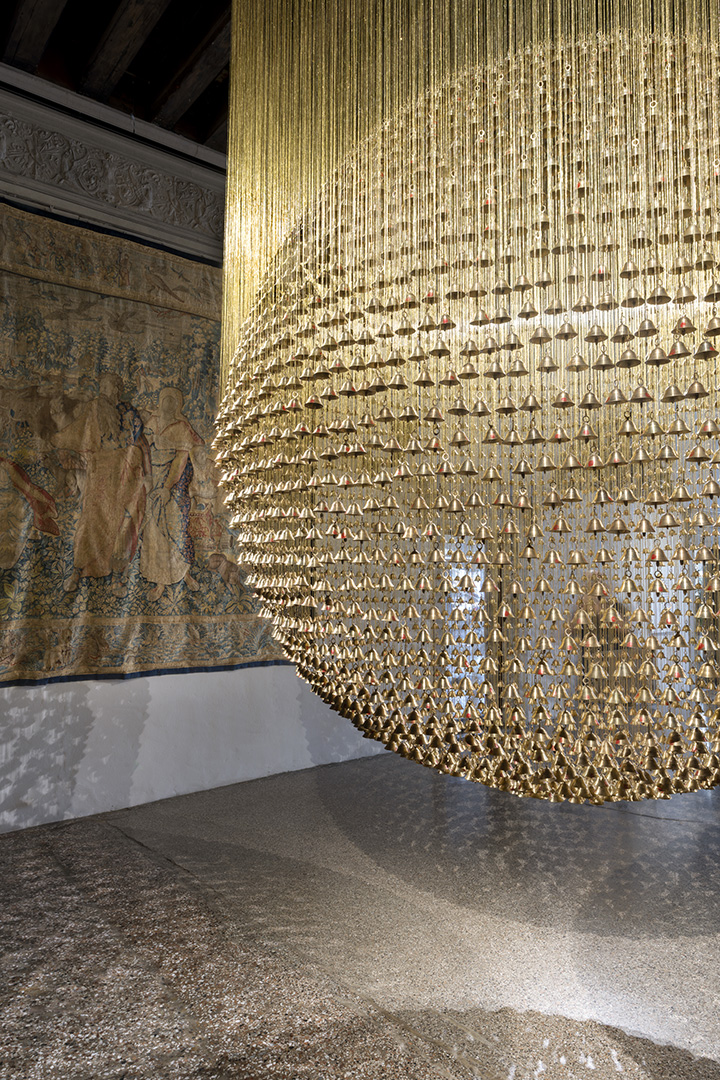
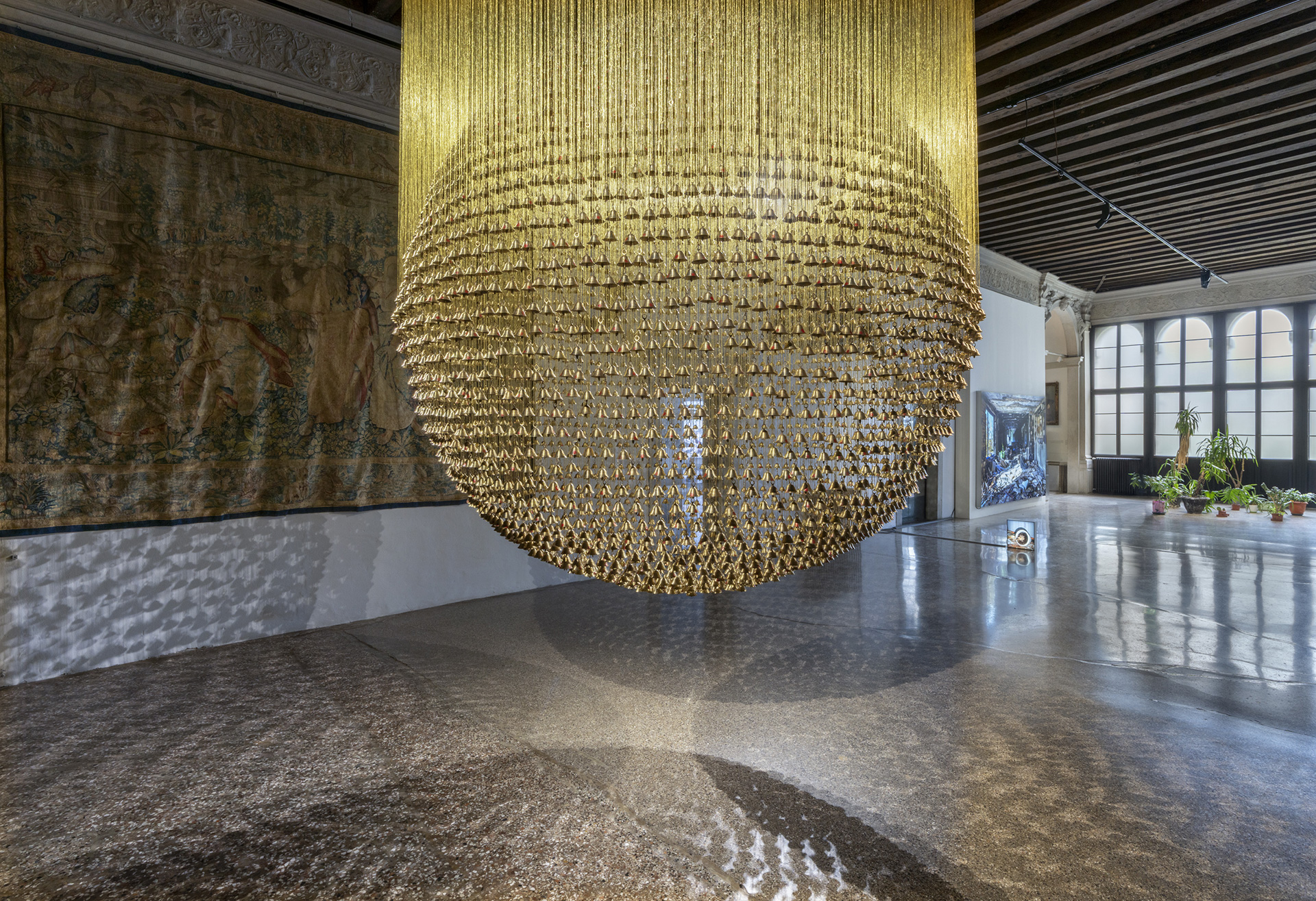
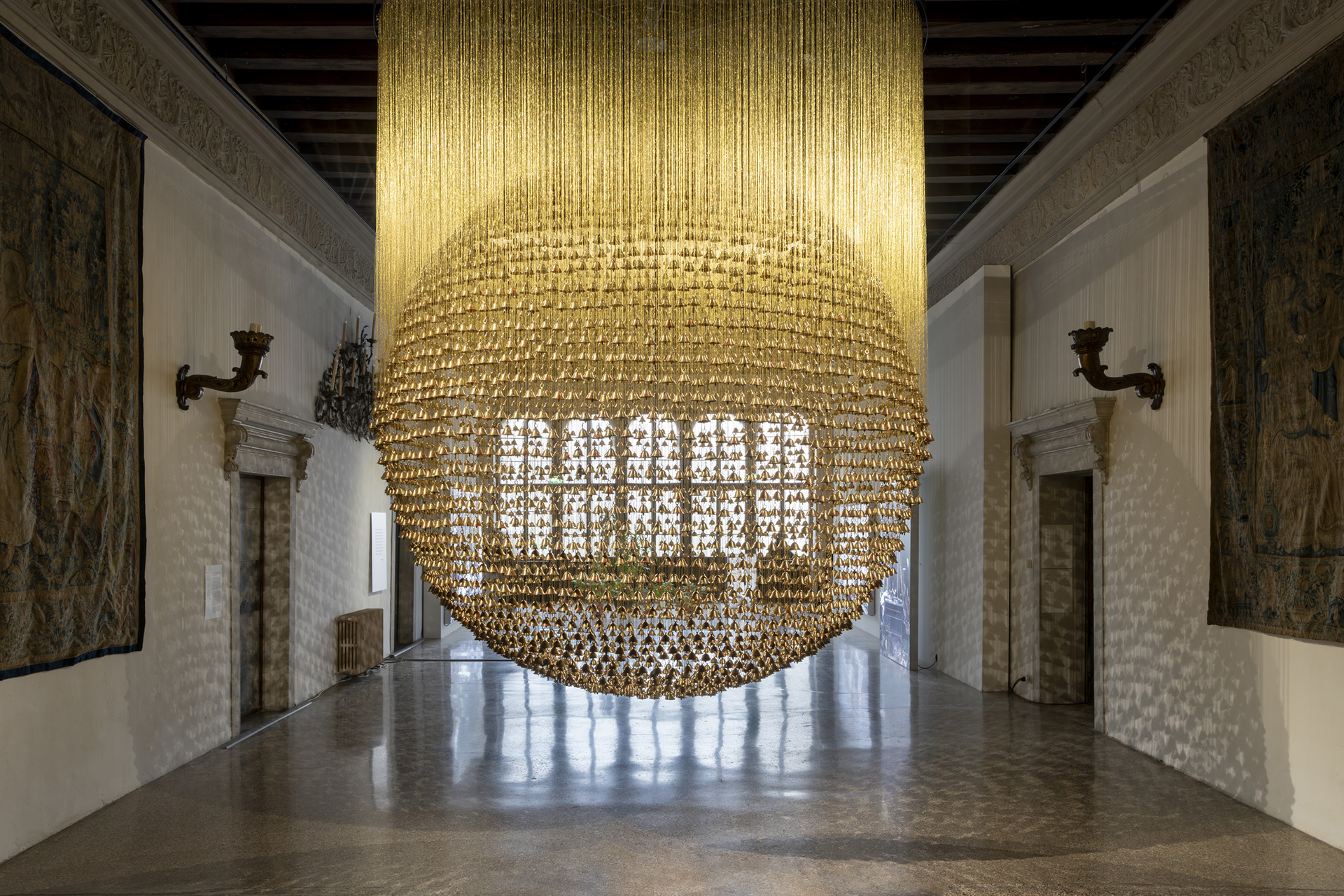
The exhibition continues with individual stories, memories of lost communities, and contemplations of love. Future Generation Art Prize winners Ashfika Rahman (Main Prize, 2024) and Zhanna Kadyrova (Special Prize, 2014) address forced displacement through endurance, care, and responsibility in their unique works; Rahman’s radiant installation of Hindu temple bells suspended by golden silk threads appears in conversation with plants salvaged from bombed Ukrainian buildings: Kadyrova’s site-specific installation composed of light boxes and living plants — figures of “refugees” in transit, receiving healing and care.
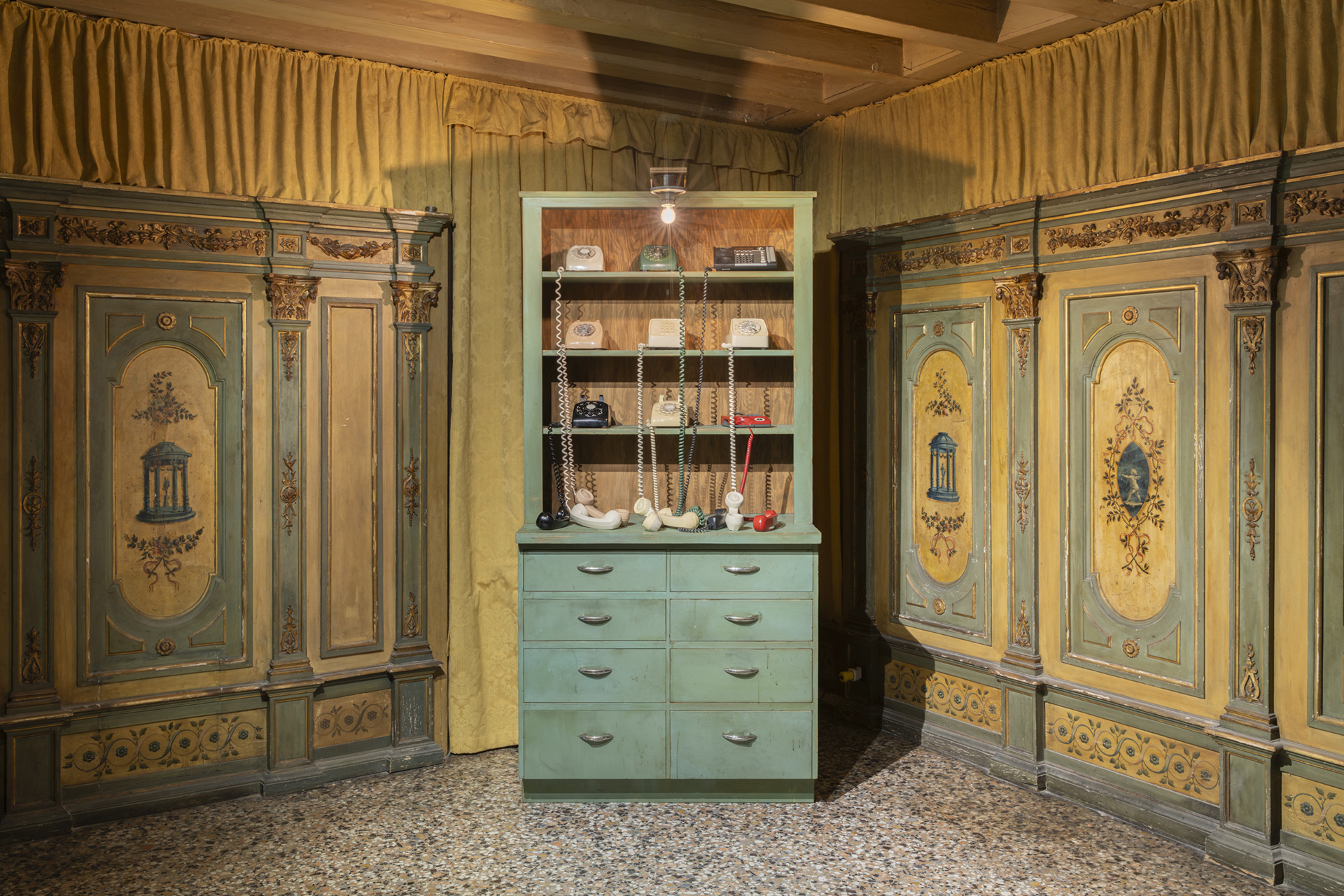
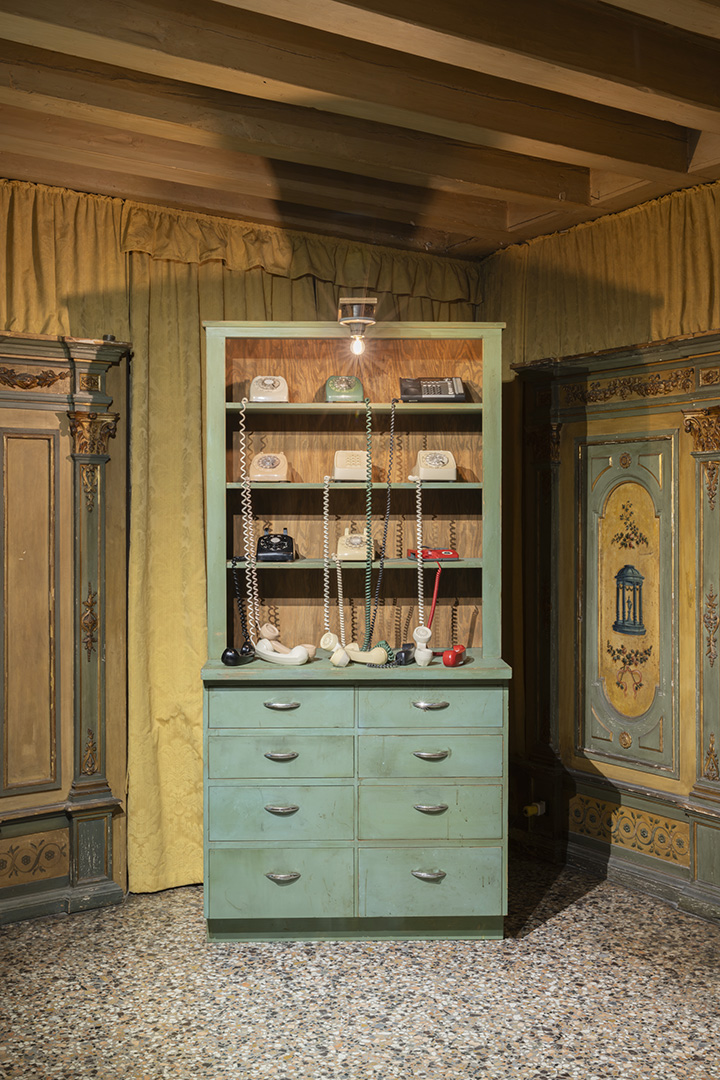
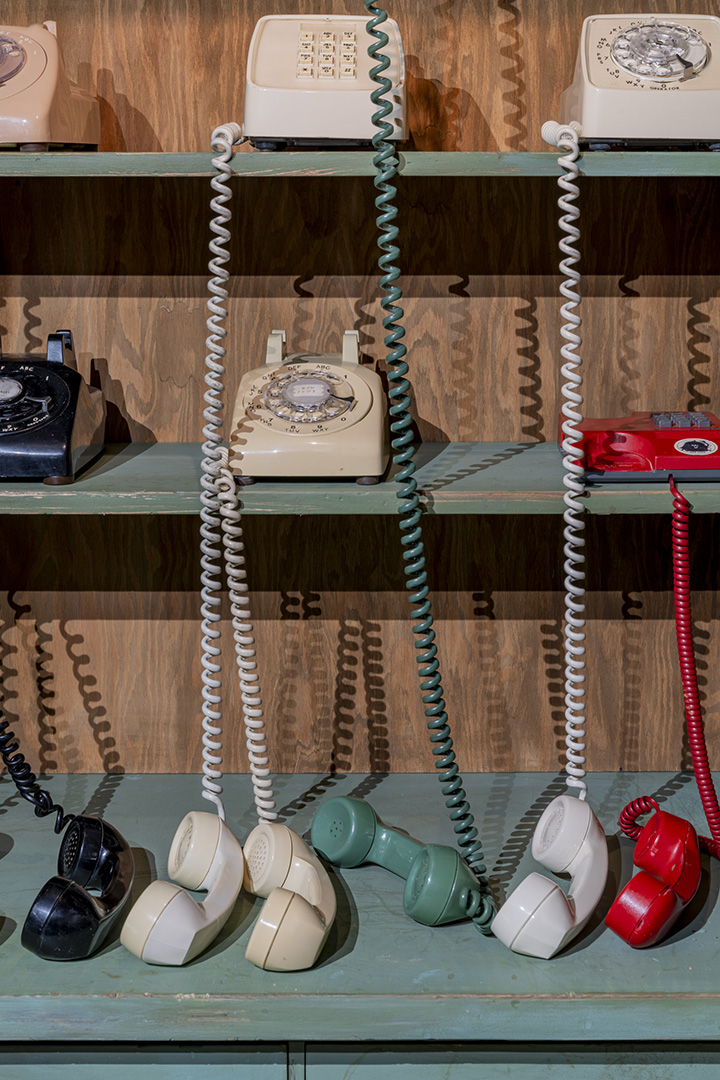
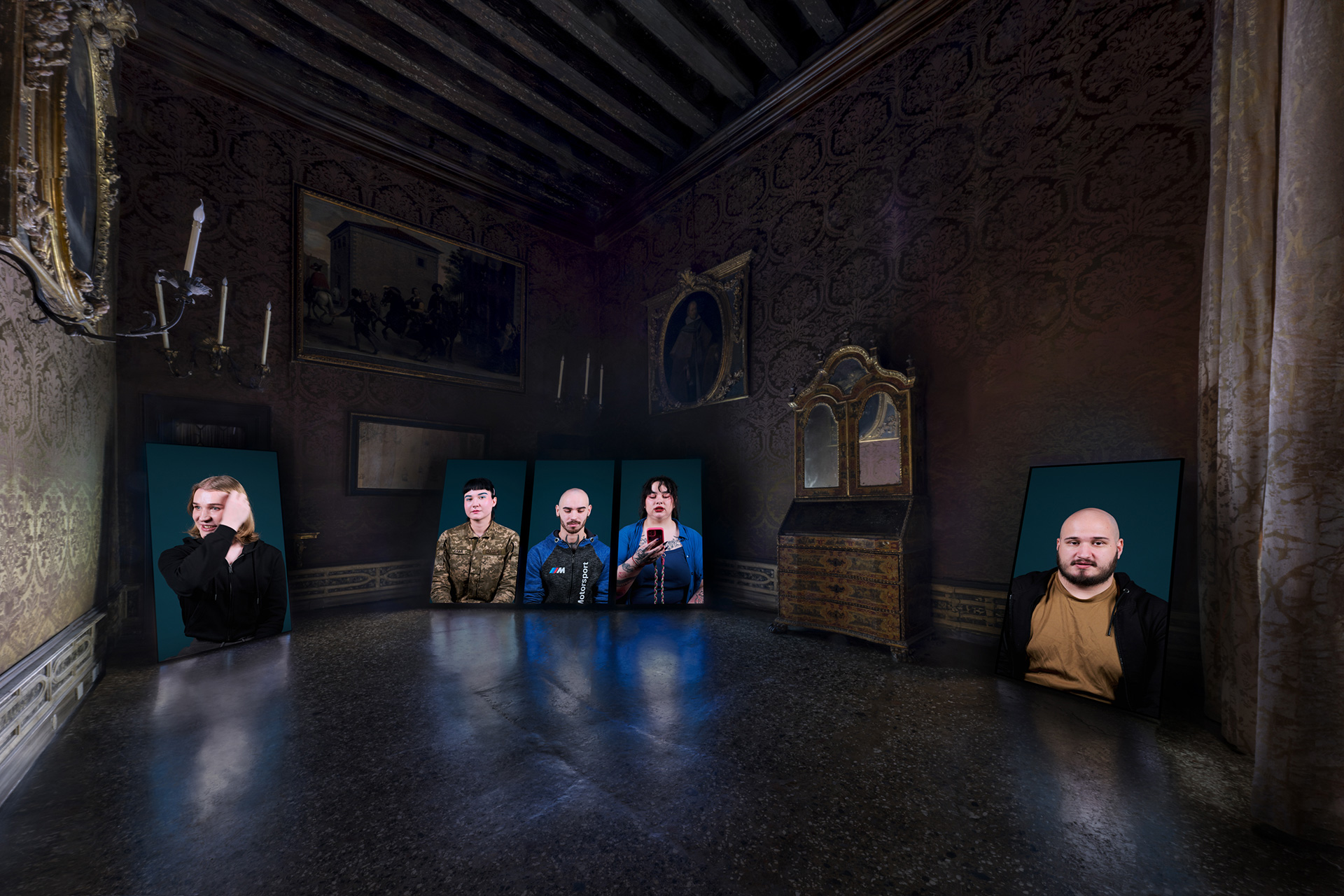
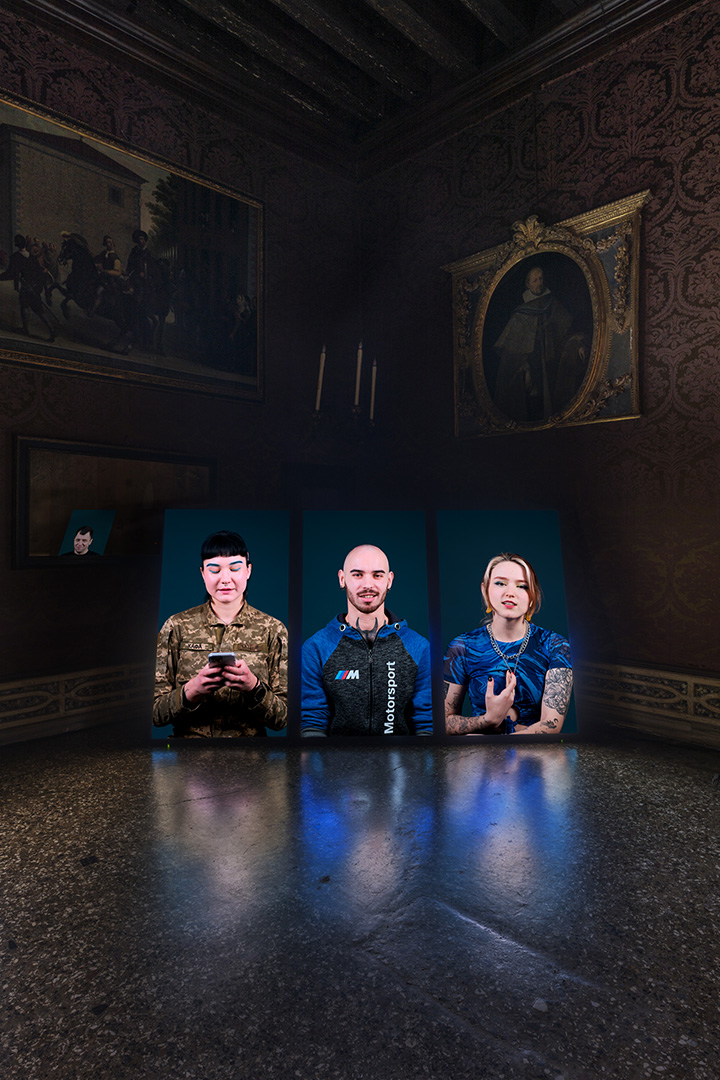
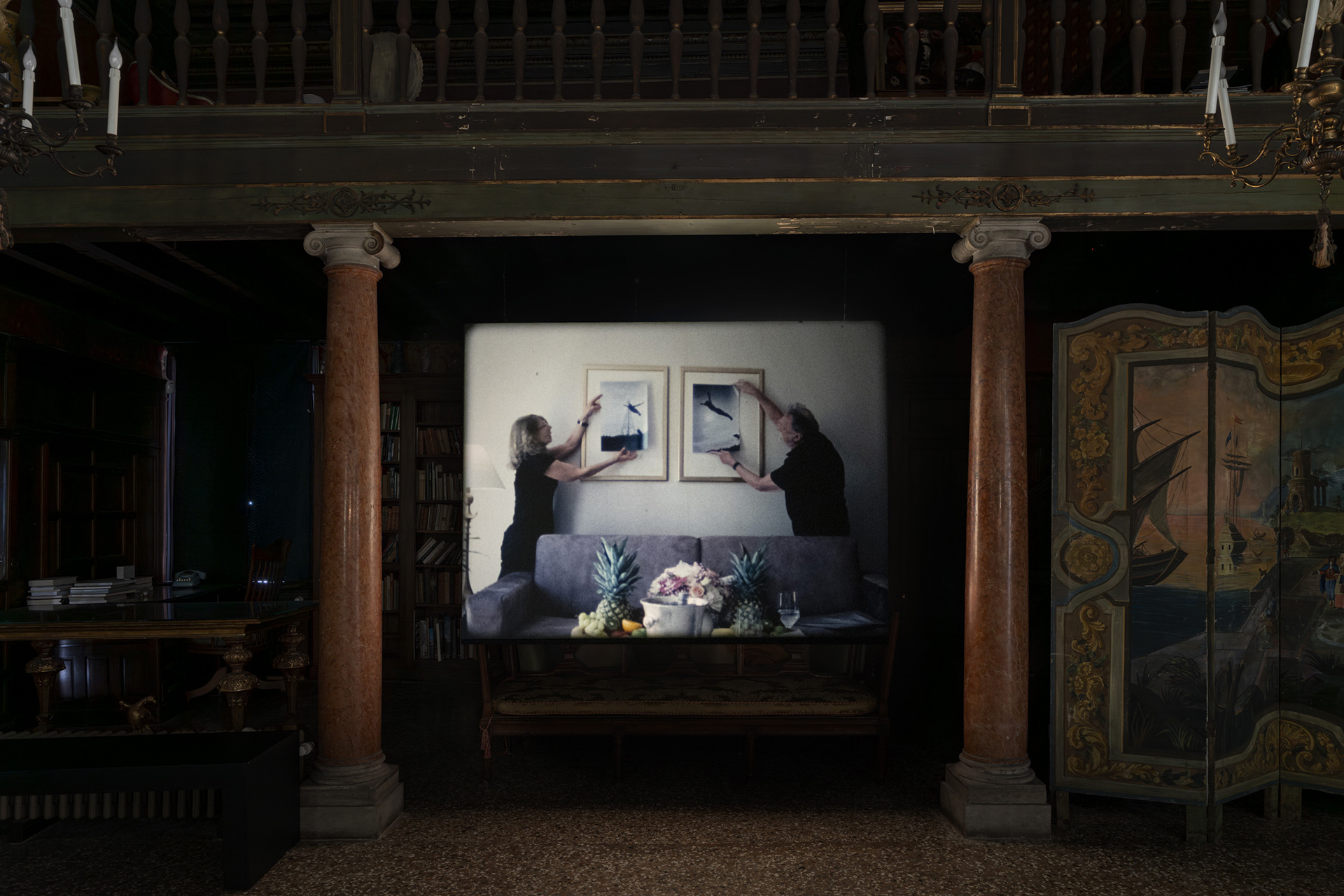
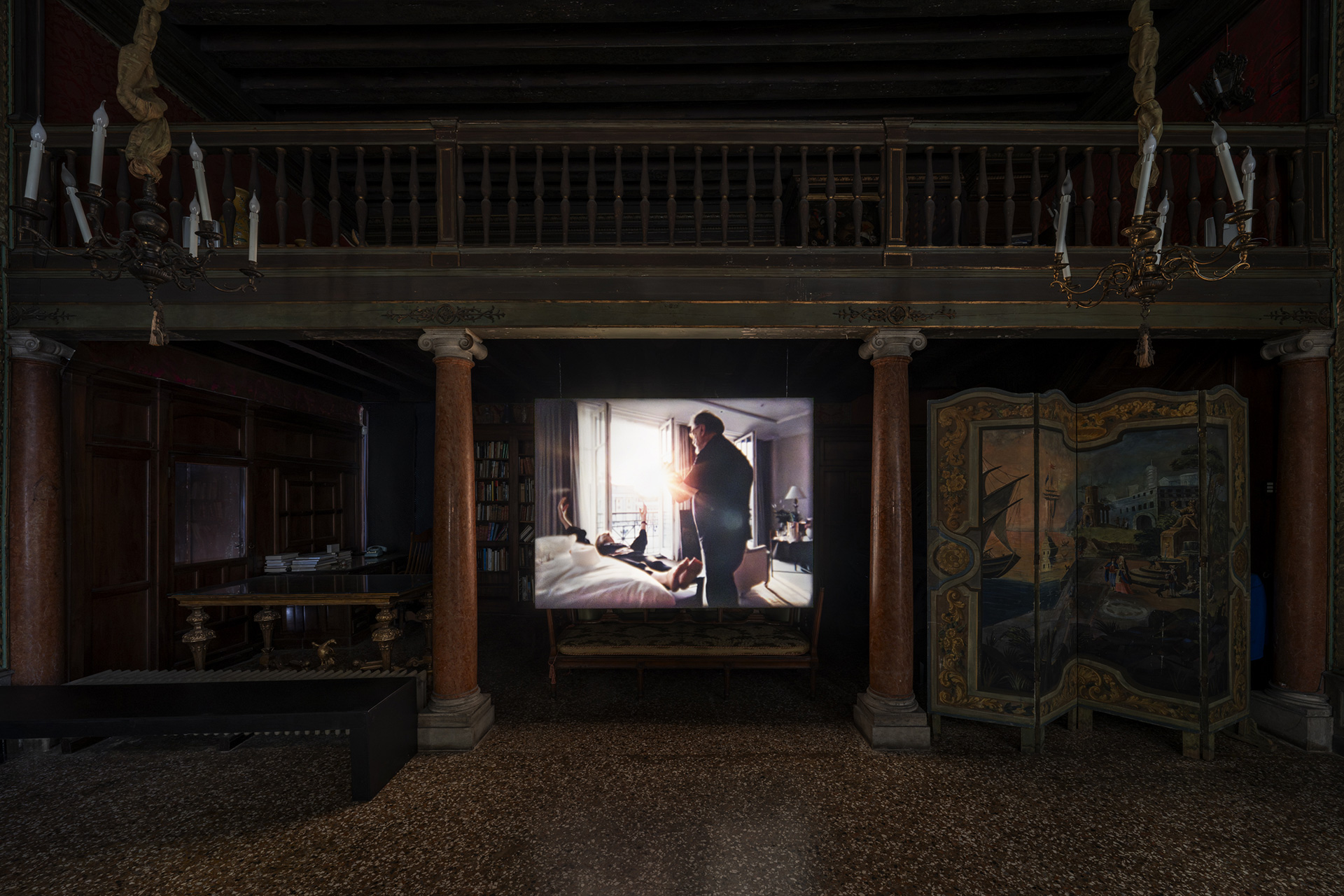
Personal joys – at once empowering and sorrowful — emerge in Gabrielle Goliath’s recent video works depicting Ukrainian LGBTQIA+ soldiers and civilians, sharing intimate testimonies. Joy as memory and love runs through Tacita Dean’s 39-minute 16mm film, If I were in the Adlon (2025), featuring the Ukrainian artist Boris Mikhailov and Vita Mikhailov, his wife, collaborator and muse, during one afternoon in the eponymous Berlin hotel, known for its ties to Cold War intrigue and espionage. Nearby, Cardiff & Miller’s installation Conversations with My Mother (2023), where telephones become a thread that binds us to those who are no longer here.
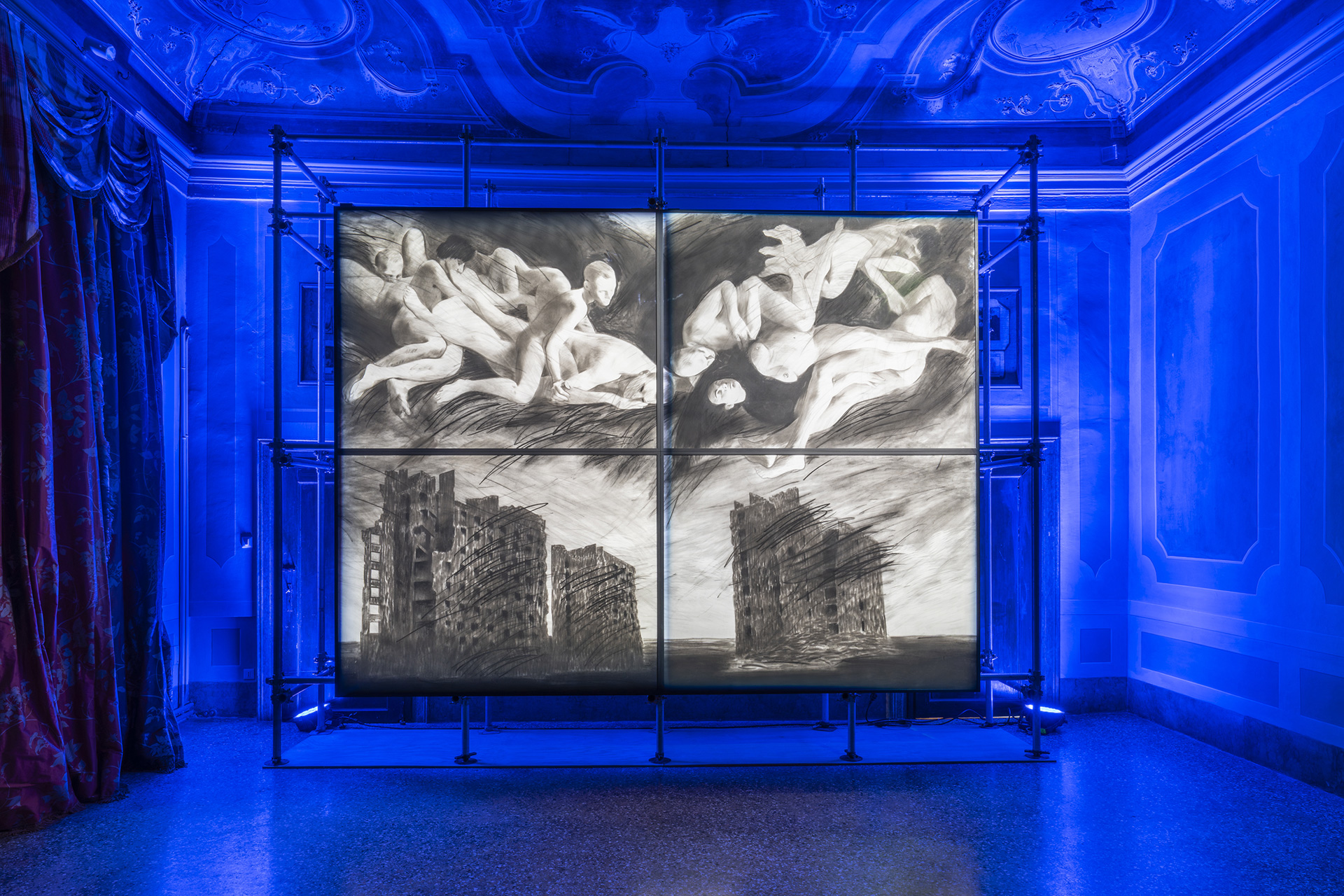
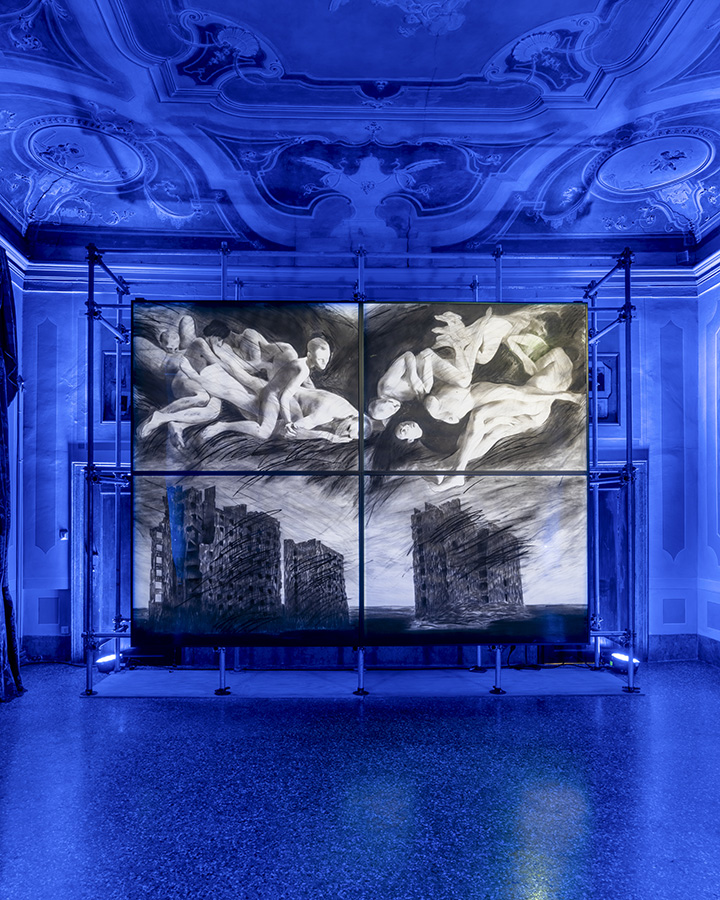
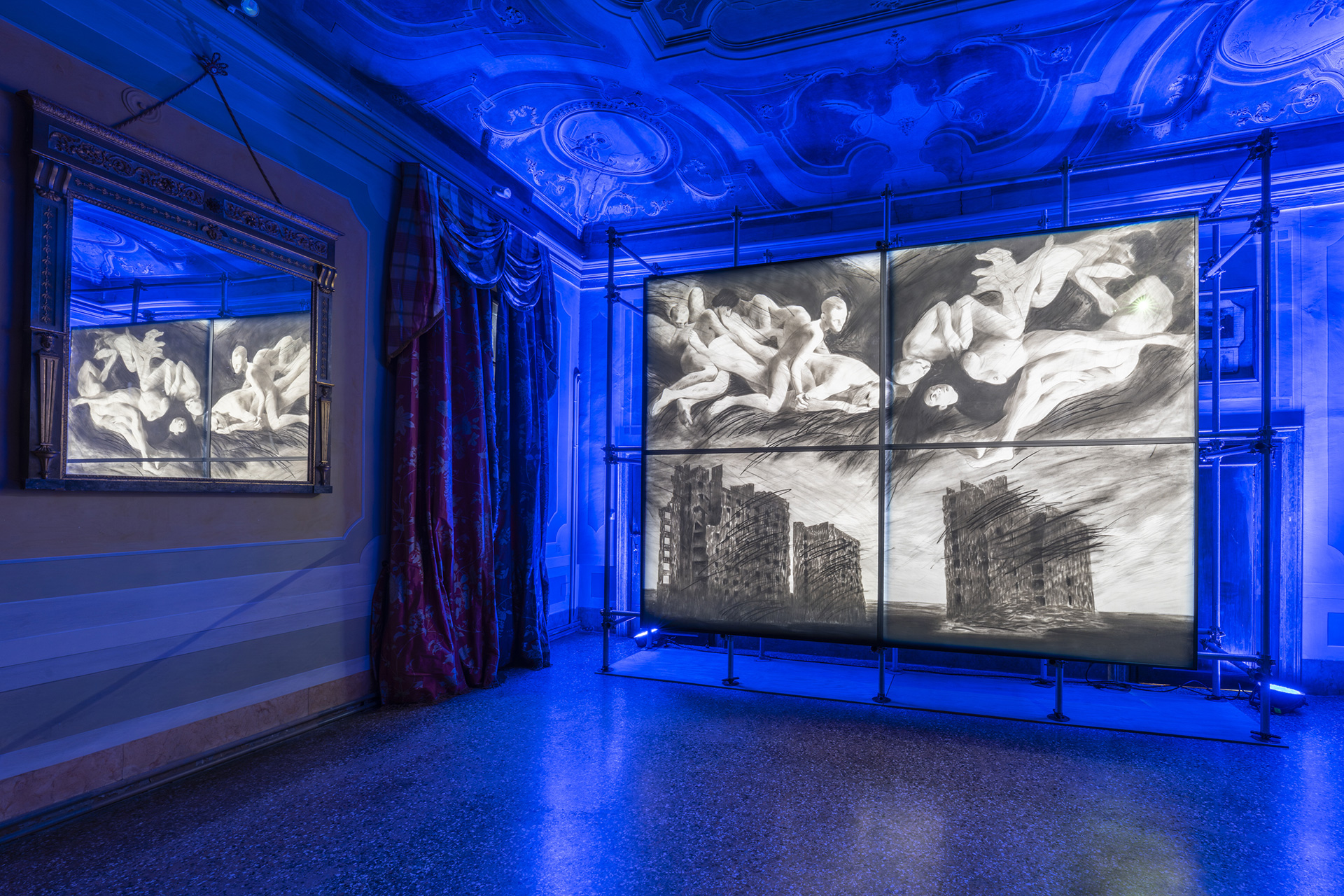
Moving through landscape and body, further works by Dean, Kakhidze, Urbano, Sai, Gander, Charrière, and Kadan trace how human actions leave marks and scars. From Dean’s hand-touched photographs of century-old Sakura trees to Urbano’s painted-metal Kalyna (viburnum) branch — a plant no longer meant to be smelled or plucked — the works call into relief the simple but precarious joy of survival. Kakhidze’s accompanying in-exhibition tattoo salon allows viewers to themselves be literally marked by the exhibition, in perpetuity. The exhibition concludes with a monumental drawing depicting a historical scene of a silent rave, captured by leading Ukrainian artist Nikita Kadan, where bodies become a landscape of emergence and loss.
Across all its layers, Still Joy responds to the present moment — originating in Ukraine and extending beyond — to a place that is fragile, yet resilient, where joy endures.
#StillJoy
Location: Palazzo Contarini Polignac, Sestiere Dorsoduro, 874, 30123, Venice, Italy
Opening Period: 9 May – 1 August 2026
Opening hours: 10 am – 6 pm every day except Monday
Commissioned and promoted by the Victor Pinchuk Foundation
Organized by the PinchukArtCentre, Kyiv, Ukraine
Curated by Björn Geldhof, Oleksandra Pogrebnyak
Roman Khimei & Yarema Malashchuk
Dedicated to the Youth of the World II, 2019
sound, video, 8’ 49”
Music by Stanislav Tolkachev
Acknowledgements: Slava Lepsheyev, Marija Pogrebniak
Filmed at Cxema
Courtesy of the Arists
Dedicated to the Youth of the World III, 2023
video, sound, 8’ 49”
Music by Stanislav Tolkachev
Acknowledgements: Slava Lepsheyev, Serge Klymko
Filmed at Daytime by Cxema
Courtesy of the Arists
Produced with the support of Kyiv Biennial 2023
Dedicated to the Youth of the Whole World II and III are two videos filmed in 2019 and 2023, during dramatically different phases of the Russia-Ukraine war. Both videos first show young people enjoying dance and life at a rave. Then, the camera captures their faces once they return to their everyday lives outside the nightclub.
The scenes in the two videos are almost identical, but the context completely changes the viewer’s perception. In 2019, the war with Russia had lasted five years, its intensity was decreasing, and the sense of threat was fading. In the first artwork, the rave seems to be a world of its own that can last for several days. Everything else is just a break or preparation for the next weekend. In the second video, however, the rave is a brief escape from reality shaped by the full-scale war. Sharing enjoyment of movement and music under nightclub lights feels like a dream or a performance that ends when the curfew begins. Here, dance is a celebration of life itself.
Khimei and Malashchuk’s work is characterized by close attention to detail and exploration of a line between reality and dream, everyday life and escape. The final room of the exhibition then presents Nikita Kadan’s work, where the party transforms into an orgy, becoming all-encompassing. Pleasure, death, and life merge into one.
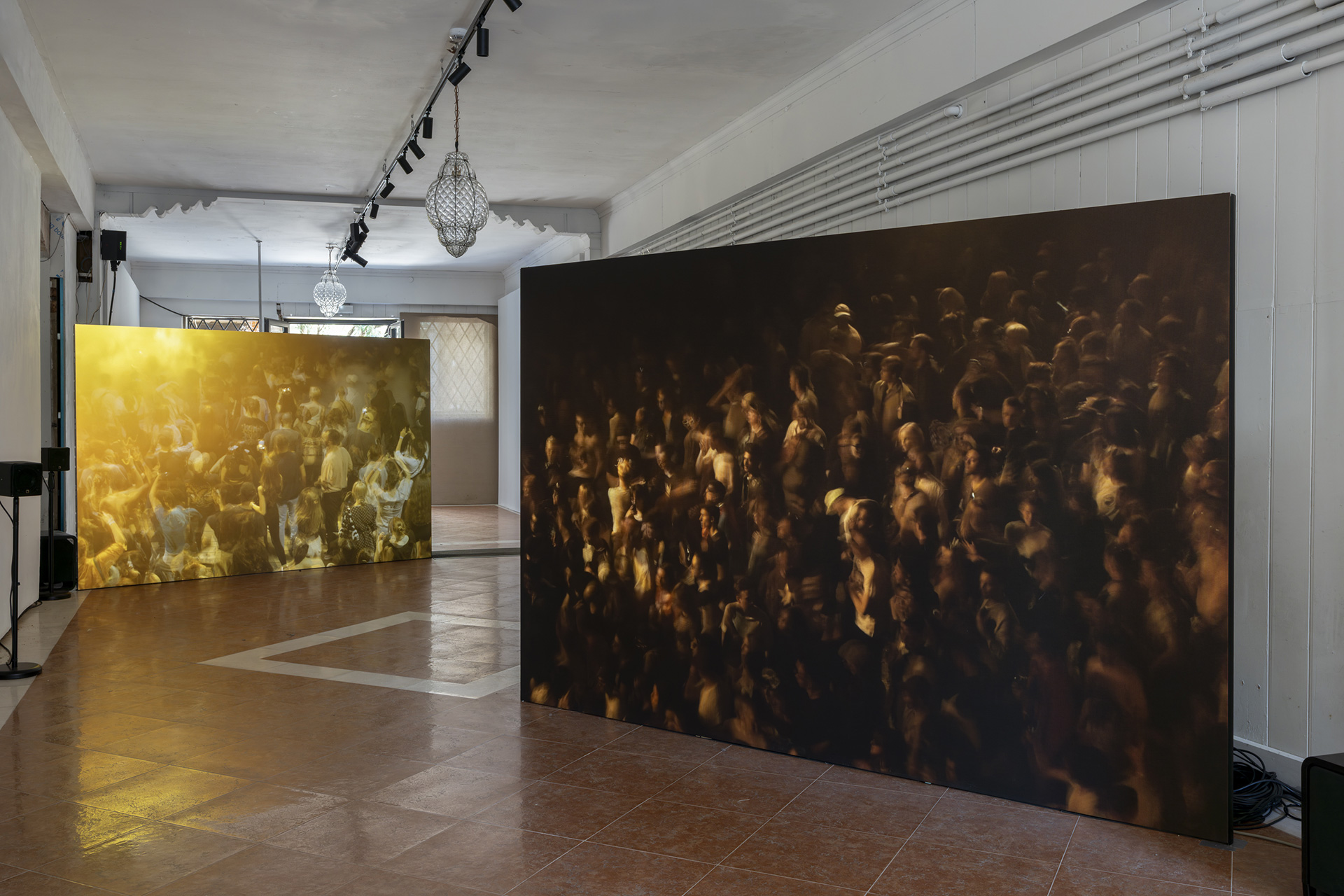
Dedicated to the Youth of the World III, 2023
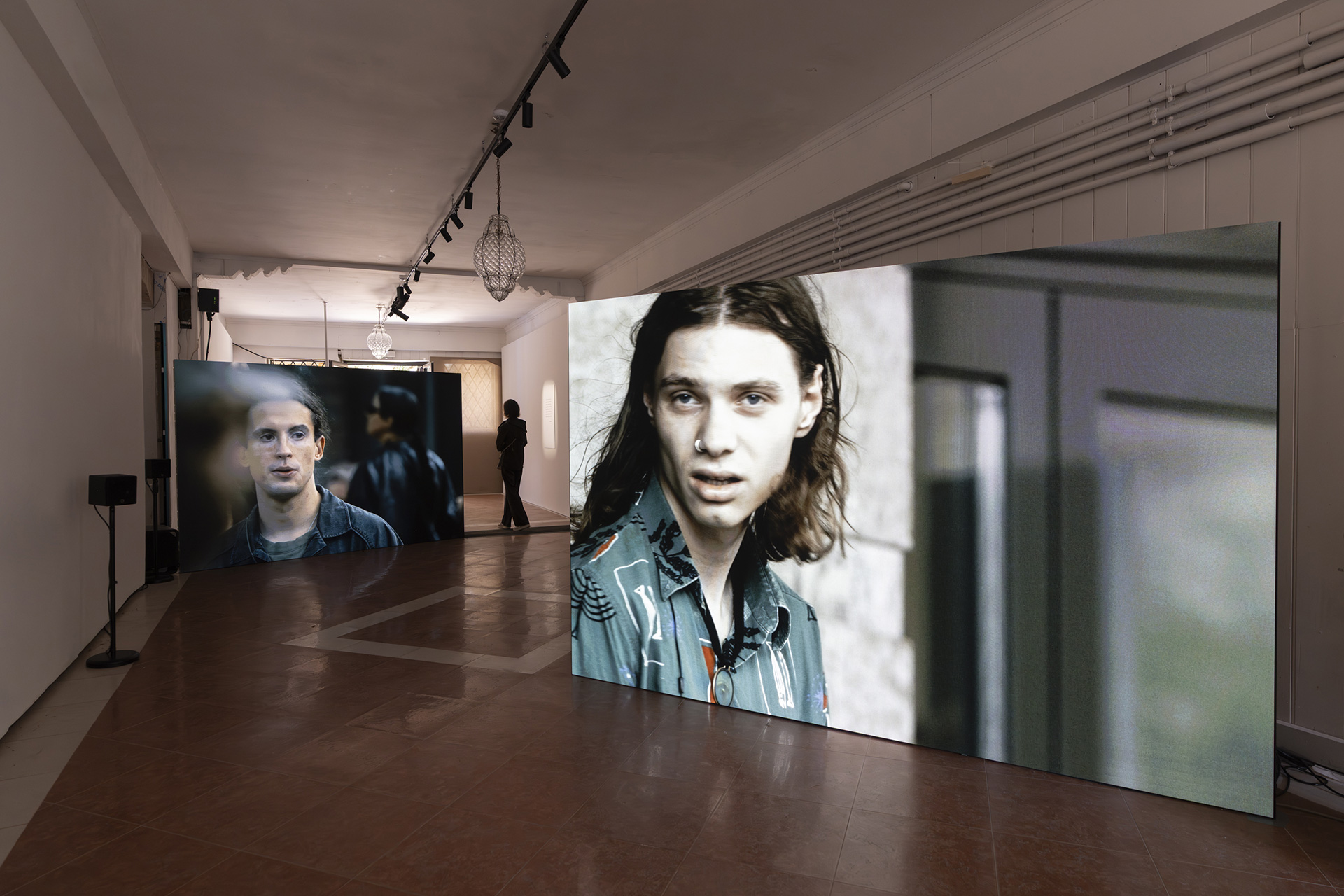
Dedicated to the Youth of the World III, 2023
Iryna Prots
Vladyslav Heraskevych
Ukrainian skeleton racer, member of Ukraine’s National Olympic Team
Iryna Prots
Helmet of Remembrance, 2026
Ukrainian skeleton racer Vladyslav Heraskevych commissioned a Helmet of Remembrance, designed by artist Iryna Prots, bearing portraits of 22 Ukrainian athletes killed during Russia’s full-scale war against Ukraine. Intended as a tribute to those who will never compete again, the helmet was meant to be worn during an Olympic race. He was disqualified shortly before the start for this act of remembrance. The decision sparked one of the most widely discussed controversies of the Games, raising questions about memory, representation, and the limits of expression in international sport.
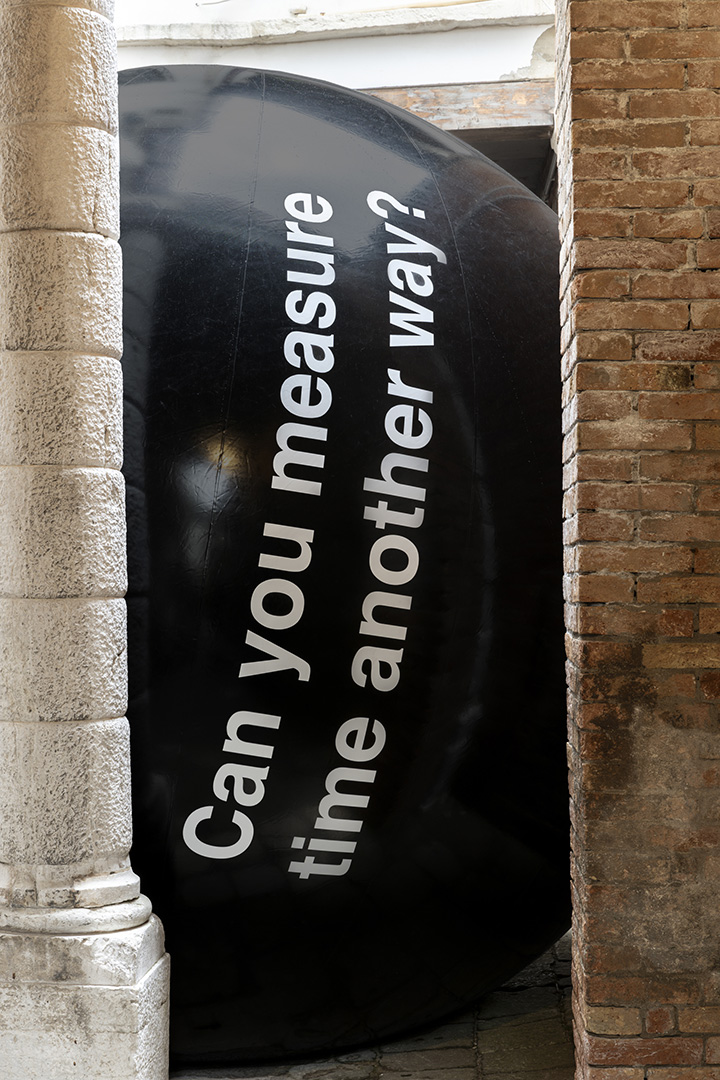
Ryan Gander
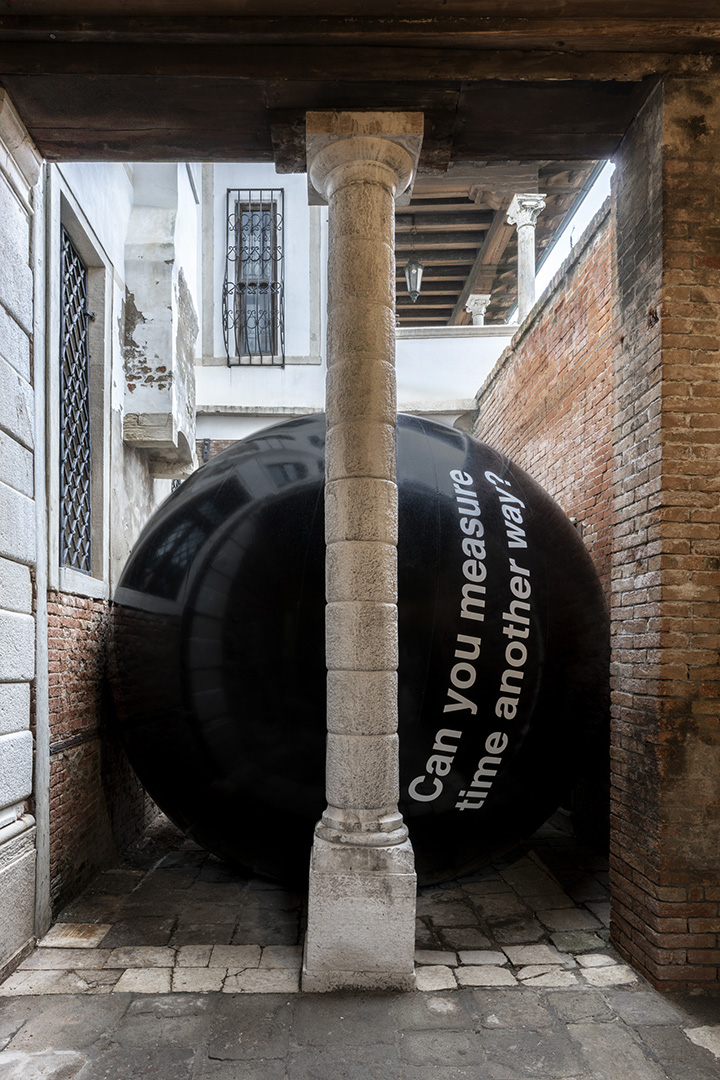
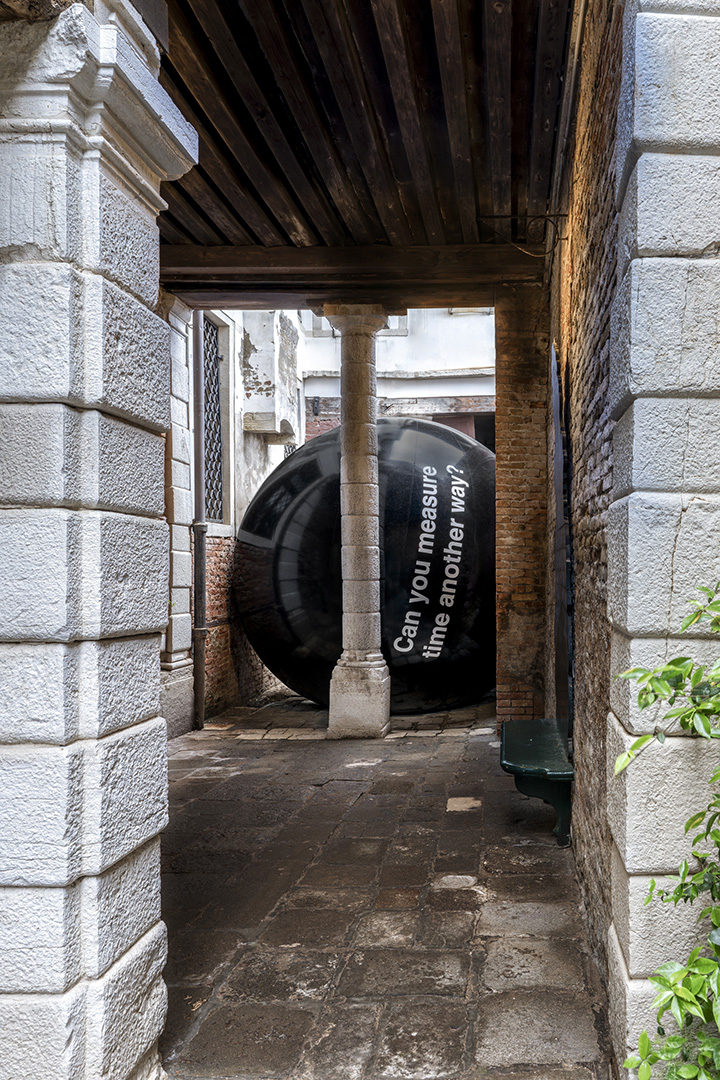
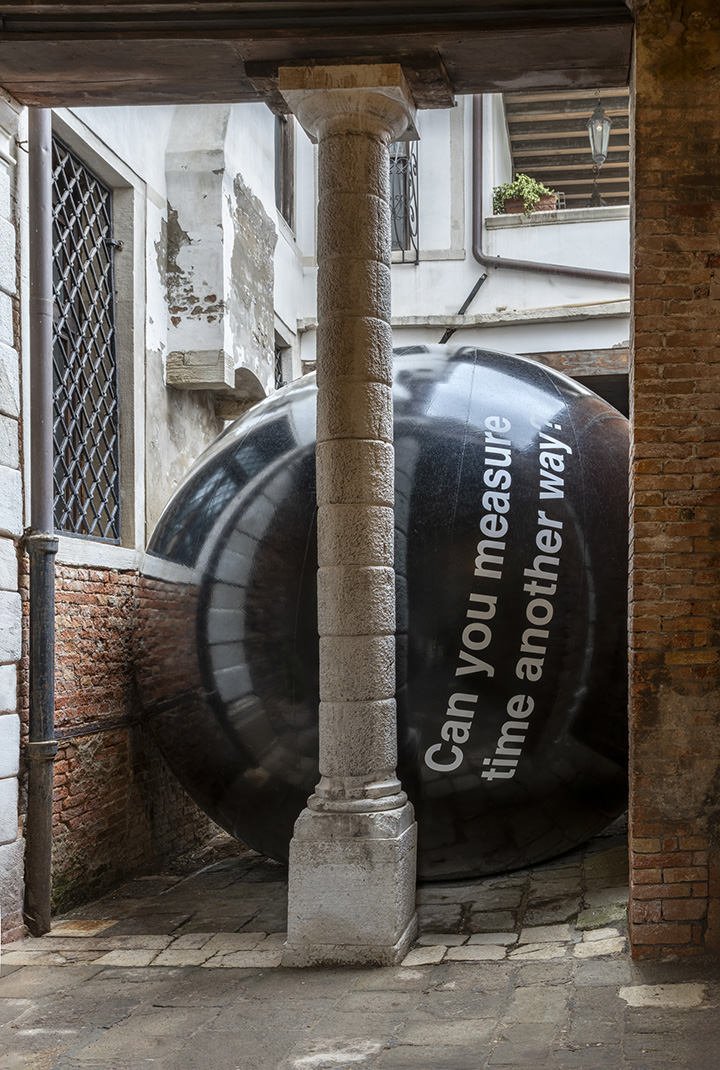
Can You Measure Time Another Way?, 2026
inflatable sphere made of PVC
Courtesy of the Artist and Esther Schipper Berlin/Paris/Seoul
Produced with the support of PinchukArtCentre
An inflatable black ball, barely fitting into the space of the room, addresses the viewer with the question, “Can you measure time another way?” Working with questions related to children’s perception of the world, Ryan Gander gives form to seemingly naive questions. However, it turns out that they are not easy to answer.
In the context of the Still Joy exhibition, this work highlights the relativity of the experience of time: at home and away from it, in danger and in safety, at war and during peacetime.
Can you convey the subjective sense of time? How is it experienced in joy? Gander’s work prompts further reflection.
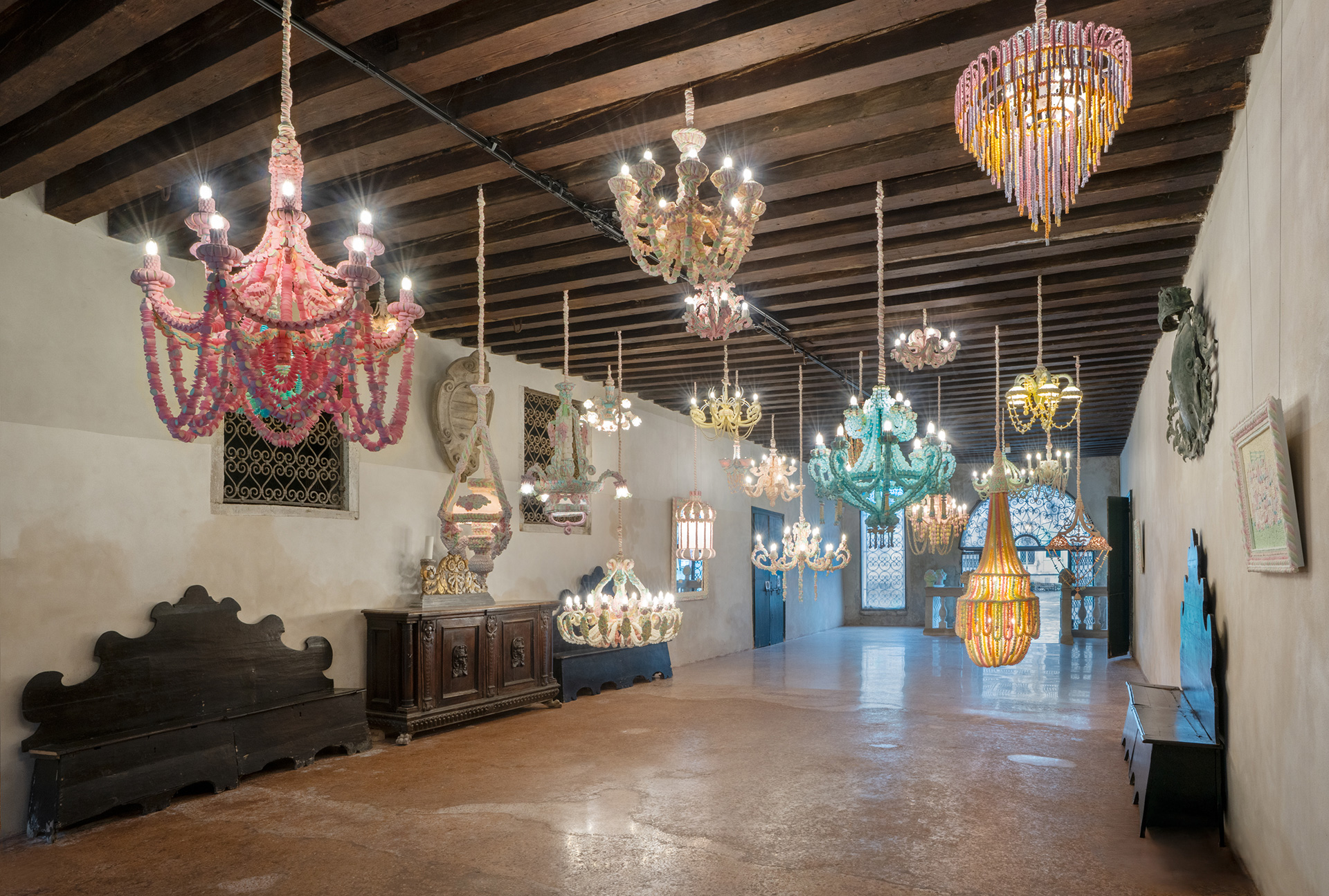
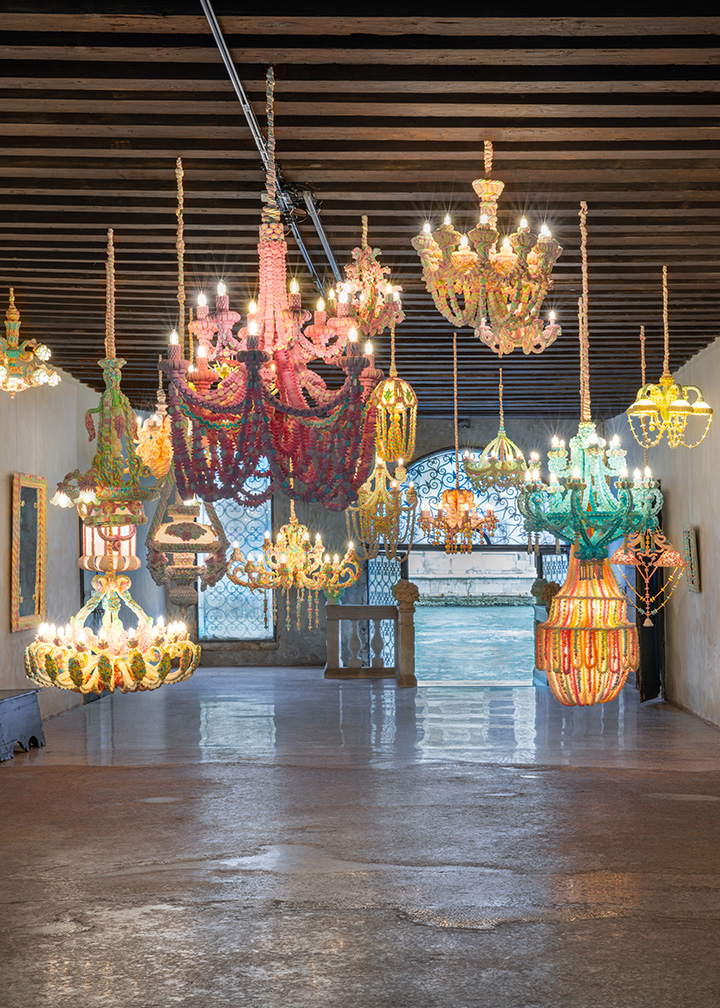
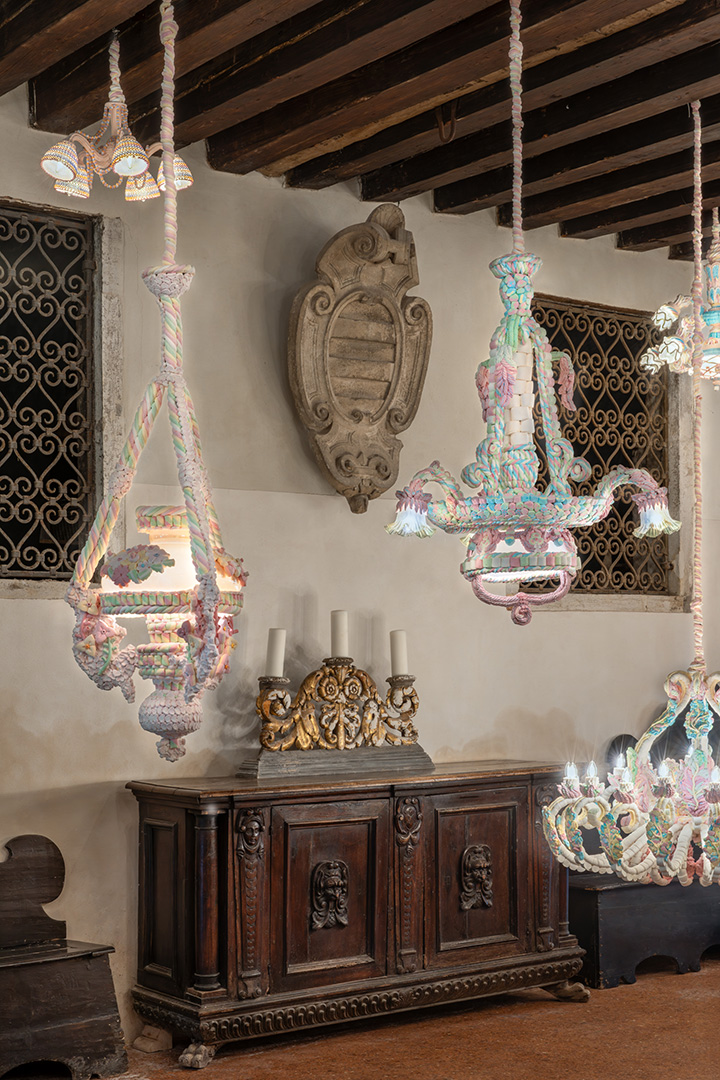
Simone Post
She Knew She/It/They Would Melt, 2026
marshmallow, sour satellite wafer, candy chain, and other
Courtesy of the Artist
Produced with the support of PinchukArtCentre
Simone Post’s work opens a different, magical realm of reality that makes room for naïve, childlike joy. The artist brings the historic interior of a palazzo to life by creating candy replicas of chandeliers and objects from throughout the house. She places images of her family, made from lollipops, in decorative frames. The installation, combining elements of domestic comfort, historic interiors, and countless colorful sweets, becomes a kind of mirage. Is this a memory of something that never was? A dream of the impossible? Or perhaps a hallucination?
Using candy, Post gives the antiques a carefree quality inherent in the naïve joy of childhood. However, this material, which melts so easily, highlights the fragile, fleeting nature of this state. Can we be so carefree in the world around us?
Daniel Turner
Conduction, 2026
glass, oils, wood from the National University of Kyiv-Mohyla Academy, Ukraine
Courtesy of the Artist
Produced with the support of PinchukArtCentre
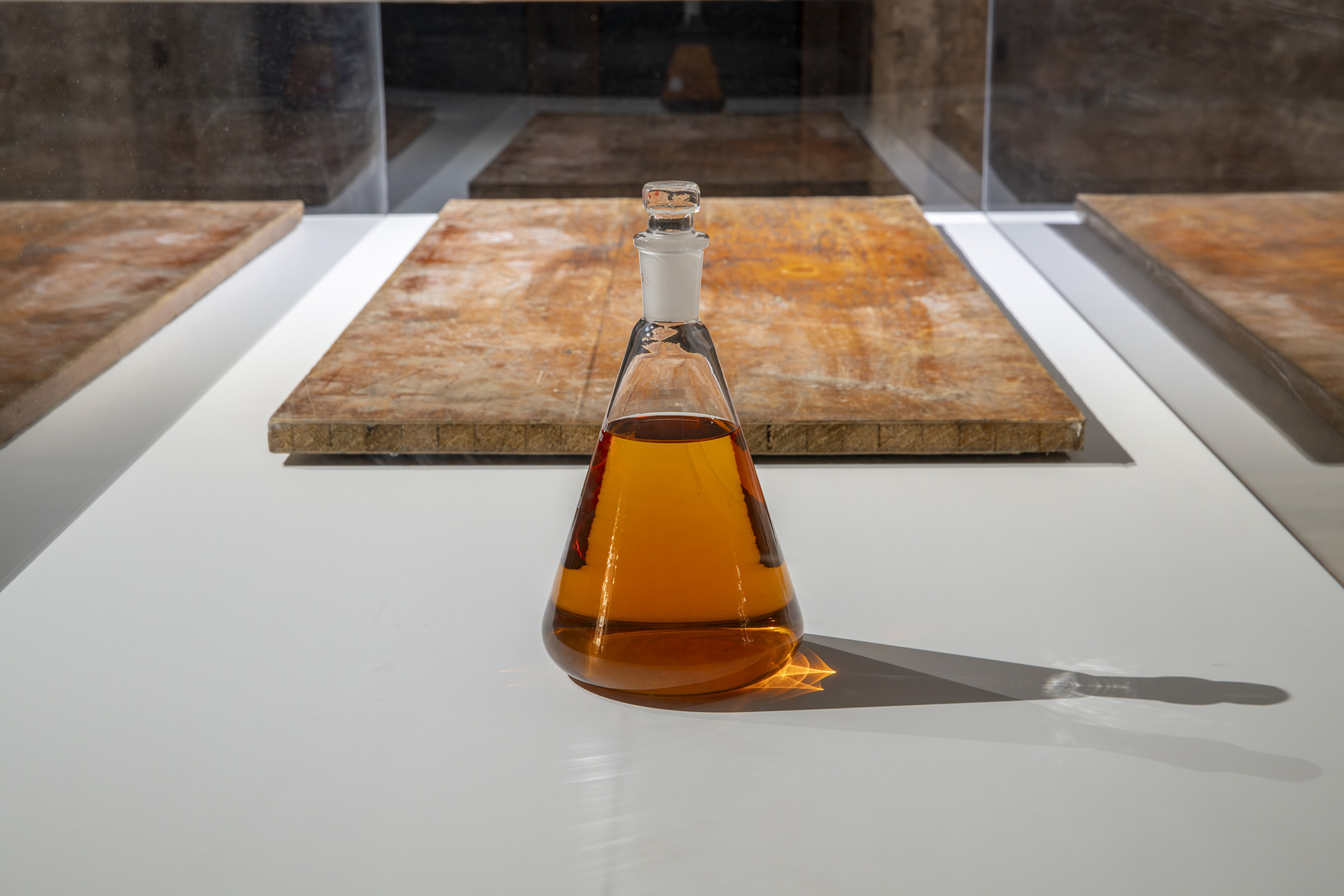
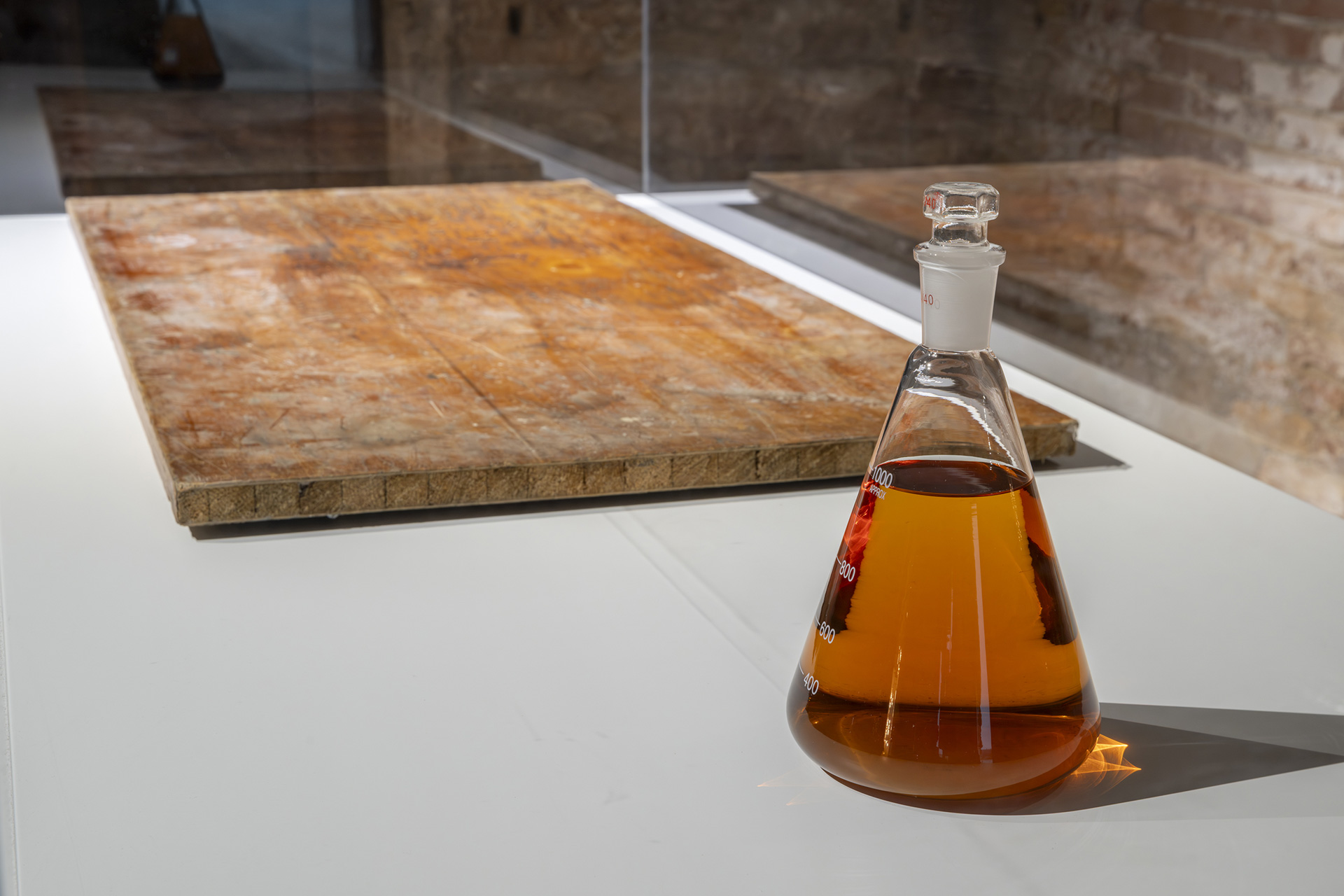
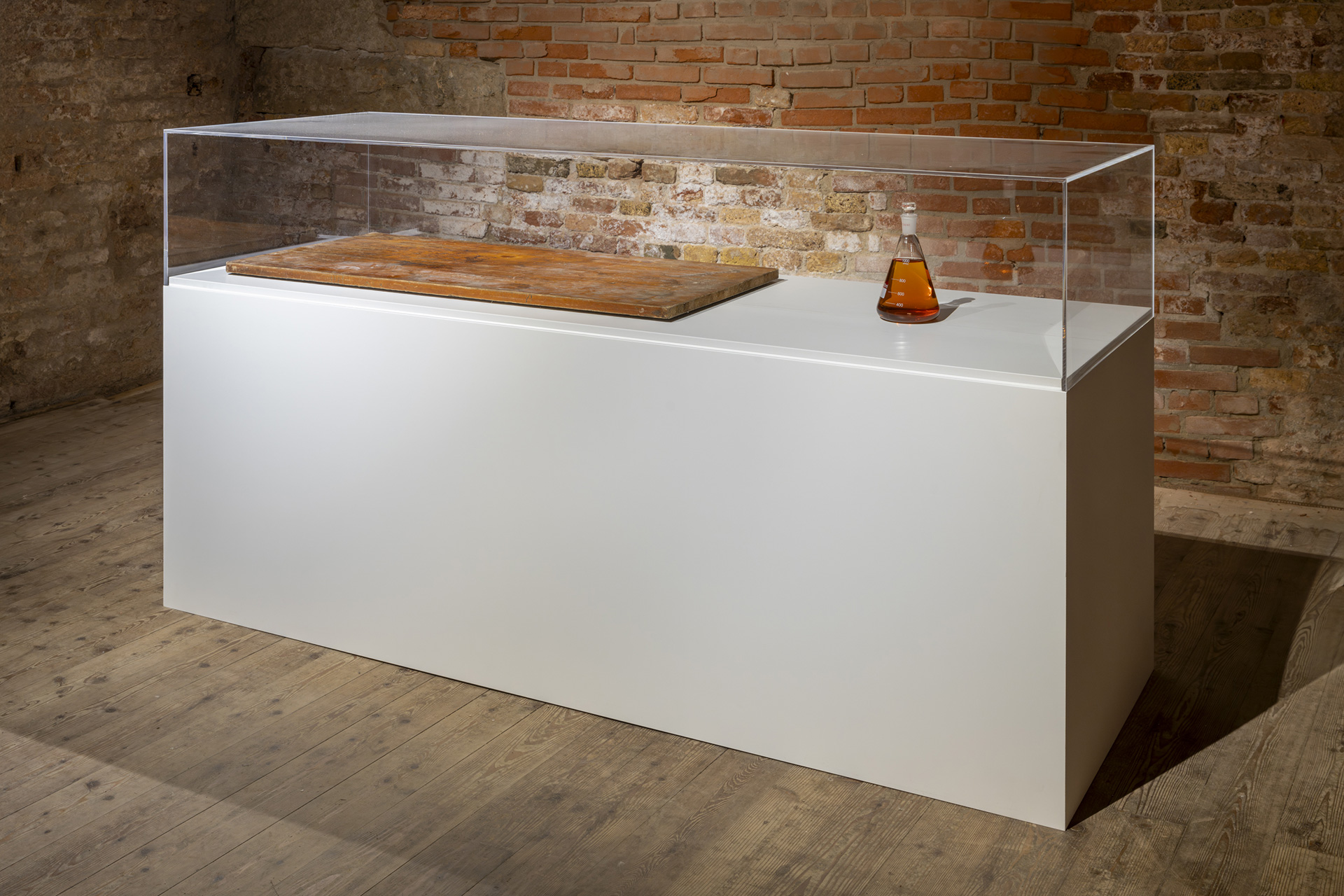
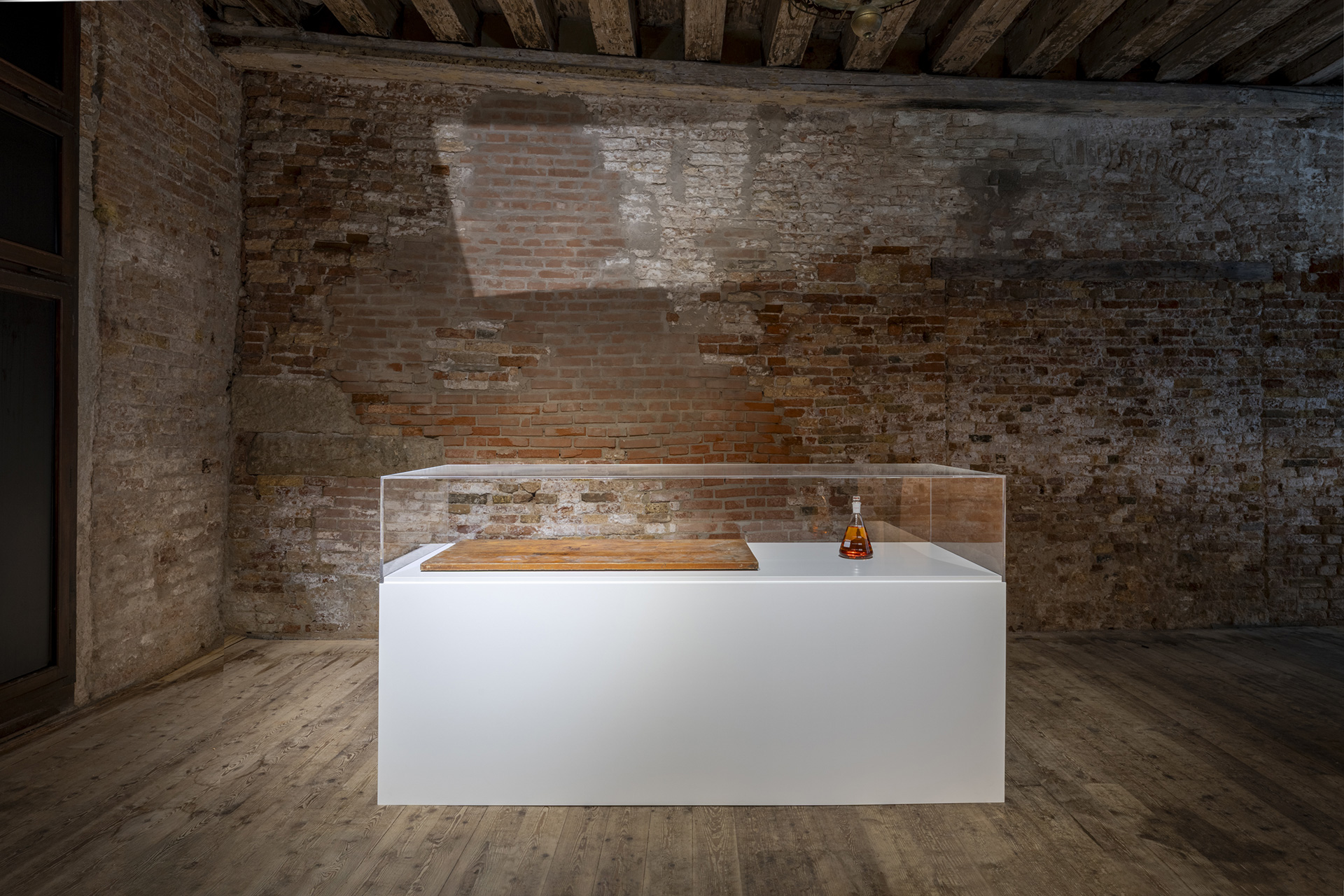
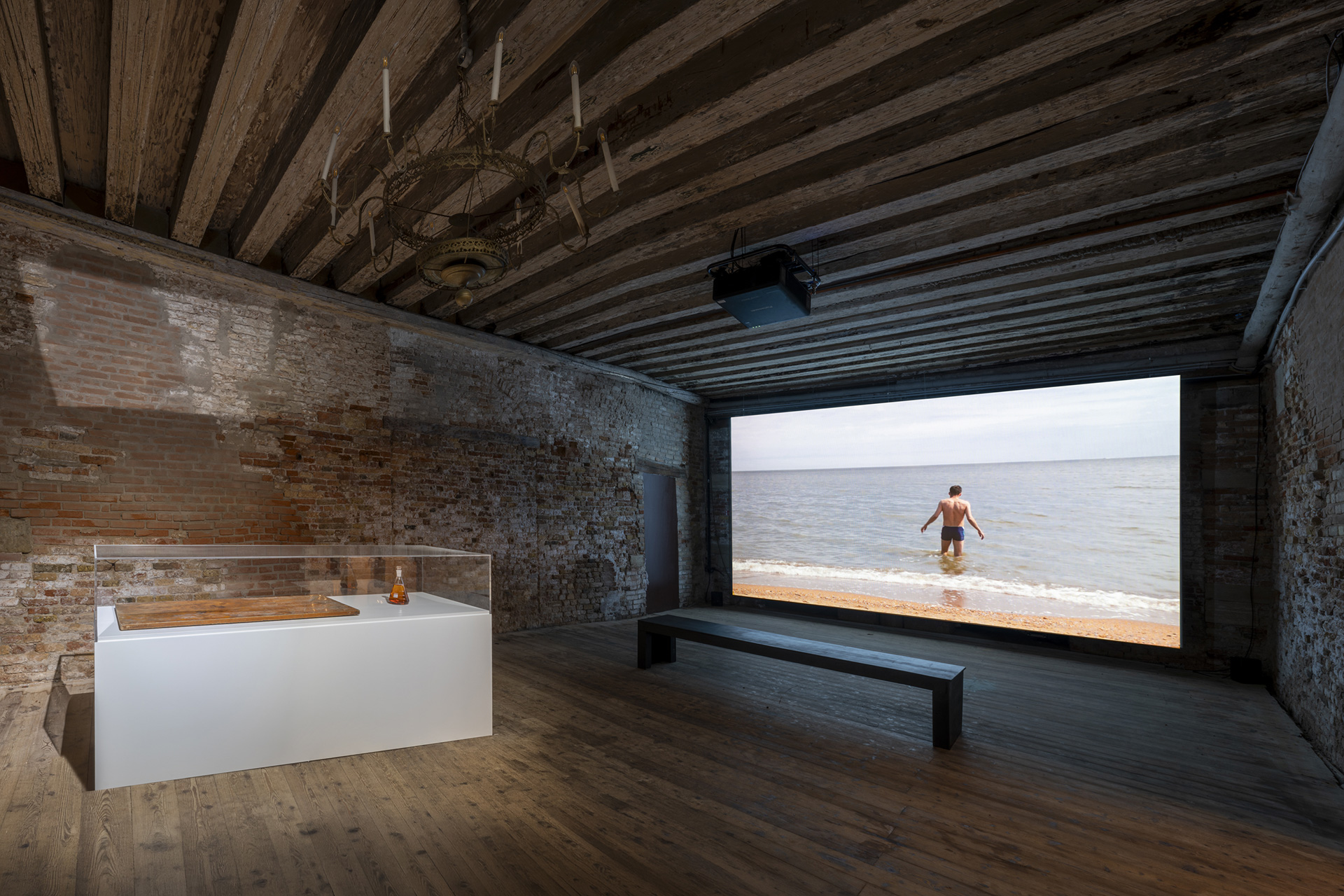
In Daniel Turner’s work, the history of many years of labor is extracted, pressed from an object, and embodied in oil. The artist selects a lecture hall desk from the Kyiv-Mohyla Academy, one of Europe’s oldest educational institutions – a place where thought turns into voice, and voice into political and social change, in Ukraine as in many places in the world. The object itself carries the traces of generations of students. By pressing oil from it, the artist almost extracts life itself, placing it in a flask. The work asks whether it is possible to extract history from objects, as oil is extracted from seeds.
In Piotr Armianovski’s video featured nearby, memories are conveyed through people, like the dreams of a city. However, objects also carry memory. In Turner’s work, the often invisible but long-term process of labor takes shape and becomes visible.
Piotr Armianovski
Me and Mariupol, 2017
video, 10’00’’
Courtesy of the Artist
Created as part of the MyStreetFilmsUkraine film workshop and the “86” international film festival
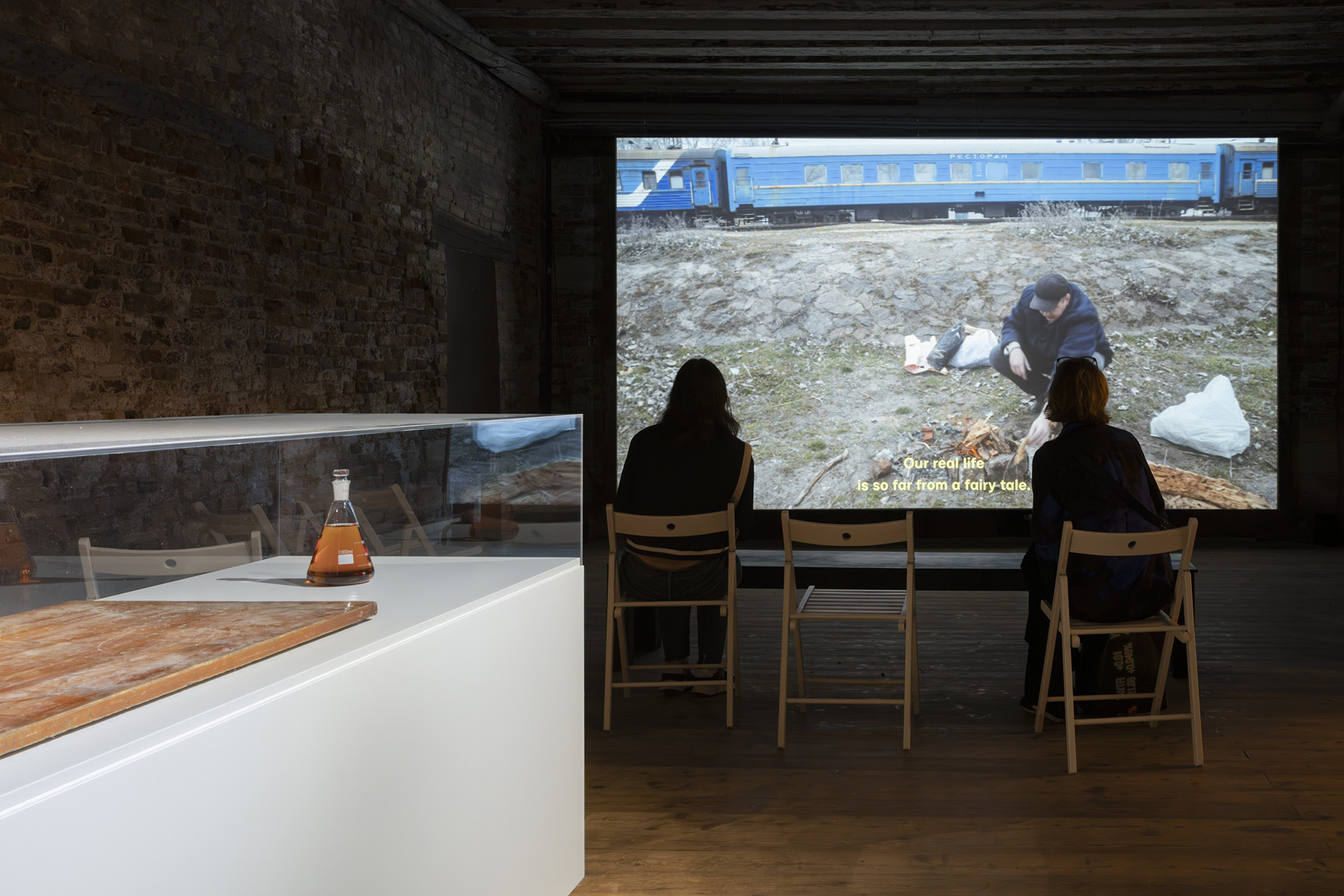
In his 2017 video essay, Piotr Armianovski asks people he meets on the streets of Mariupol about their lives and the dreams they imagine the city might have.
The work shows how the port city in the south of the Donetsk region adapted to the war that began in 2014. Today, Mariupol is almost completely destroyed and remains under Russian occupation.
Through the voices of its residents, Mariupol shares its dreams of clean beaches, green parks, good schools, and hospitals; it tells its own story and the stories of people from across the former Soviet Union who settled here decades ago; it describes the sea as a miracle. At the same time, in the words of locals, you can hear anxiety about danger in the city and difficulties earning a living. Armianovski’s video captures the melancholic atmosphere of an industrial city, full of worries about a present that no longer exists and hopes for the future. What is Mariupol dreaming of now?
Lesia Vasylchenko
1534, 2026
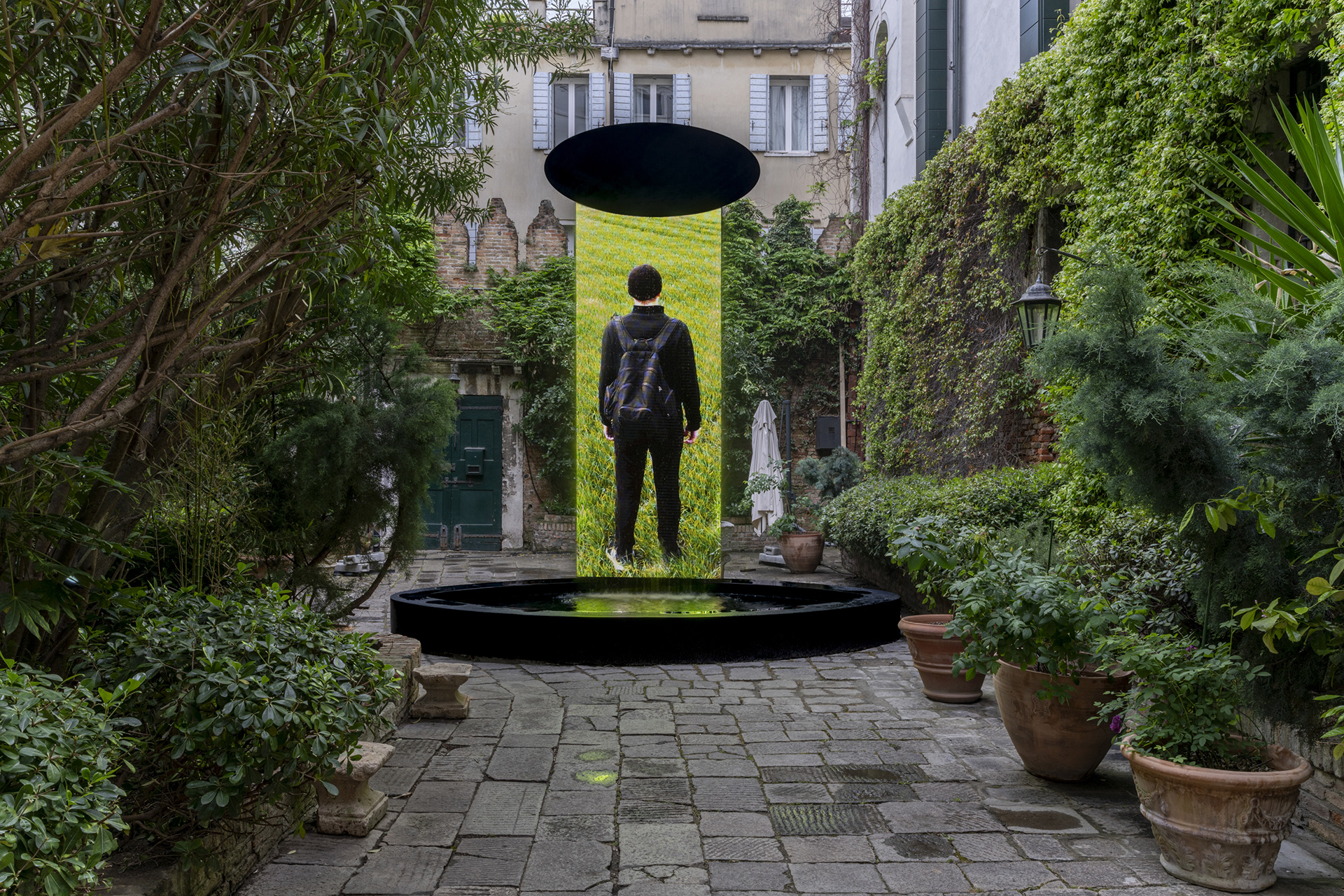
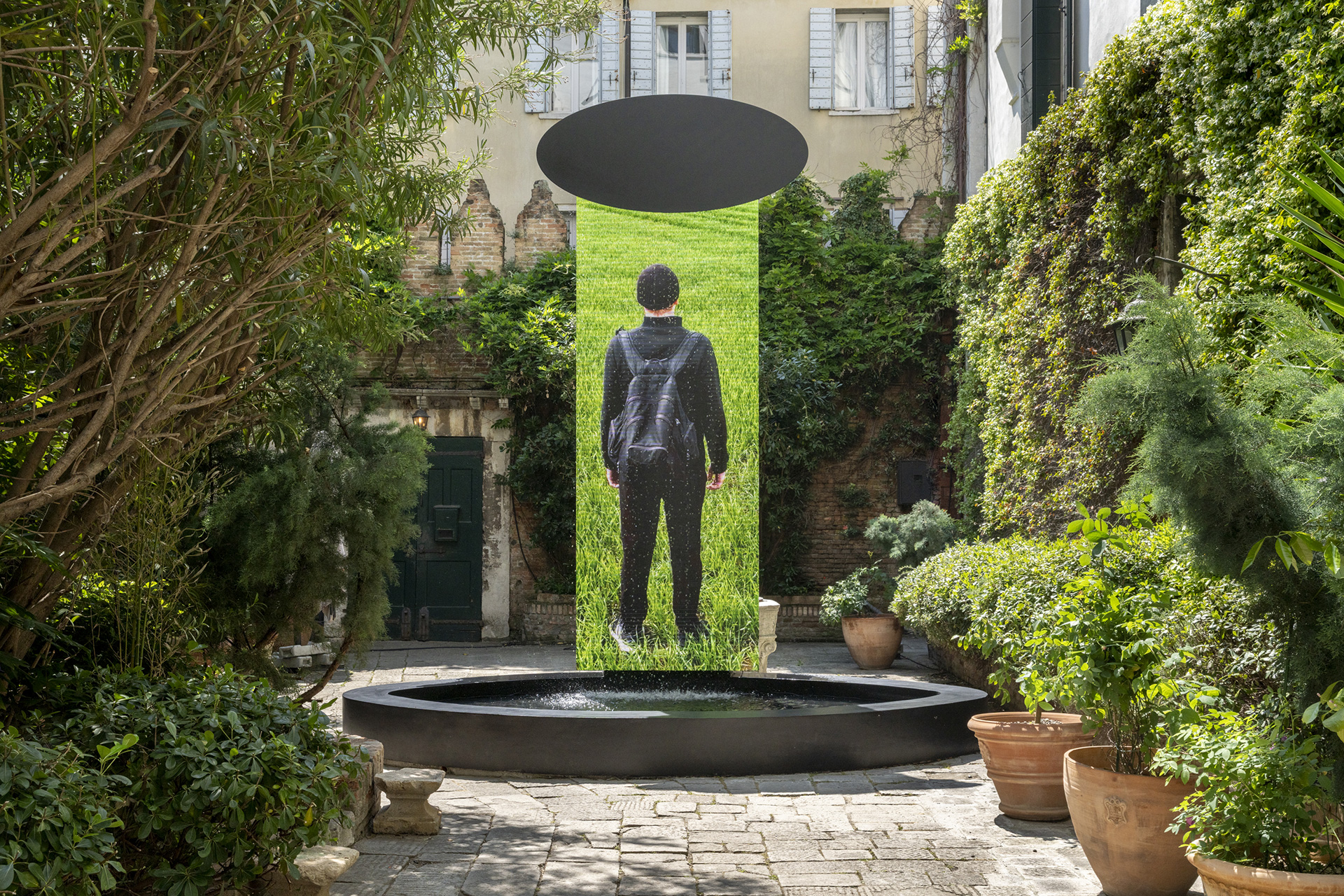
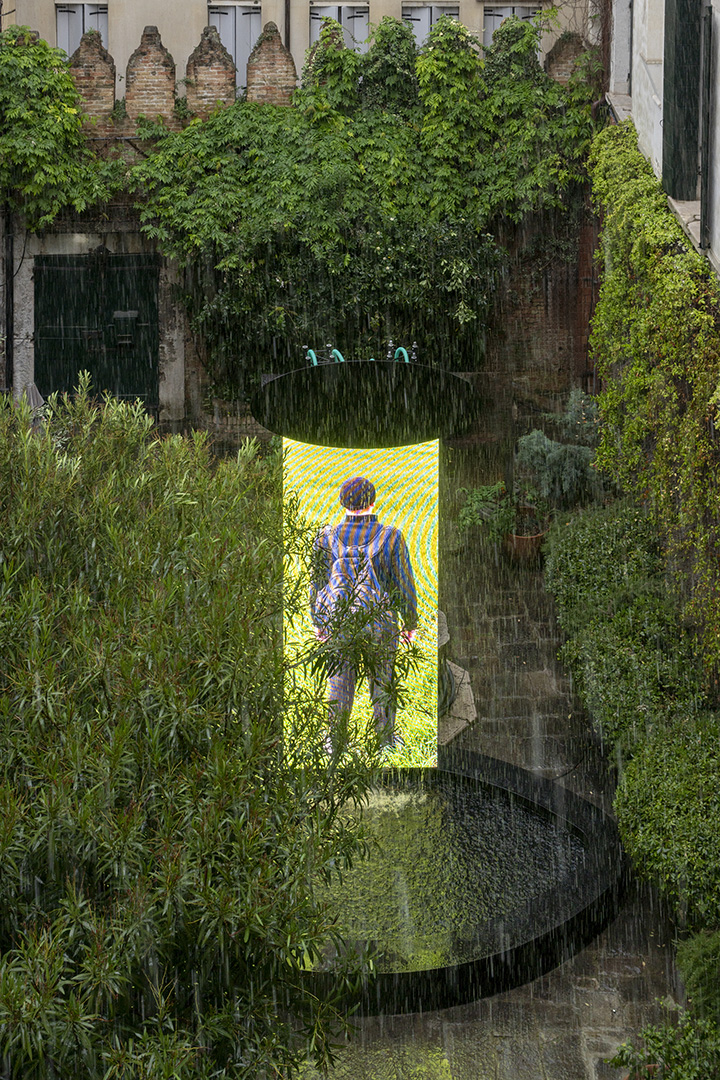
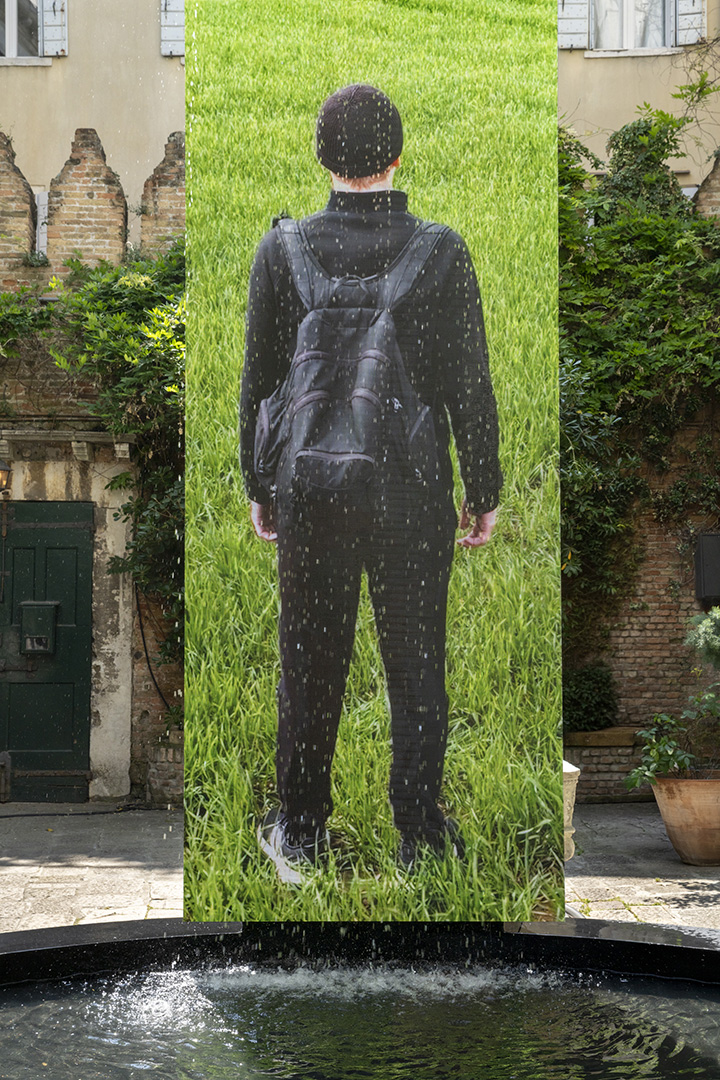
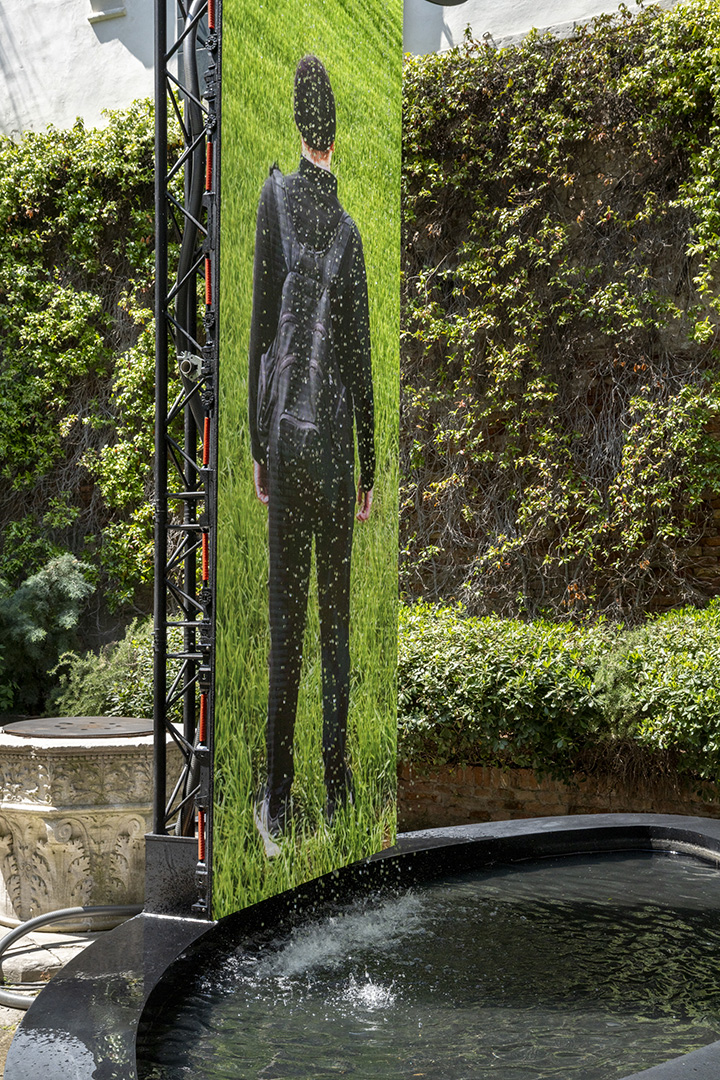
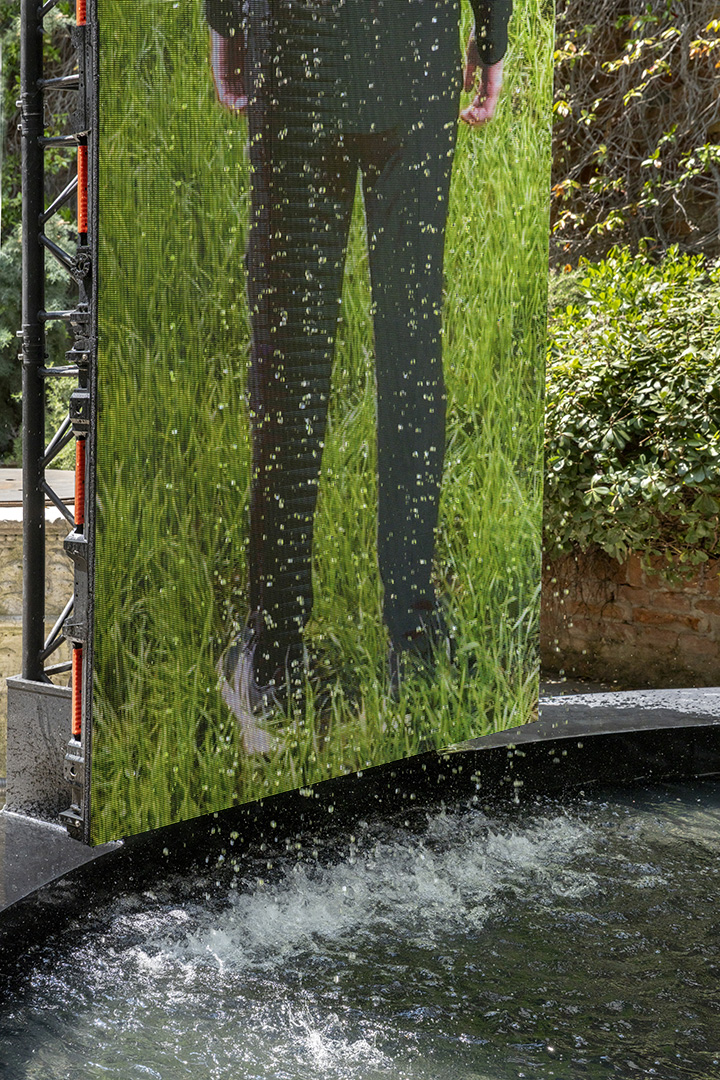
video on a LED screen, fountain sculpture, flowing water
Courtesy of the Artist
Produced with the support of PinchukArtCentre
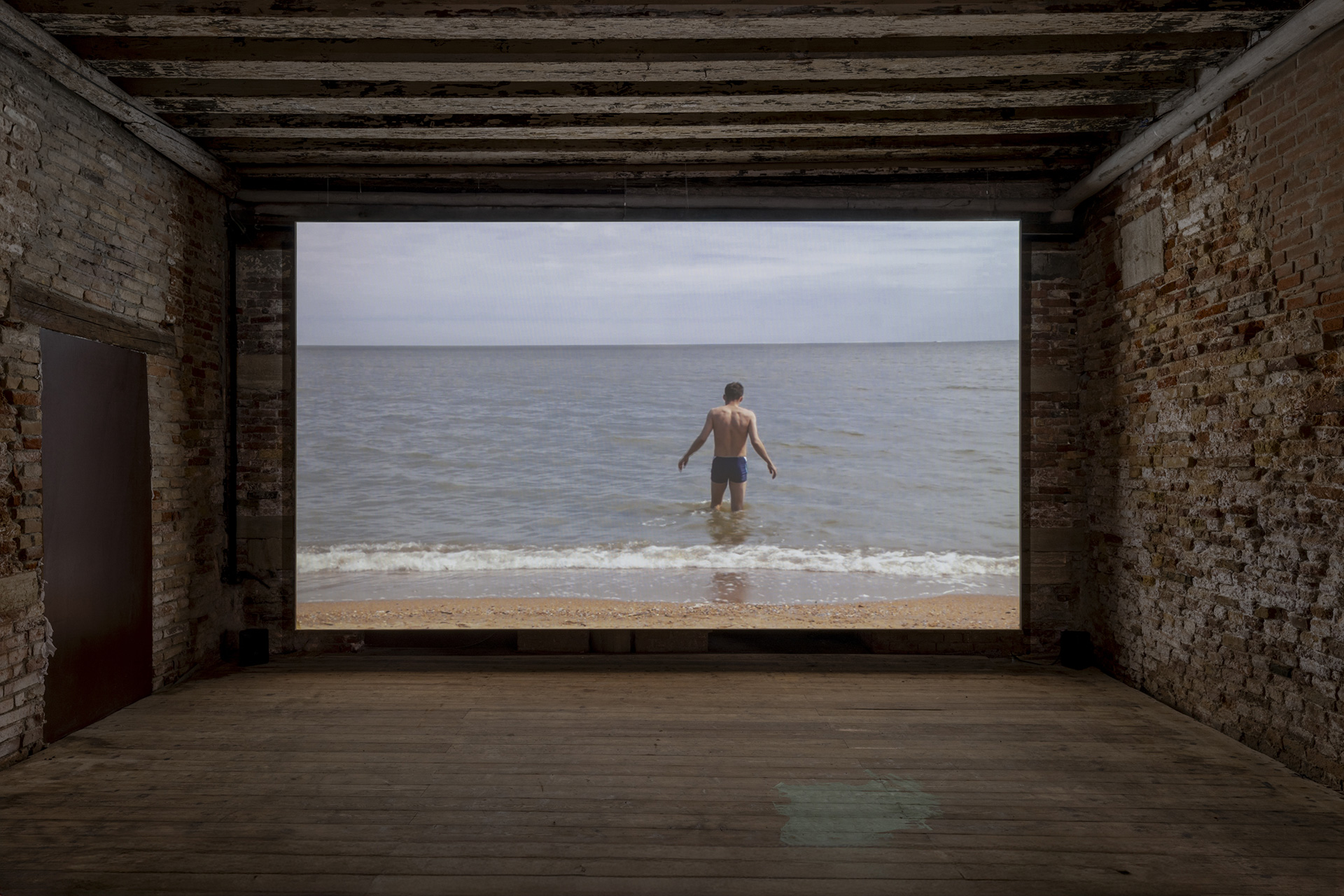
Lesia Vasylchenko’s work combines moving image and a water sculpture. Its name changes daily: 153X are the days of youth the artist’s best friend Yurii has lost to the war. In this sense, the fountain stands as a monument to wartime experience and stolen time that will never return.
The image is an homage to Tetiana Yablonska’s painting “Youth” (1969), which was exhibited at the “This Is Ukraine: Defending Freedom” exhibition organized by the PinchukArtCentre as part of the Venice Biennale in 2022. In both works, the male figure appears in a somewhat liminal space: a small lake seems frozen, and the landscape around it has no clear marks of place or time. The video is almost static, while the water in front of it is moving. Vasylchenko thus conveys a sense of time as experienced by the serviceman who has been in the army since 2022: as if everything has been suspended at the moment the full-scale invasion began; yet, time relentlessly passes, taking with it the youth that he is giving to the war. Observing the installation, the viewer essentially replicates the position of the person in the video, creating a lasting reflection: the same, but stretches over time, across years and days.
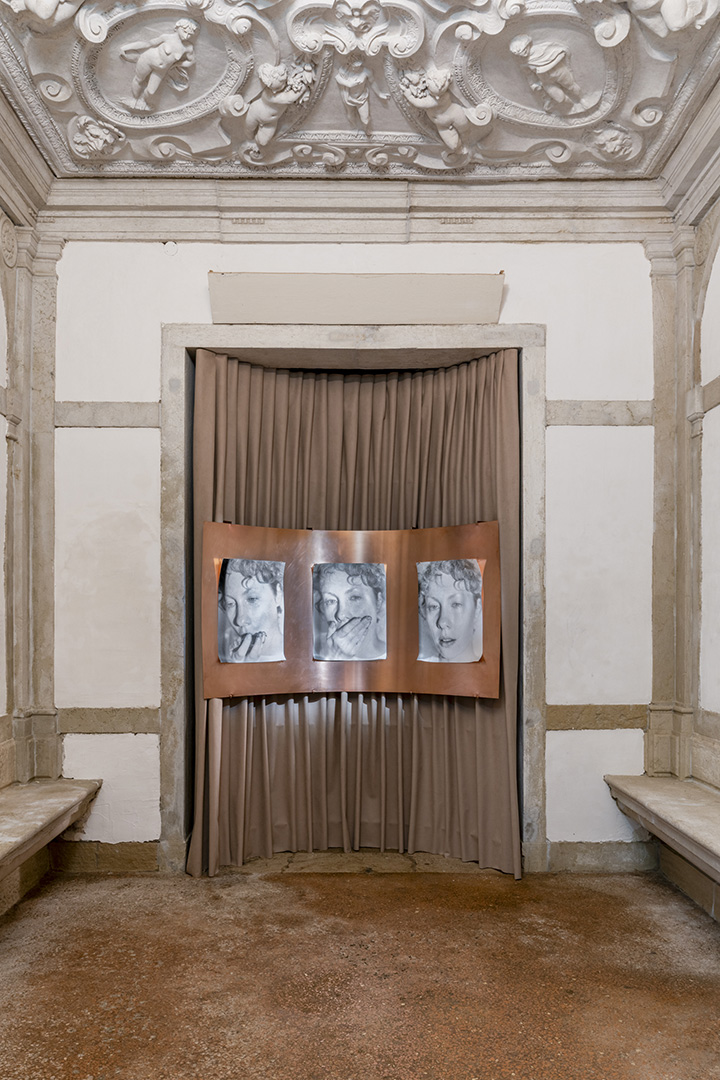
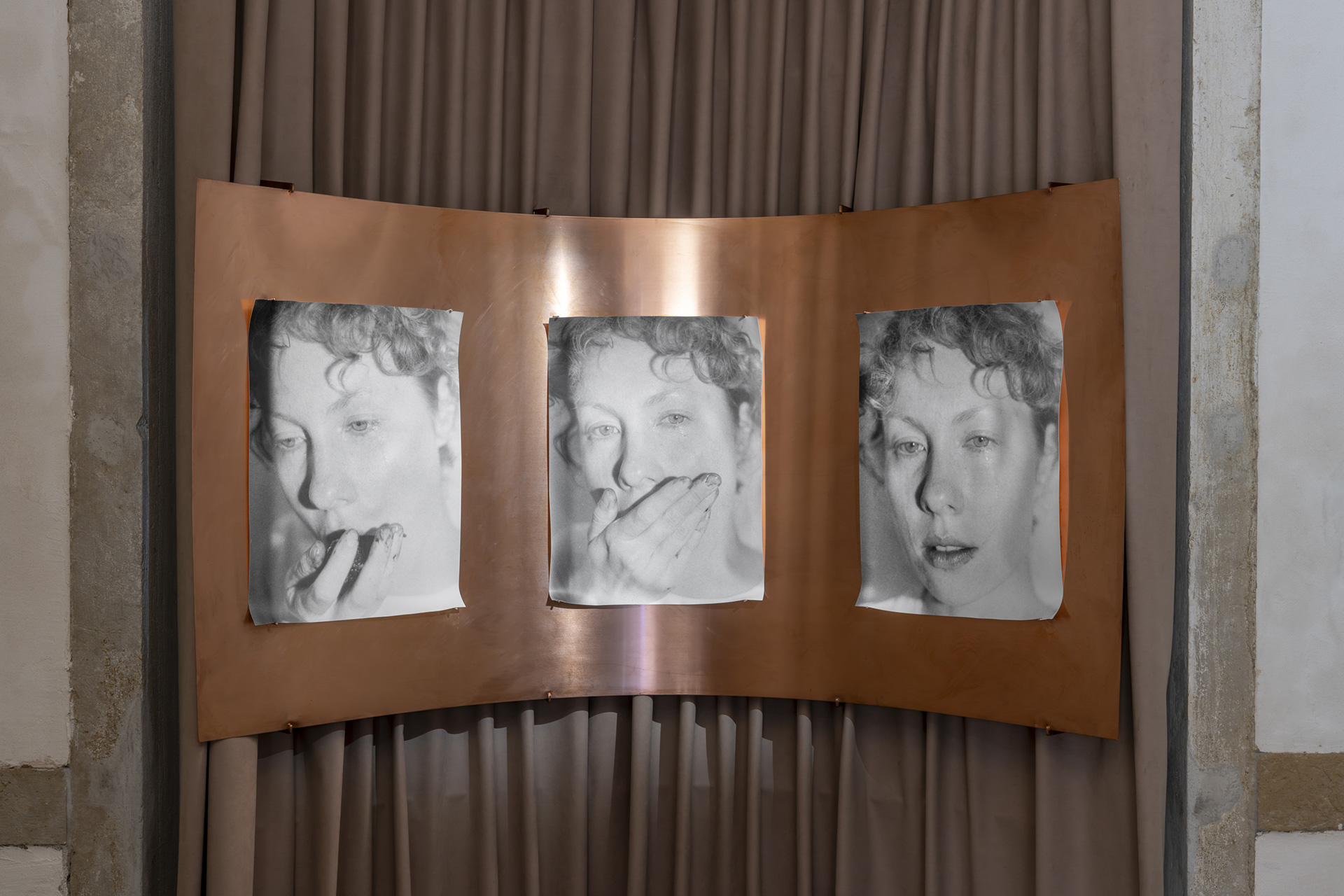
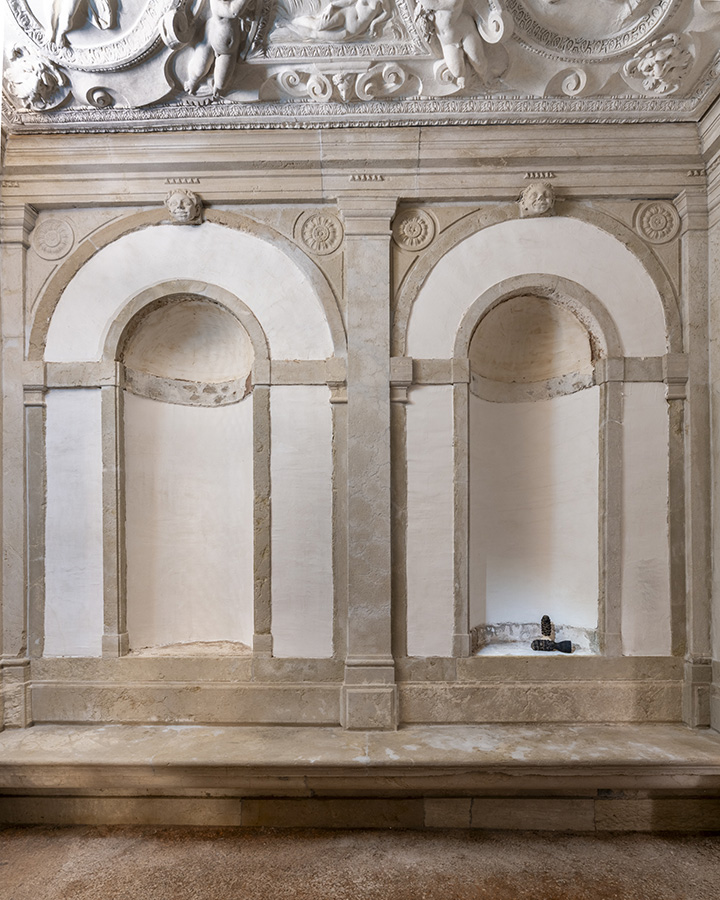
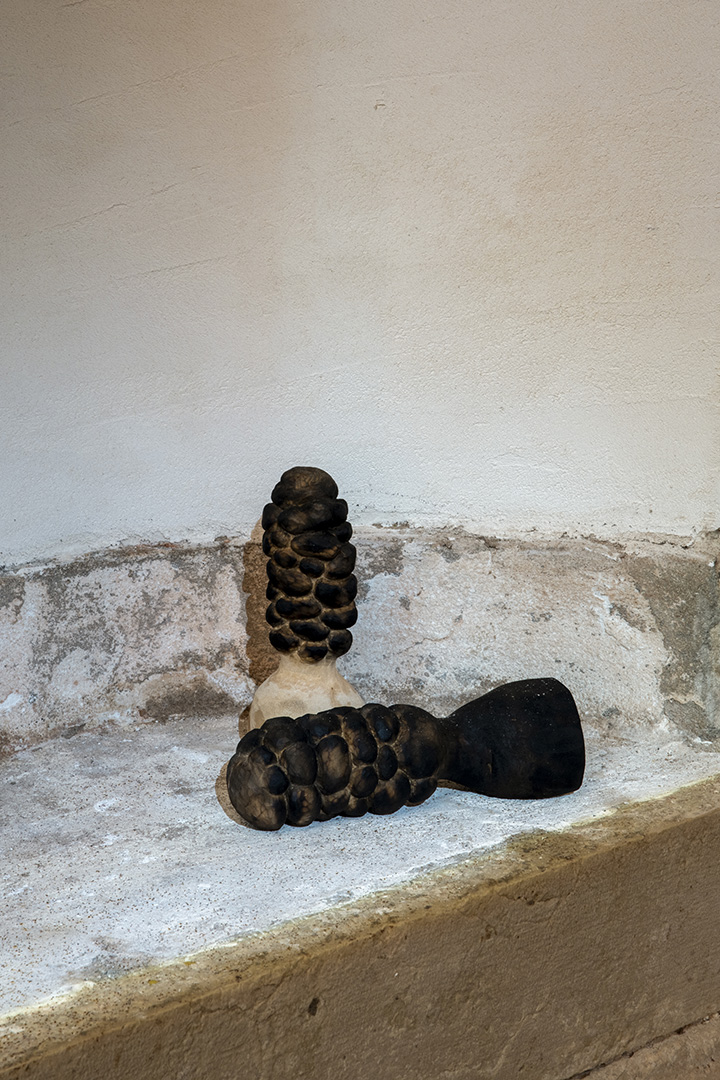
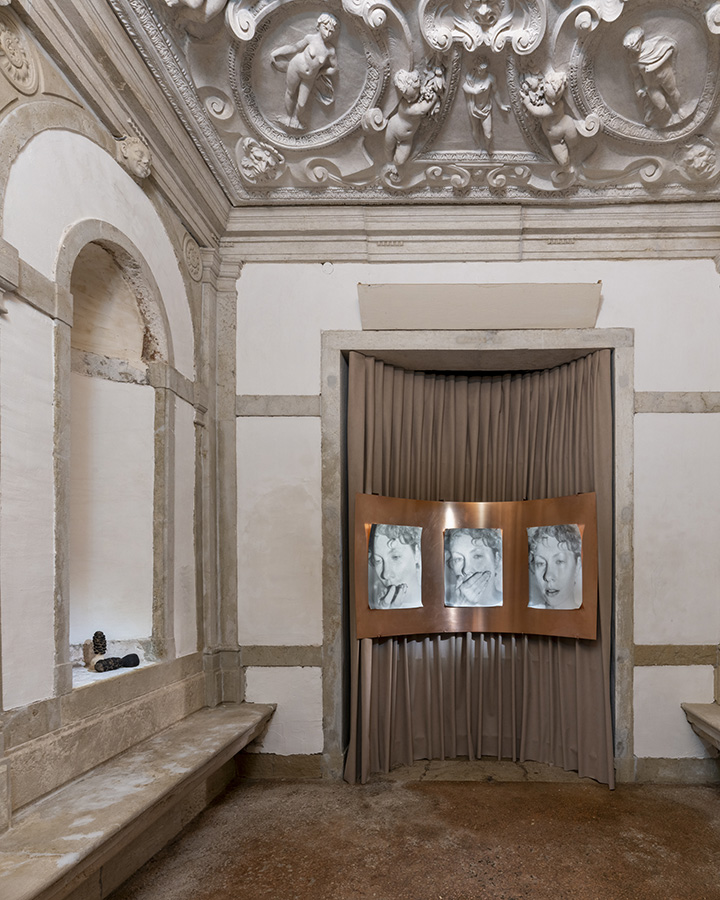
Katya Lesiv’s work I am going home to eat mulberries from the tree grows from a personal attachment to eating berries straight from the tree in a family garden. This became a ritual, with part of the pleasure coming from the long wait for the berries to ripen. Beyond seasonal cycles, the tasting season may be postponed indefinitely because of war, forced displacement, and other life and natural disasters. At the same time, an intention toward pleasure and safety remains within the living body, where the body itself becomes a vessel guided by this intention.
The project is rooted in sensory memory, myth, and the archetypal maternal body. Bringing together performative photography, text, and sculptural objects, the work moves between instruction, spell, and poem. The silver gelatin prints appear as objects, referencing the body within the image while also acquiring a bodily presence themselves. Site-specific installations, accompanied by two wood-carved pieces, unfold two archetypes: morus moros1 and morus mater 2.
1morus moros: doomsberry, slipberry, deathberry
the one who slips from the lips, losing herself. At peak ripeness, warmth, and juice, the mulberry gets lost, loses herself. In the most erotic way, she celebrates her fertility, sharing it with her own ruin.
2morus mater: motherberry
mulberry-mama is wider than me, always is and will be. Her flower and later each segment of the berry is like a cervix. A super-tender, hollow tightness.
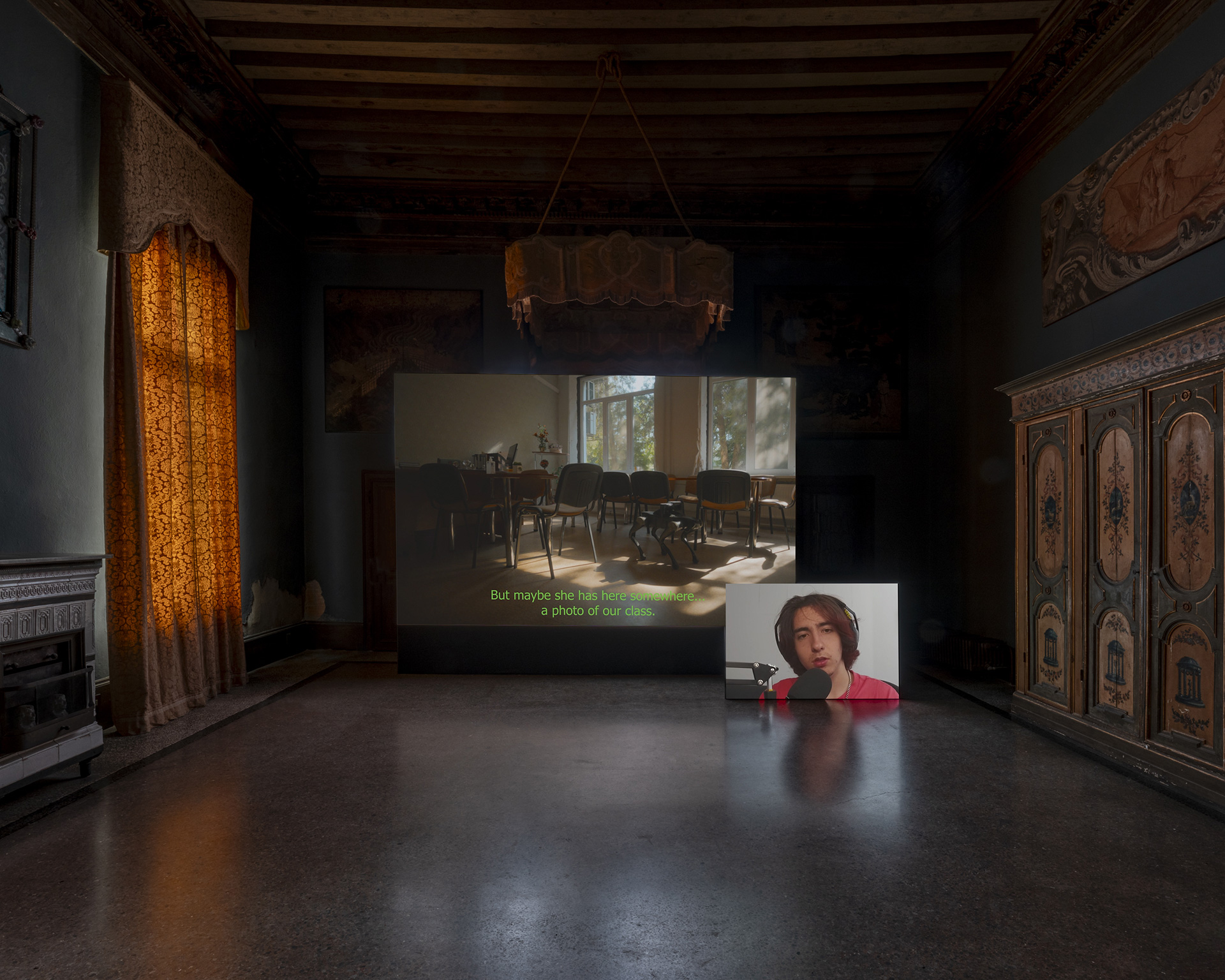
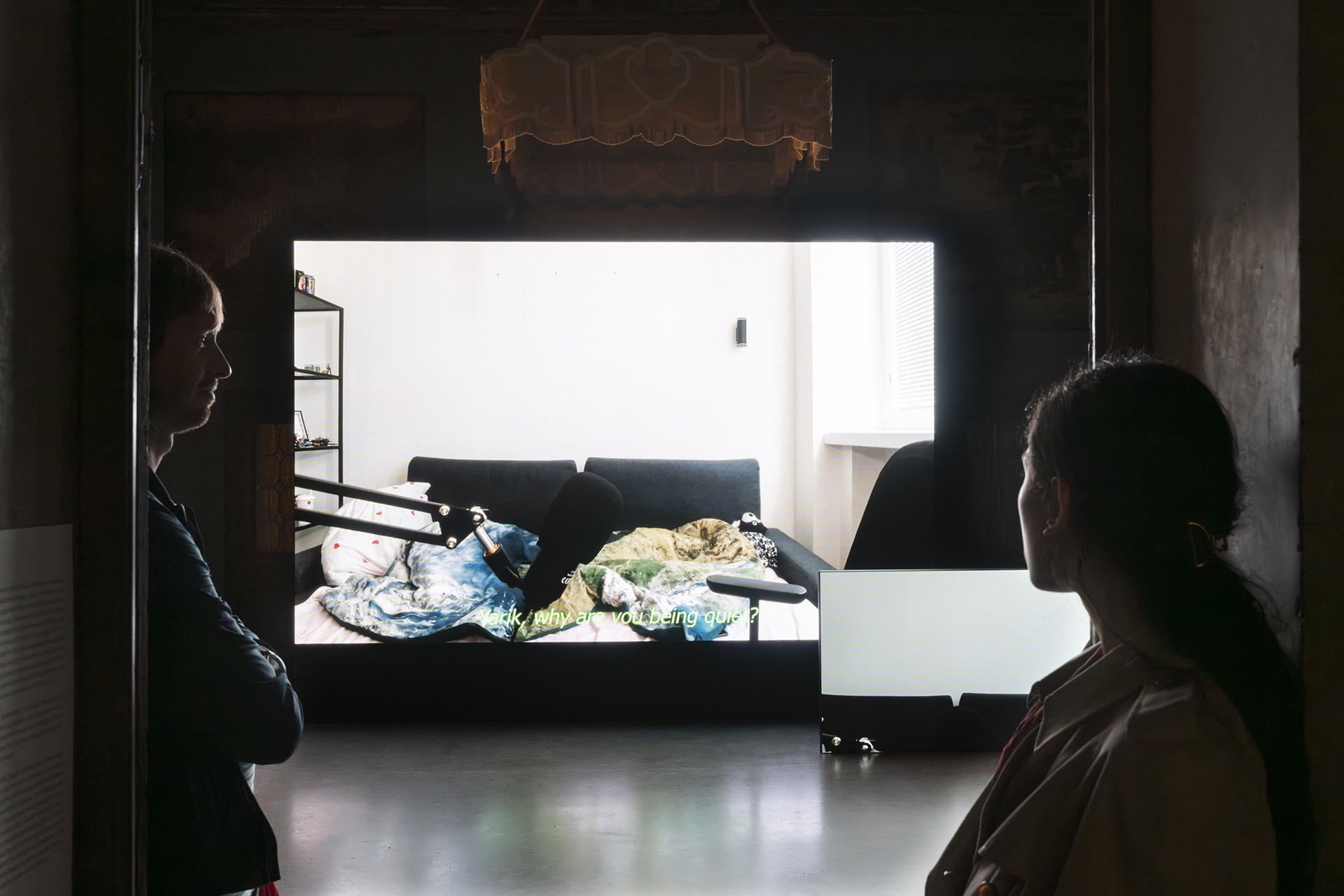
Roman Khimei & Yarema Malashchuk
Open World, 2025
two-channel video with 5.1 sound, 19’8’’
Courtesy of the Artists
Technical support:
Brit Alliance
Burevii, Ukrainian Military Technologie
Commissioned by:
RIBBON International and TBA21–Thyssen-Bornemisza Art Contemporary for Ljubljana Biennale of Graphic Arts
Co-commissioned by:
Pontevedra Art Biennial
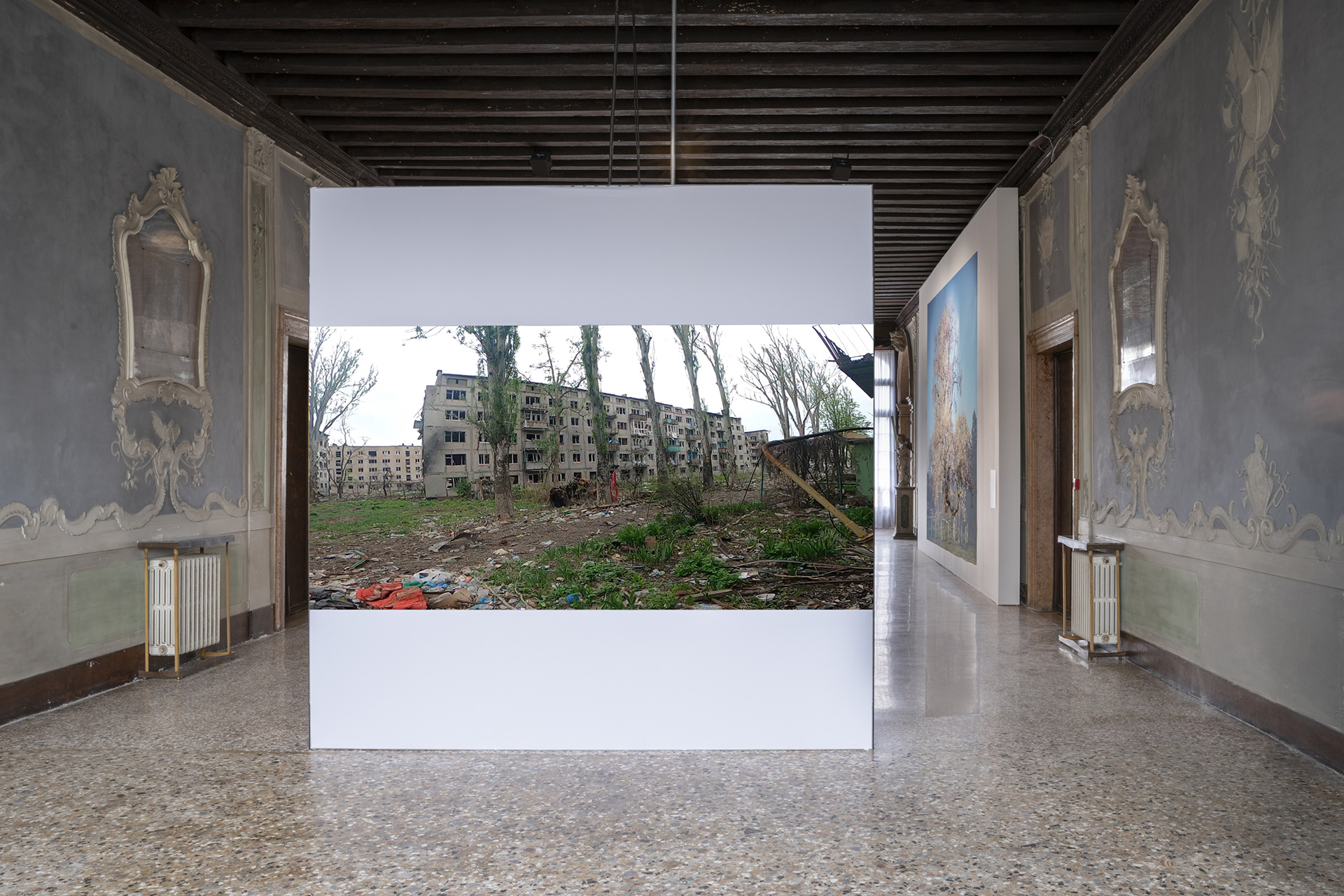
In Open World, Yarema Malashchuk and Roman Khimei invite a boy to remotely walk through his native city with the help of a robotic dog. Yaroslav left Zaporizhzhia, which is constantly under Russian shelling, and now lives in Poland. In the video, he finds himself in his half-destroyed school, wandering along the waterfront, talking to locals, playing with his cat at home, and chatting with his mother, all through the optics, voice, and mechanics of a robot.
The technology, originally developed for military purposes and hazardous tasks, has become a way to partially return to a home that is becoming ever more difficult to reach.
The title, Open World, refers to the video game genre where the player can move through the virtual environment with almost no restrictions. Similarly, a robotic dog enables one to roam freely through the real environment. But to what extent can corporal presence be reproduced? Is it possible to touch or smell one’s home from a distance? By raising these questions, the artwork shows how technologies become mediators of personal experience.
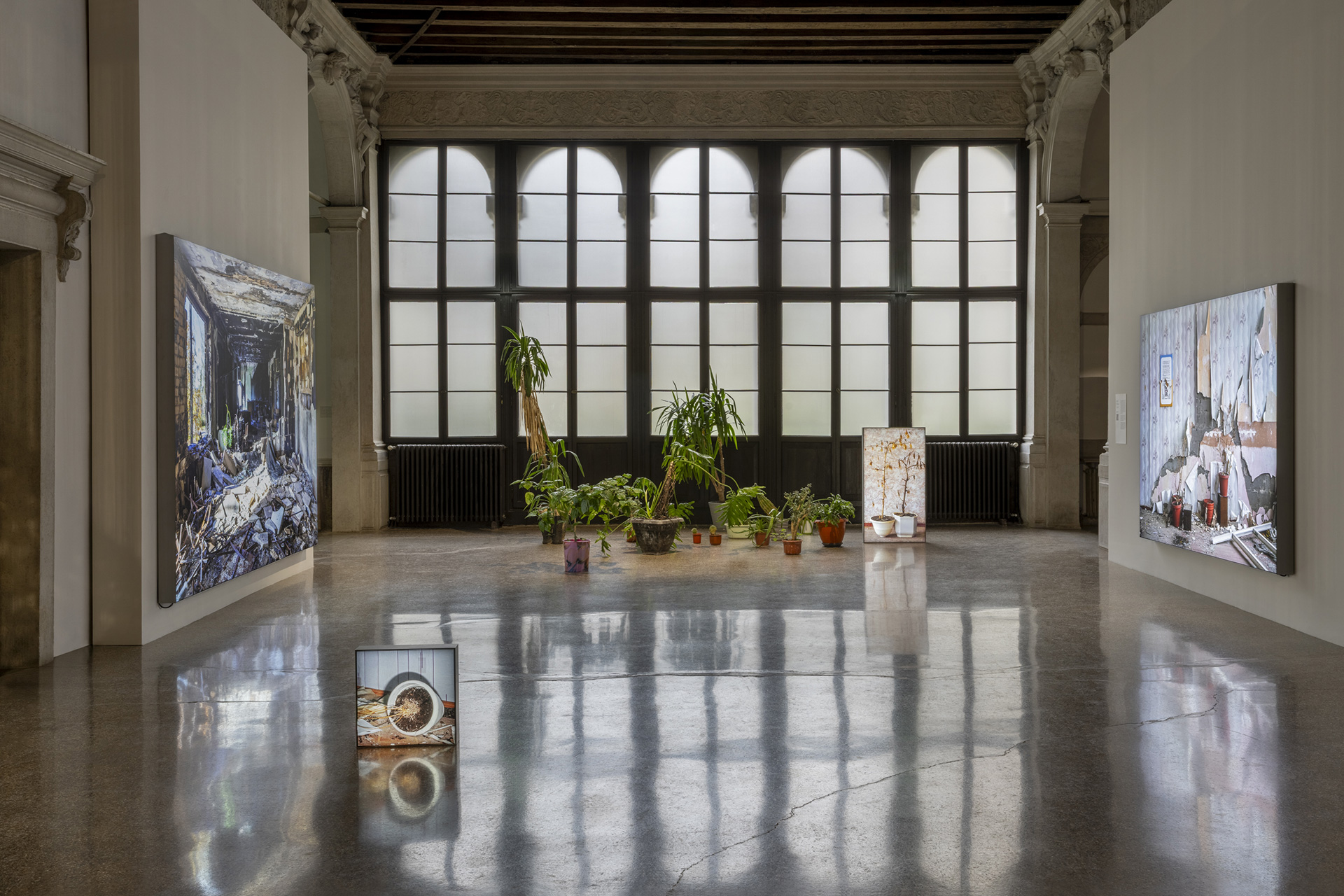
Zhanna Kadyrova
Refugees, 2023
plants, digital print in lightbox frames, variable dimensions
Courtesy of the Artist and GALLERIA CONTINUA
For her work Refugees, the artist collects plants from across Ukraine that survived Russian shelling of civilian infrastructure. Rescued from schools, libraries, and clinics, these plants are often charred or damaged by explosions. Kadyrova brings these living organisms to safe locations and provides them with temporary shelter at exhibitions. They remain alive, though the journey and adaptation to new environments are never easy.
In this way, the project transforms museums and exhibition spaces into places of care, offering refuge to witnesses of war. Will they find a permanent home? How long will they remain on the road?
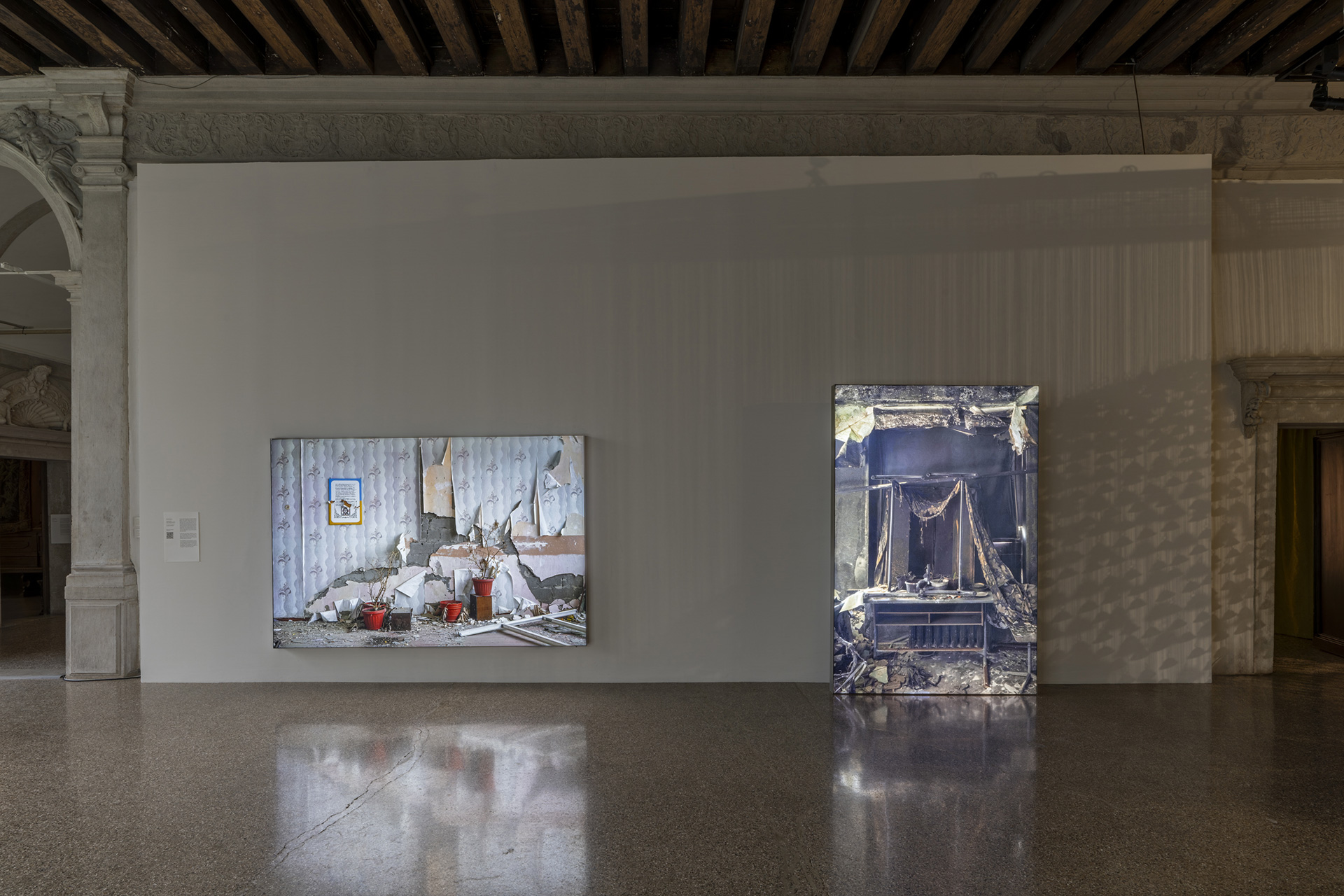
The installation is accompanied by photos of surviving plants set against the backdrop of their destroyed homes. The artist draws on classic still life paintings and modern photography, immortalizing the history of “refugees” through their “portraits.”
Janet Cardiff & George Bures Miller
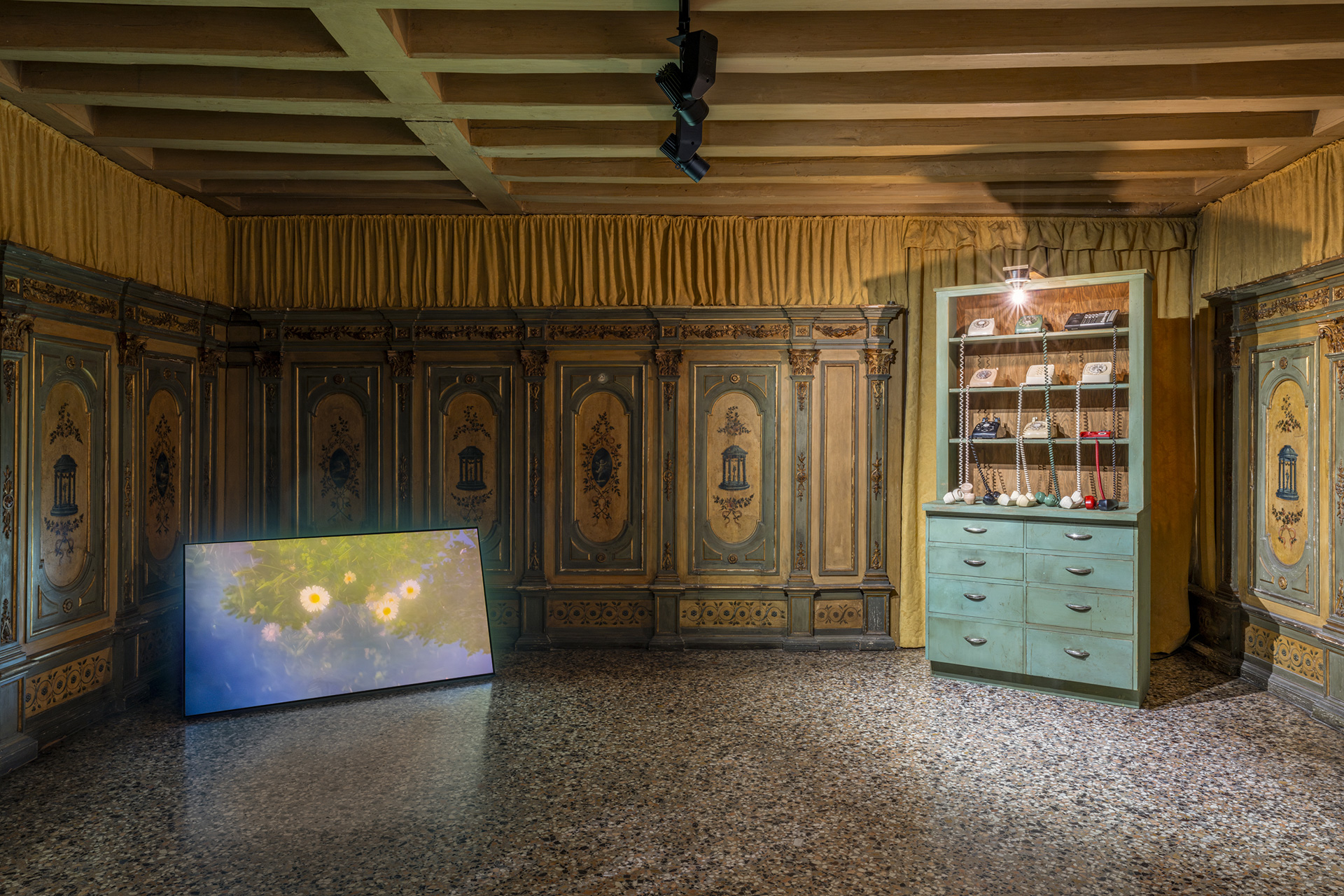
Clouds, River, Floating from Contemplation Videos series, 2026
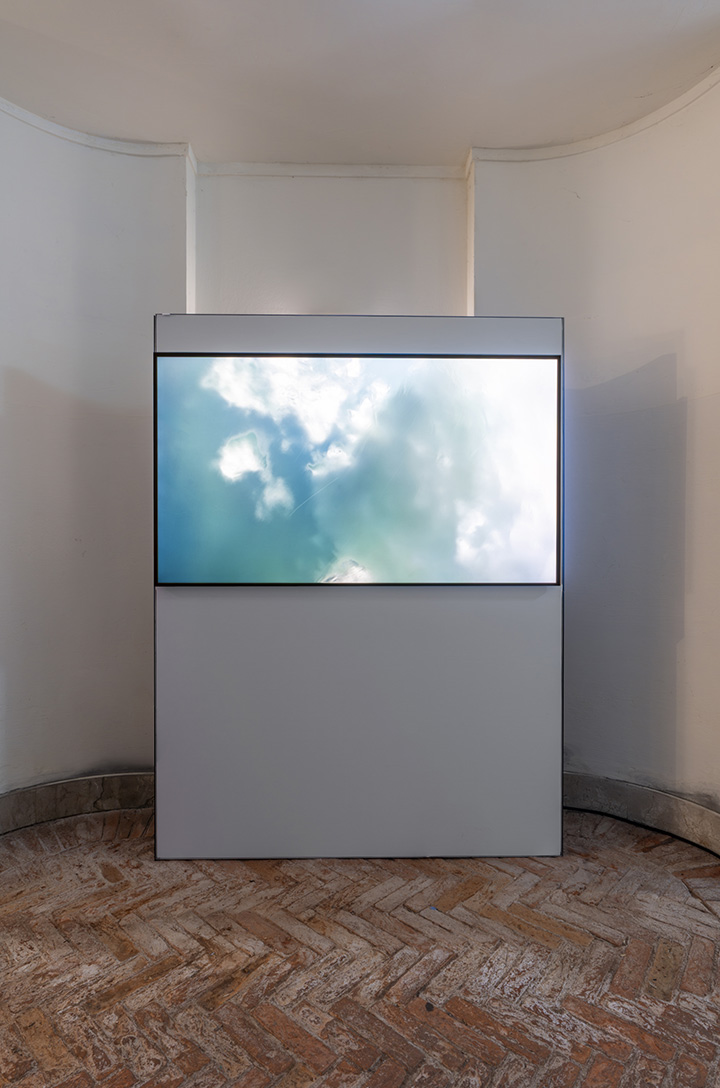
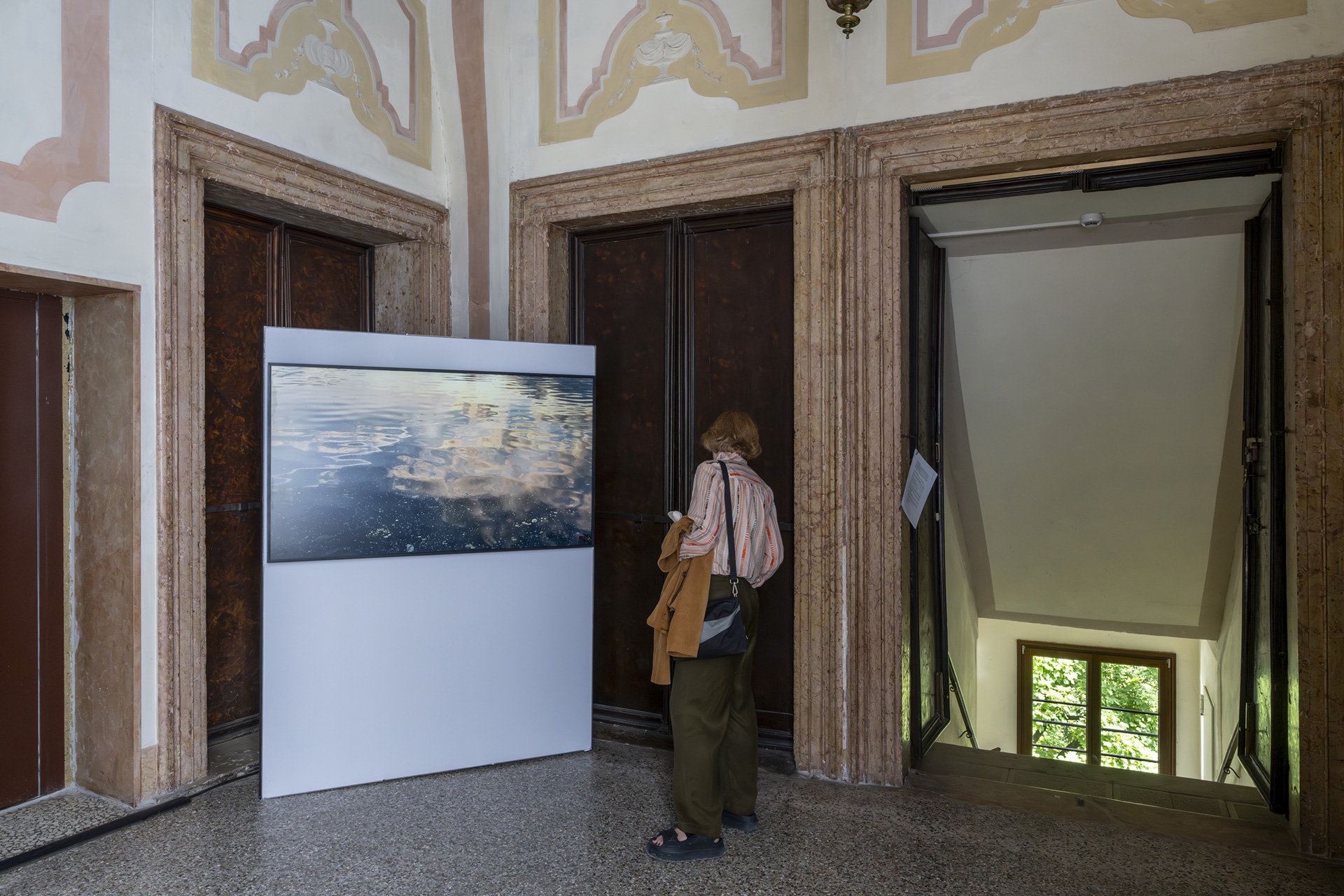
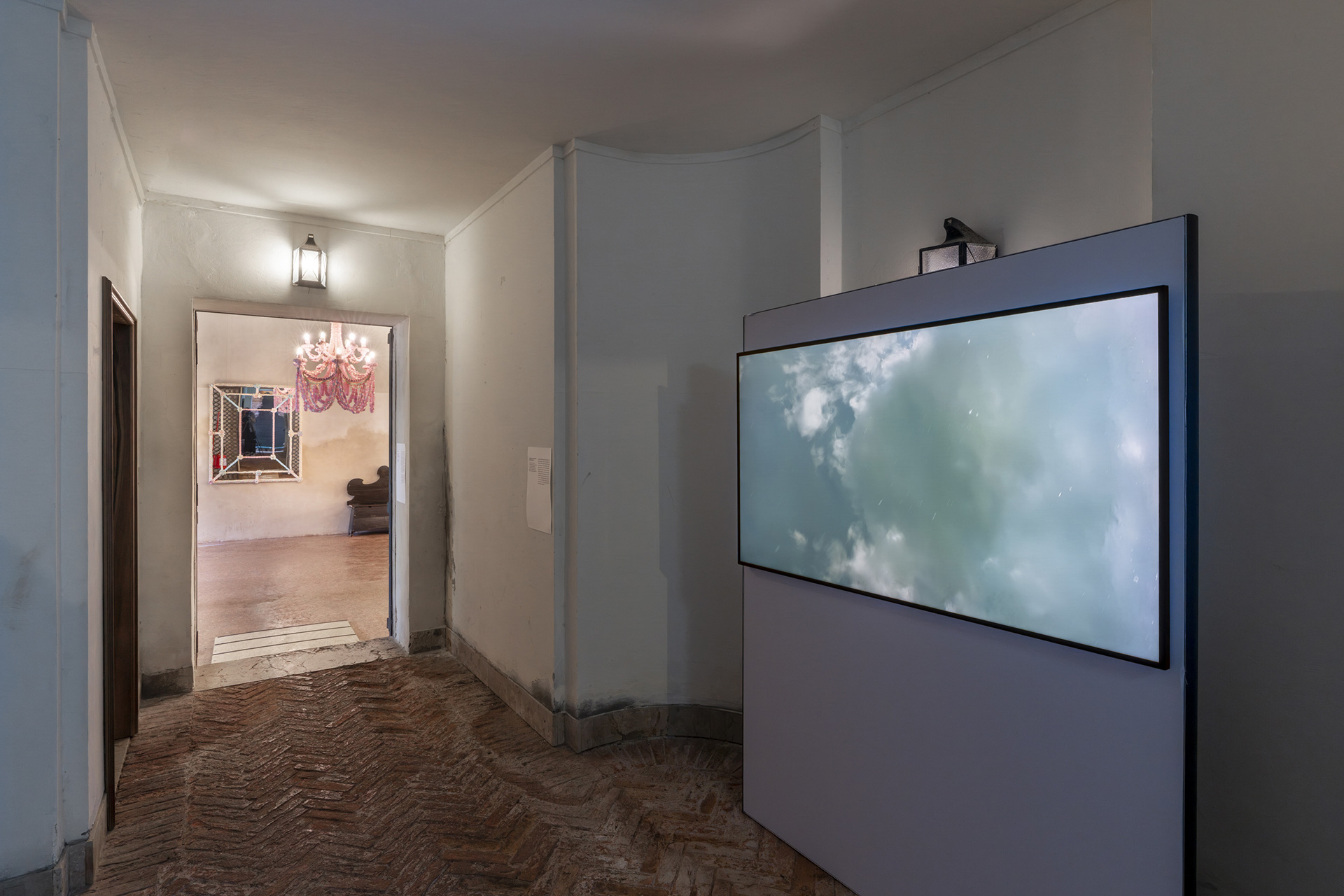
Ashfika Rahman
Than Para — No Land Without Us
2025 – ongoing
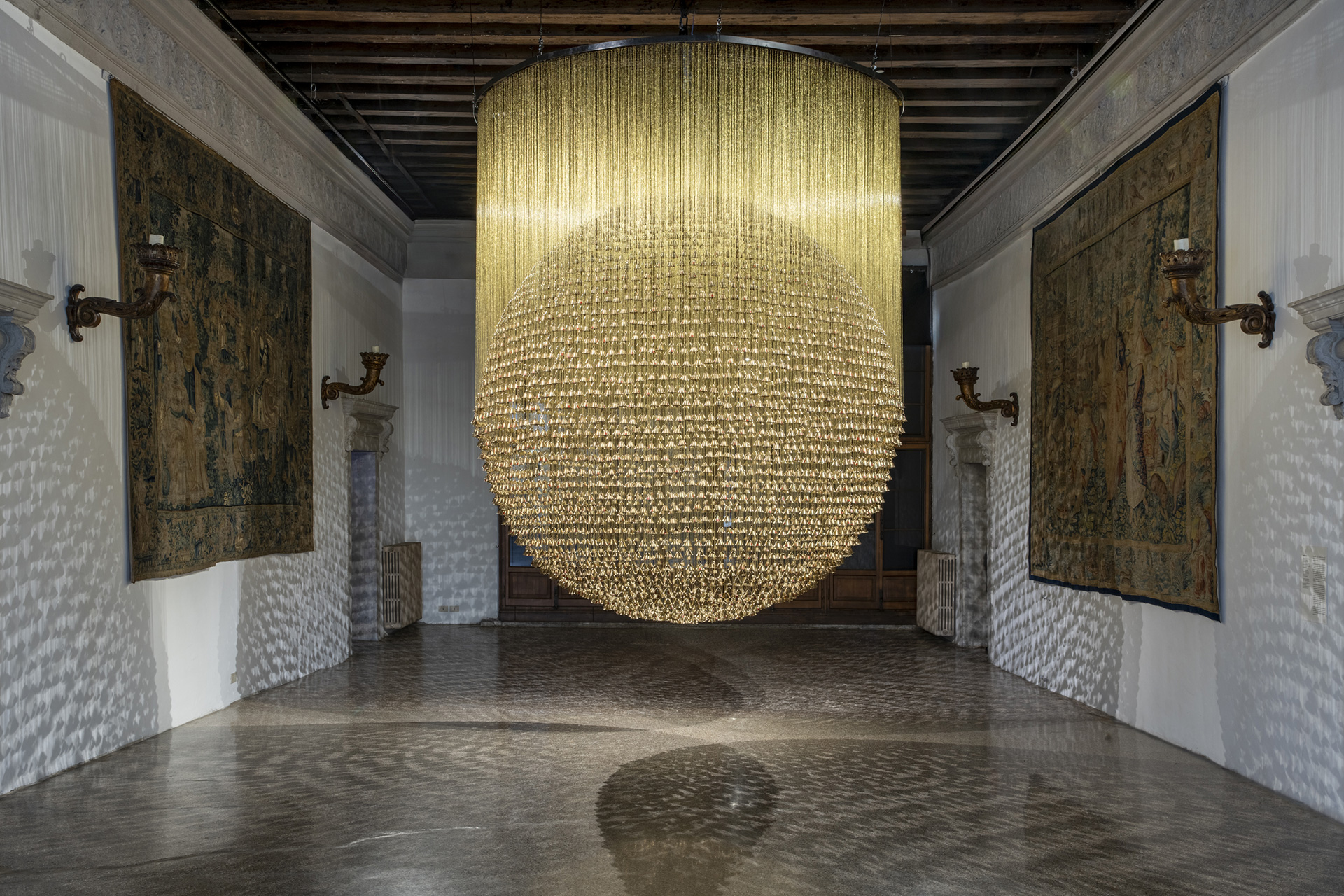
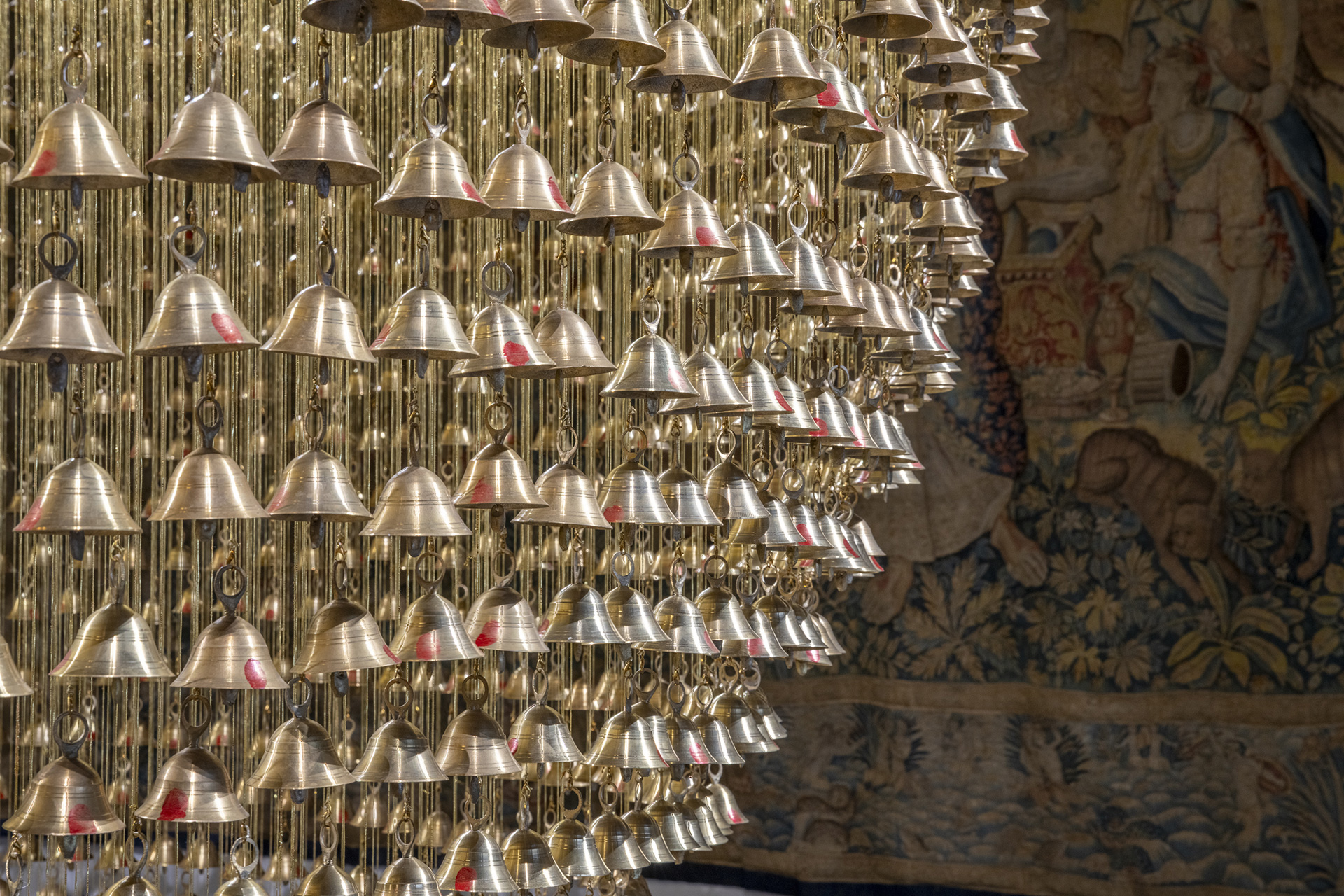
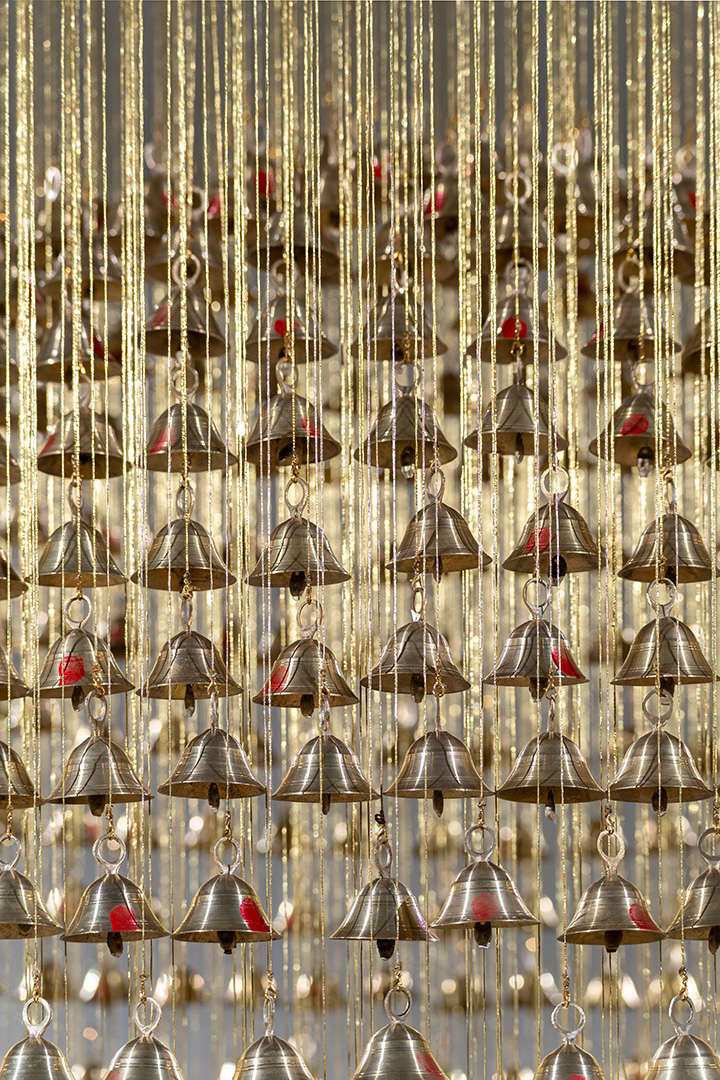
installation with 4,849 temple bells (brass) bearing collected thumbprints from the community, golden silk threads, and metal frame
Courtesy of the artist, in collaboration with the community of Than Para and the Chittagong Hill Tracts, Bangladesh.
Support team: Md Sabbir Newaz, Rasel Chowdhury, Tanji Kun, Tufan Bubu, Oishik Sarker, Mahdi Ahsan Rafi and team.
Produced with the support of PinchukArtCentre
Than Para — No Land Without Us is a work that embodies the unity of hundreds of people who lost their homes.
The Chittagong Hill Tracts, a conflict-affected border region of Bangladesh, is home to about eleven Indigenous ethnic communities who have lived in the region for centuries. The residents of the region differ from the majority of the country’s Bengali-Muslim population in their language, religion, and culture. The state appropriated the lands of indigenous peoples for industrial development and elite resorts.
Rahman invites these individuals, many of whom do not possess identity documents, to leave their fingerprints on separate temple bells, as if confirming their identity. In Hindu and Buddhist traditions, such bells are used to draw the attention of deities to the presence of believers. Thus, an installation that can resonate softly with the movement of air, becomes a call and a shimmering affirmation of the community and its right to identity and space.
At the same time, the work embodies a monument to displaced people worldwide. Does a person lose their connection to home after displacement? In Rahman’s work, it endures.
Gabrielle Goliath
Personal Accounts (a quiet rush), 2025
11-channel video and sound installation, variable duration
Courtesy of the Artist
Produced with the support of the PinchukArtCentre
To read participant`s offerings:
In Personal Accounts (a quiet rush), 11 women, queer and trans people from Ukraine share stories about their experiences of violence, trauma and healing. The Kyiv chapter features, among its participants, people who serve in the military, defending Ukraine. The video shows the pauses between words, sighs, and gestures — unique manifestations of each individual’s life. The stories themselves are not publicized so the participants feel safe and freely share something highly personal.
The participants have faced patriarchal violence at the physical, mental, and systemic levels at school, in their families, in church, at work, in the army, and even within queer communities. At the same time, these statements always express a desire to see a Ukraine where one can love freely. In this work, freedom and equality regardless of identity emerge as values just as much worth fighting for as the right to national self-determination.
Each video is also accompanied by the participants’ offerings: texts about their own path, practices of surviving and healing, poems, playlists, recipes, and artworks. By sharing their experiences with the world, these people rise above the trauma they have suffered. They heal and offer others a chance for healing.
Tacita Dean
If I Were at the Adlon, 2025
16mm colour film, optical sound, 39 ¼ minutes
Courtesy of the Artist
If I Were in the Adlon, 2025 is a 16mm film by Tacita Dean about Ukrainian artist Borys Mykhailov and his wife, Vita Mykhailova about an August afternoon spent together in the Adlon Hotel in Berlin. The artist has known the Mykhailovs for many years and had always wished to film them. She was then offered a voucher for ‘a night in the Adlon’ that a friend had won in a tombola and the scene was set. The Adlon Hotel has a long history. Built at the beginning of the 20th century, it survived World War II but ended up in DDR when the Wall was built. It therefore became the perfect place for the Mykhailovs to be portrayed being Ukrainian but born in the Soviet Union and now living in effective exile in Berlin. The film becomes an intimate portrait of the couple, revealing the humour and tenderness in their relationship and the way they work together. The hotel room with its view over the Brandenburg Gate also plays a role in this profoundly moving testament to love, marriage and art.
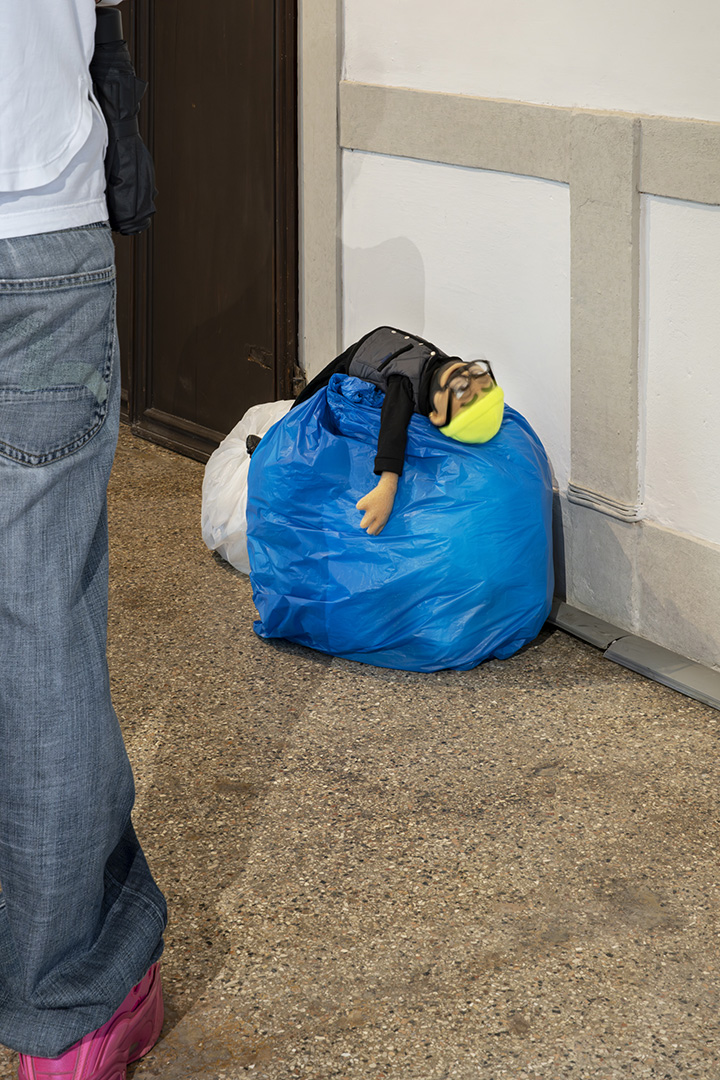
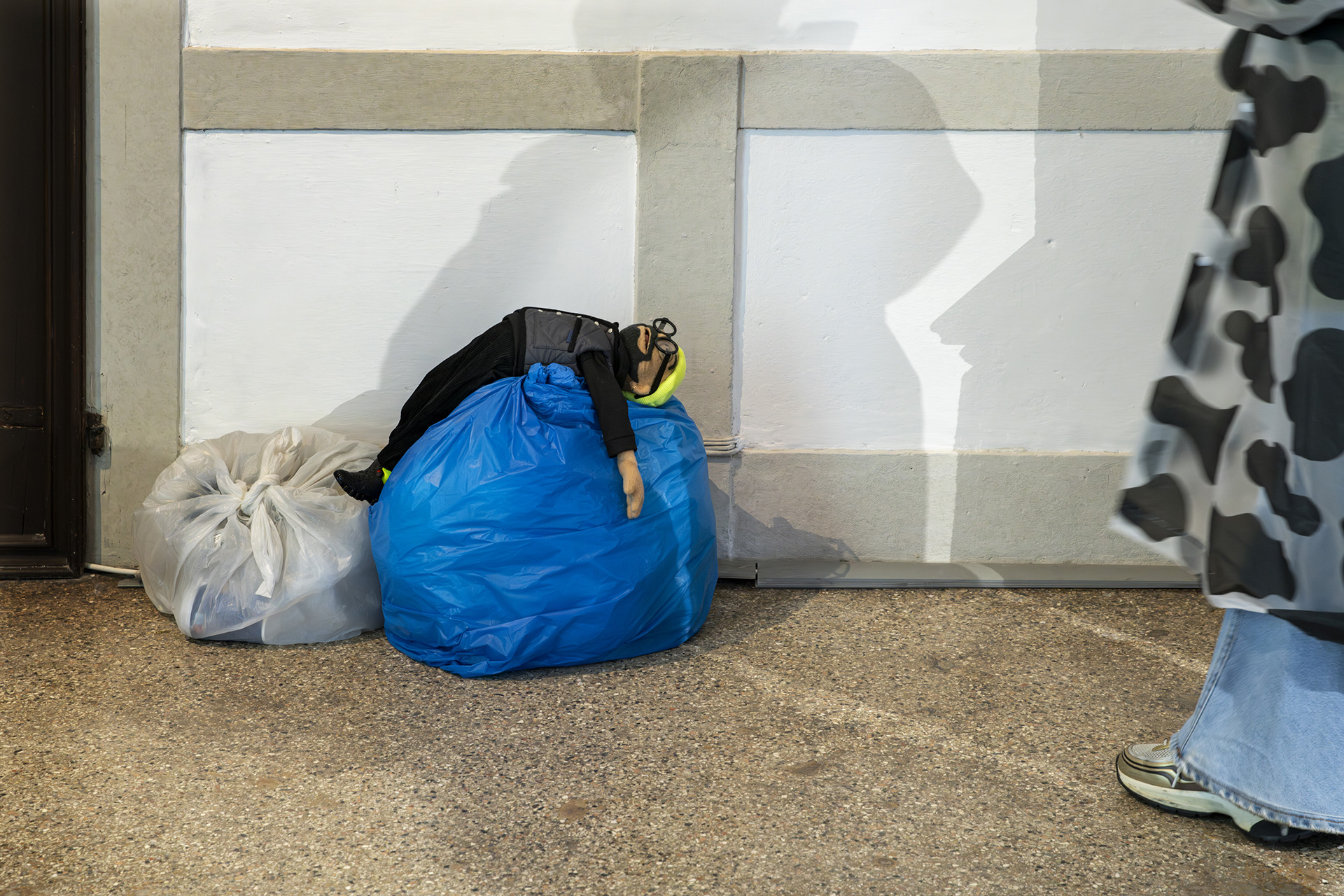
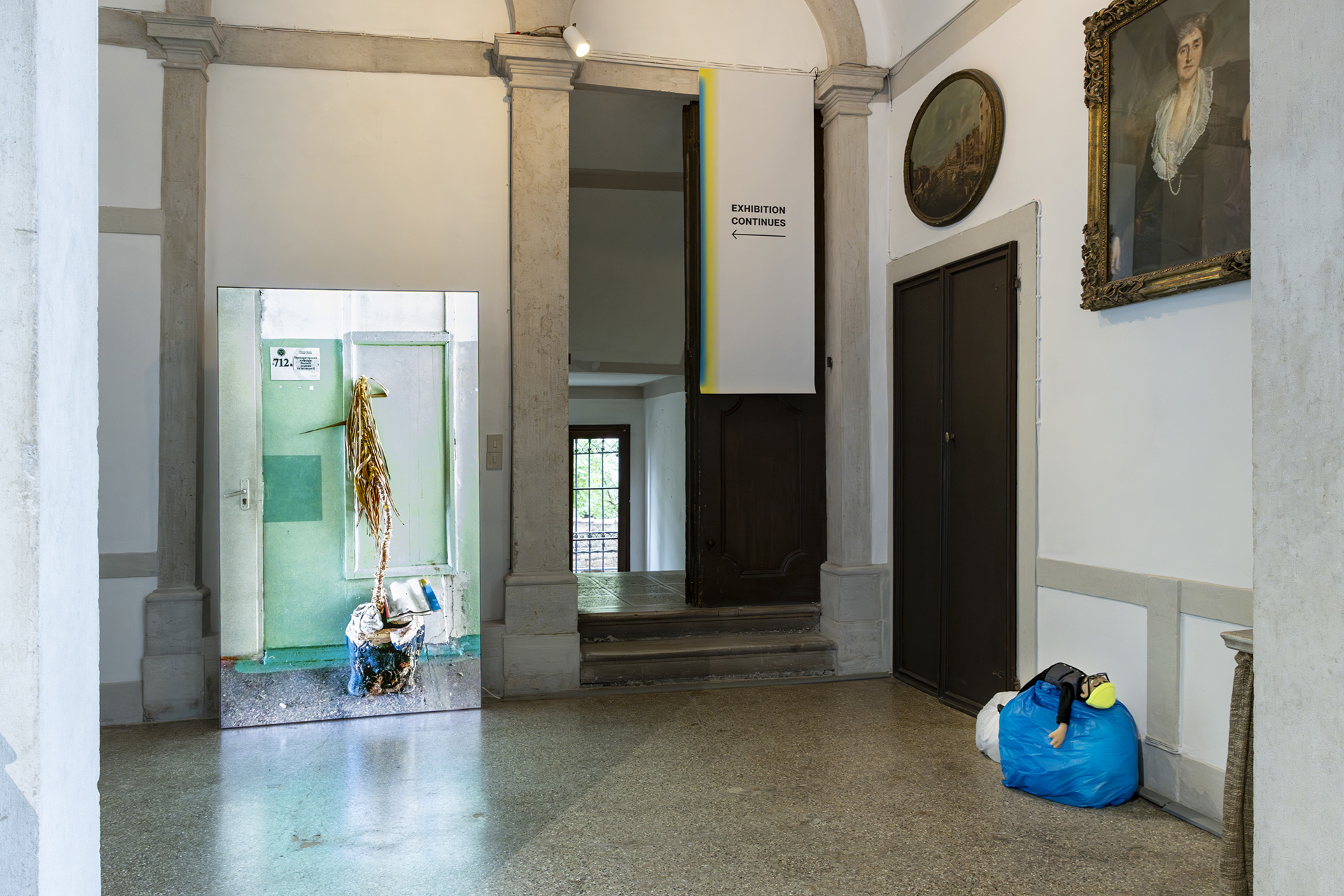
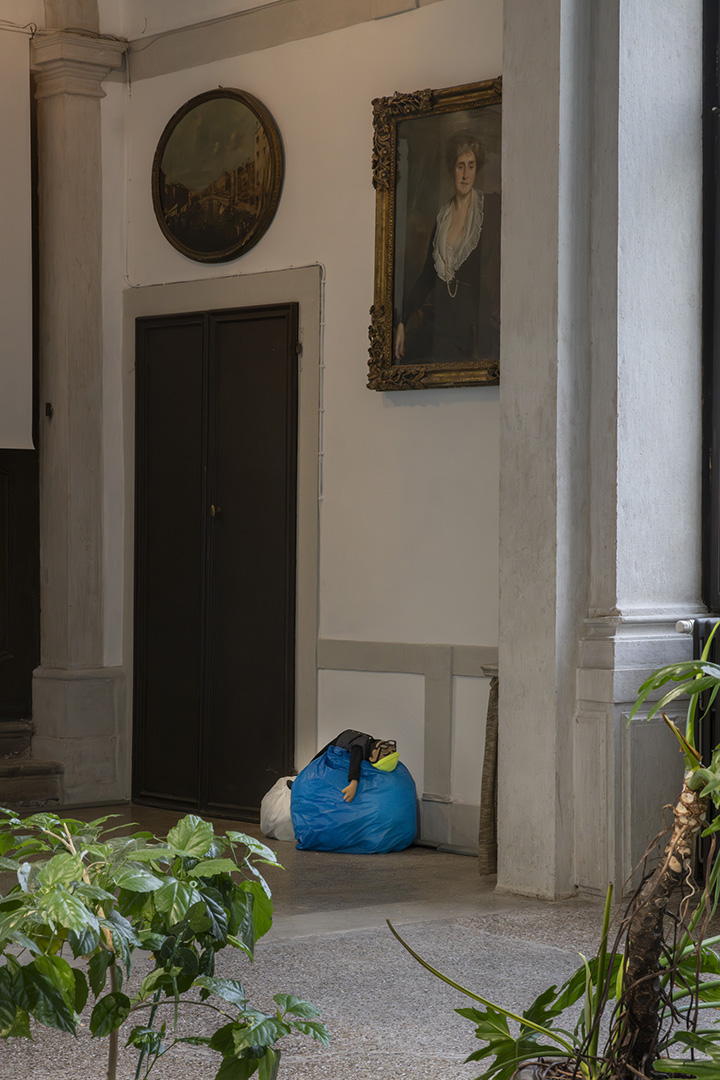
Ryan Gander
Hope Is a Discipline – An Apology (They Will Only Encourage you to Perform the Script), 2026
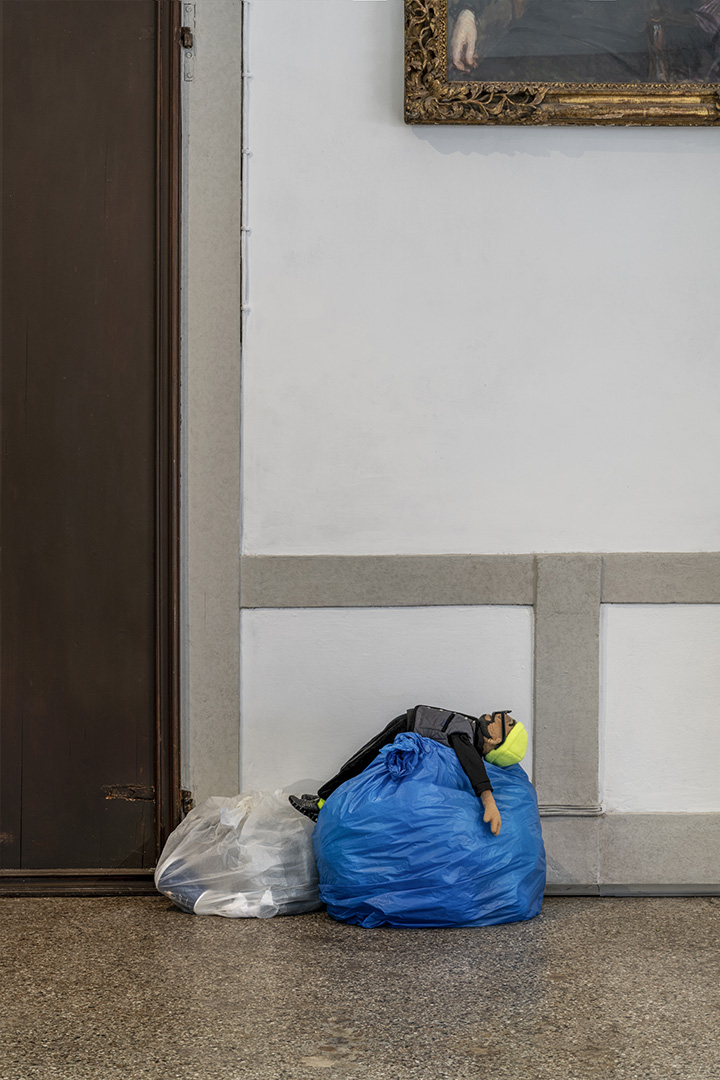
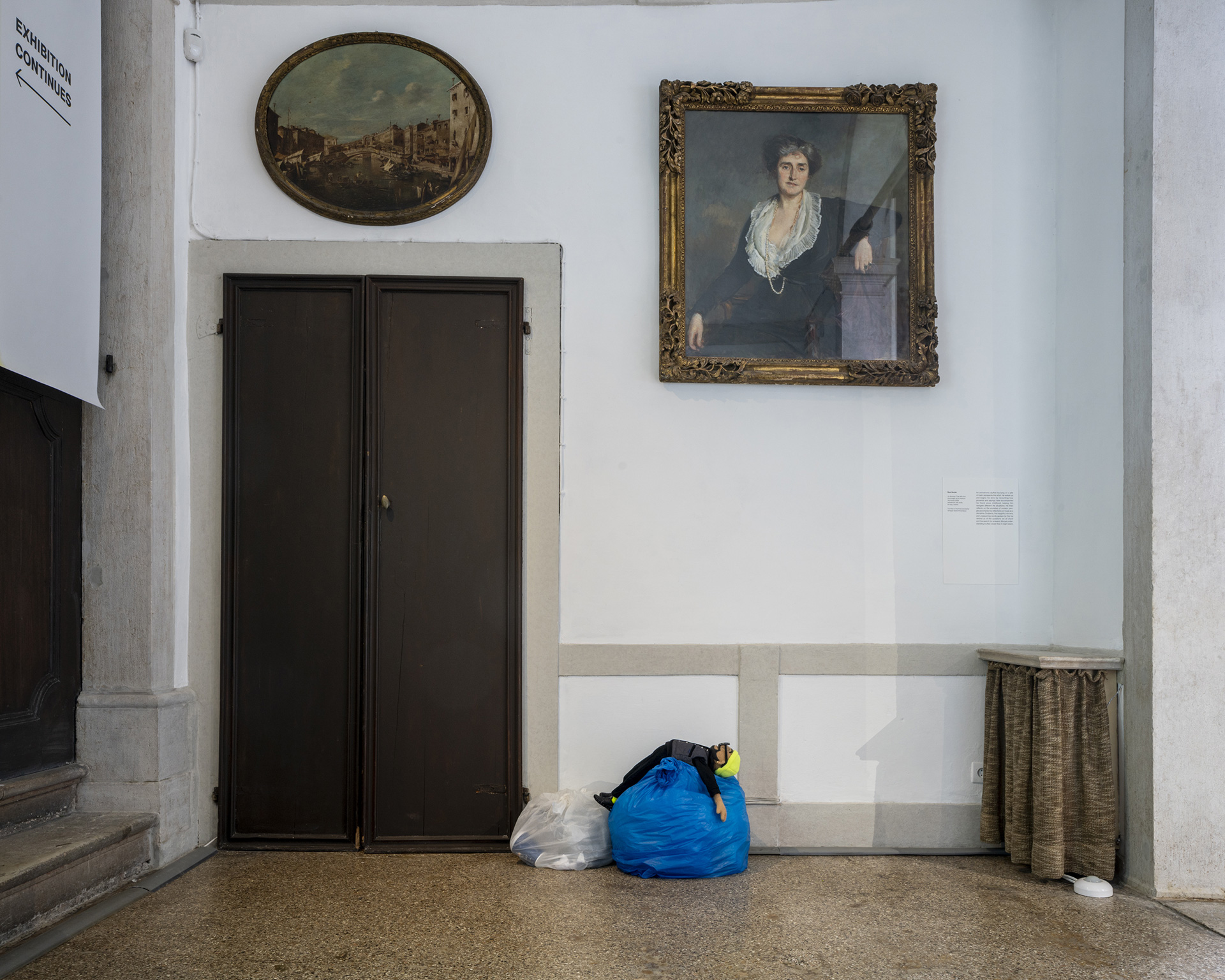
animatronic doll, audio, bin bag, rubbish
Courtesy of the Artist and Esther Schipper Berlin/Paris/Seoul
An animatronic stuffed toy lying on a pile of trash represents the artist. He wakes up and begins his story by recounting how proverbs and sayings have accompanied his friend since childhood, helping him navigate different life situations. He then reflects on the anxieties of modern people and shares his reflections on hope as a discipline. Suddenly, the insightful, sincere, and unassuming words spoken by the toy remind us of the questions we all share and the search for answers. Mutual understanding is often closer than it might seem.
Álvaro Urbano
Disobedience After Hilma af Klint (Kalyna), 2026
metal, paint, UV resin on glass, fabric
Composed of the sculptural elements:
2 plants, 12 leaves, 1 cigarette butt,
variable dimensions
Courtesy of the Artist, ChertLüdde (Berlin), Travesía Cuatro (Madrid, Mexico City, Guadalajara), Marian Goodman Gallery (New York, Los Angeles, Paris)
Produced with the support of PinchukArtCentre
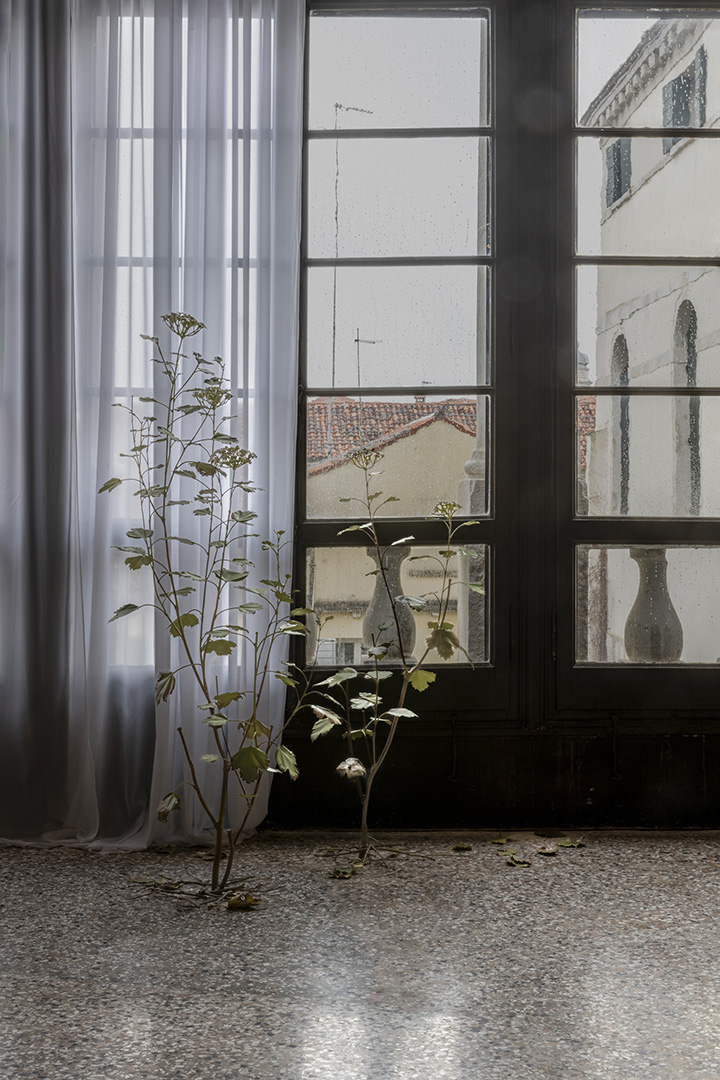
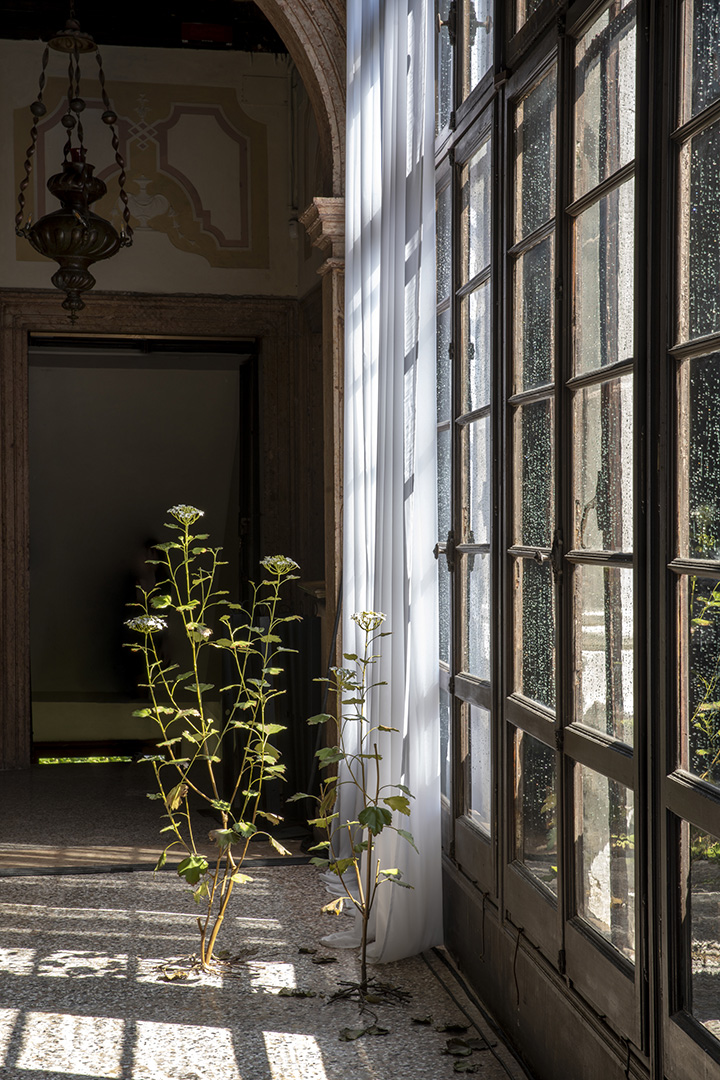
On the second floor of the palazzo, Álvaro Urbano stages an unlikely situation: two blooming kalyna plants (Viburnum opulus) thrive within the gallery’s architecture. Though they appear to have sprouted from the floorboards, these plants are meticulously crafted from metal and handpainted. A sculptural gesture that provides permanence to a fleeting moment.
In this setting, Urbano utilizes the kalyna as a narrative vessel to explore the intersection of botany and resilience. While the plant is deeply embedded in Ukrainian folklore, literature, and oral history — where its red berries typically convey social and geographical belonging — Urbano reimagines its form to communicate the weight of current affairs. By rendering the plants with white spring blooms rather than their characteristic red berries, the artist shifts the focus towards the future, transmitting a sentiment of tenacity, anticipation, and hope.
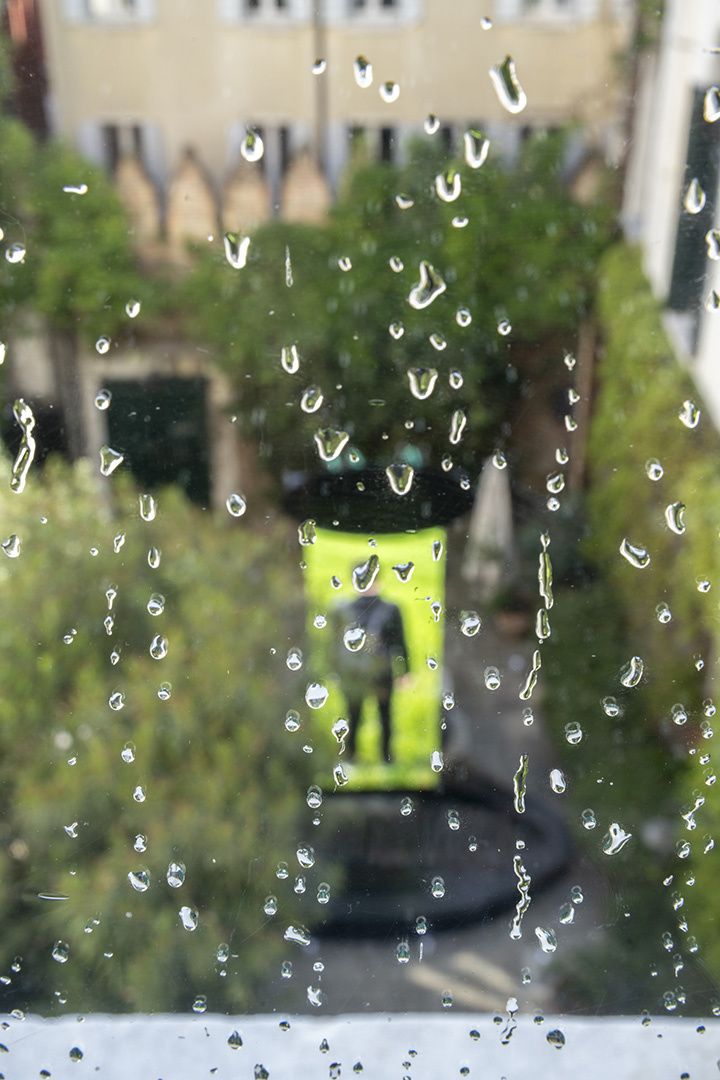
This sense of arrested time extends to another element of Urbano’s installation, where raindrops have stopped while running down the windows of the exhibition space. Suspended in a single moment, they prolong this instant for the entire summer, fracturing the temporality of the installation with what can be seen outside, making the sunny days to appear even brighter. In a world where experiencing nature in its organic fullness is often not an option, these sculptures serve as botanical symbols of endurance.
Alevtina Kakhidze
Joy, 2026
chair, table, mirror, certificate, tattoo ink, digital print on fabric and paper
Courtesy of the Artist
Produced with the support of PinchukArtCentre
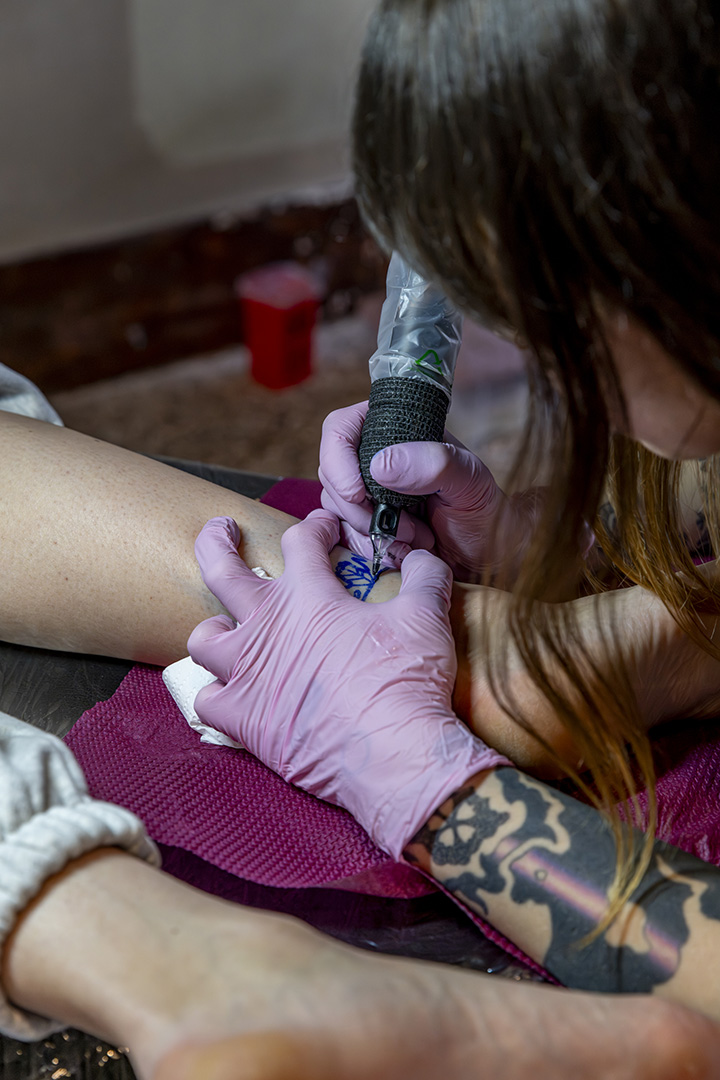
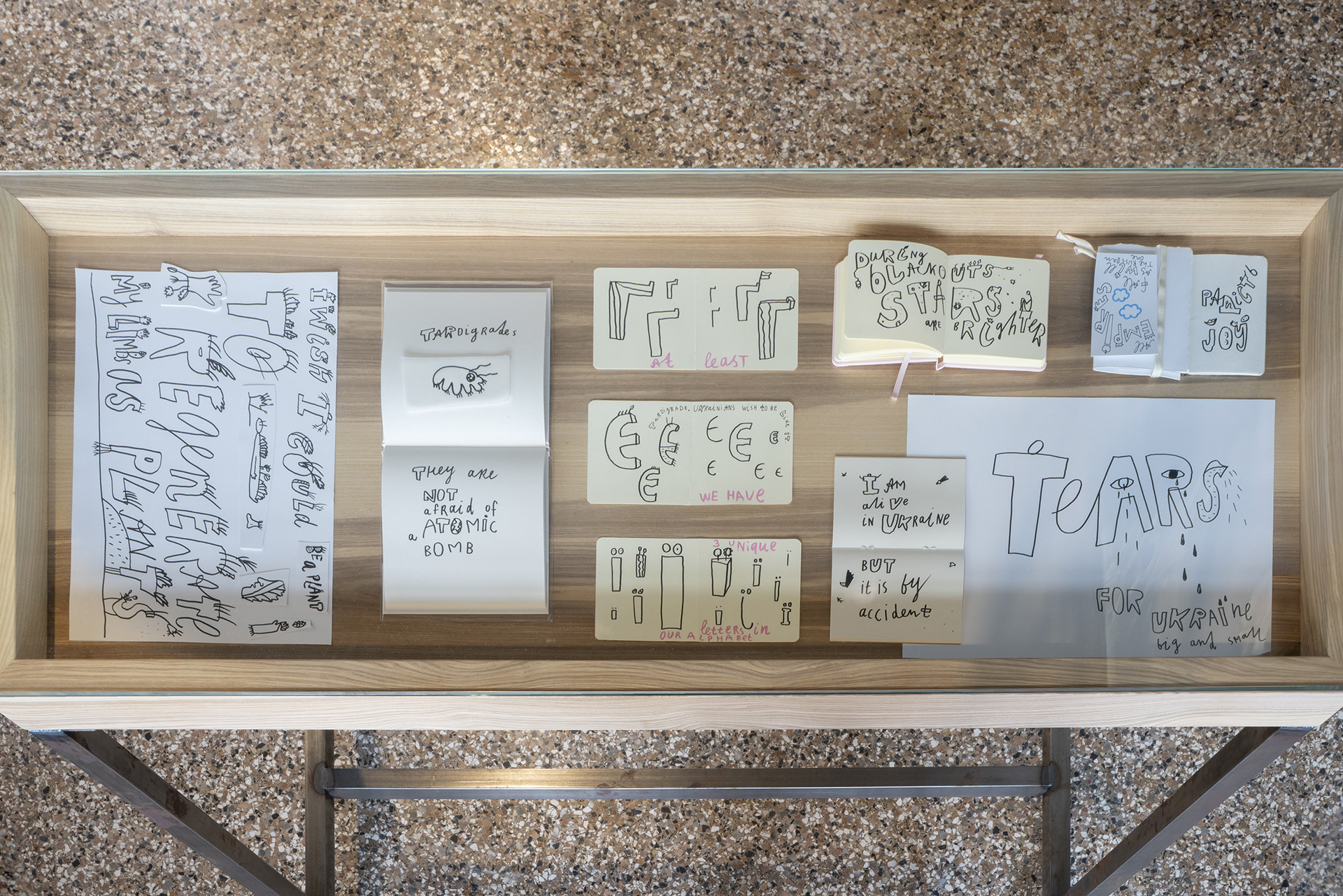
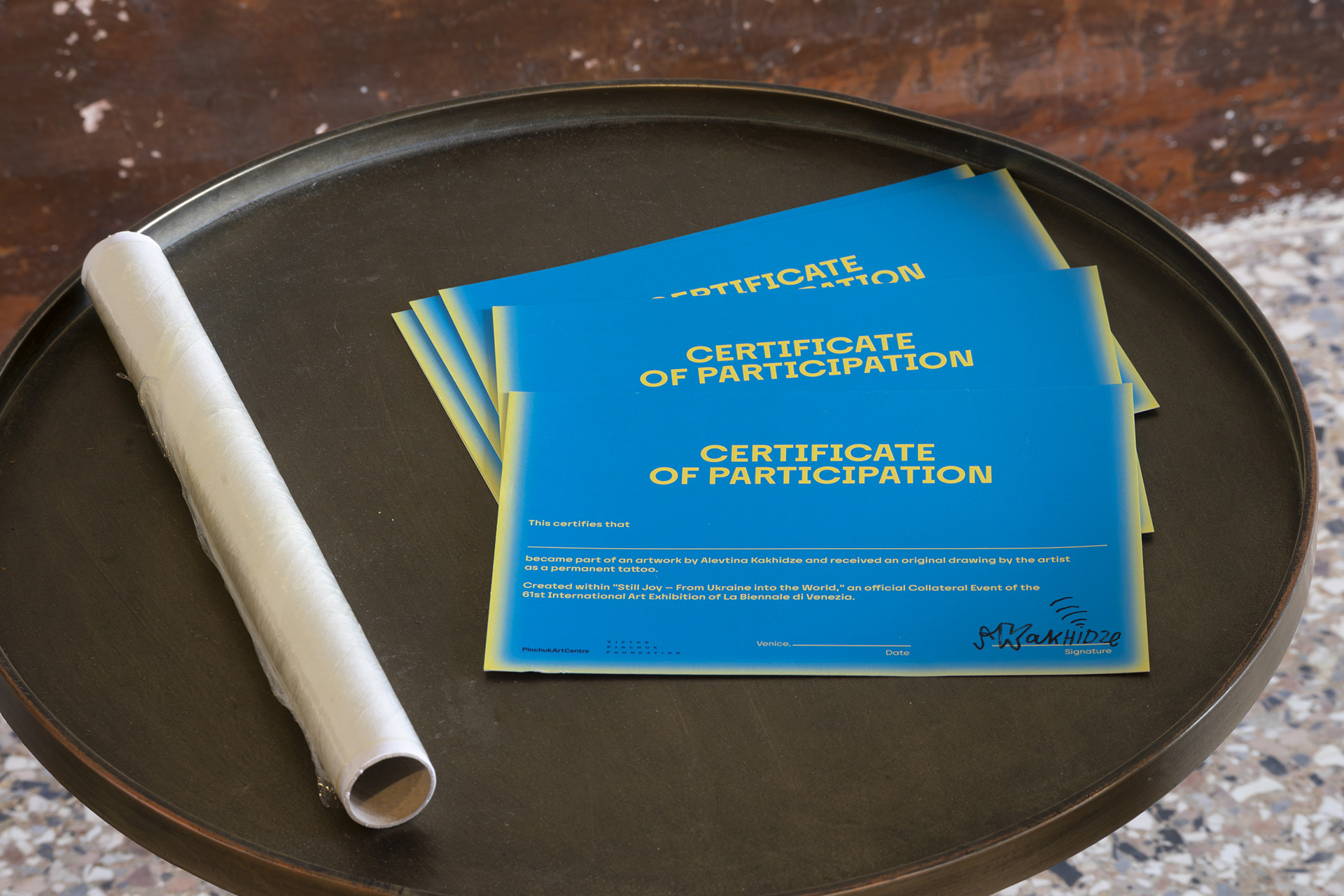
Alevtina Kakhidze’s Joy is a tattoo salon where visitors can receive a tattoo based on the artist’s own drawings, many of which are offered in limited editions. Each participant who gets a tattoo receives a certificate of an original artwork by Kakhidze.
Among the pieces are three unique letters of the Ukrainian alphabet, a flower growing from the rocks in the Crimean highlands, the word “joy” written in Ukrainian, and a microscopic animal, tardigrade, capable of surviving in any conditions. In different ways, they speak of resilience and the ability to feel joy even in the most difficult circumstances, while extending the role of the viewer into that of an ambassador for Ukrainian culture.
A tattoo is a means of preserving something important on your body: a message to the whole world or an intimate sign that only you can understand. Sometimes it’s simply about fun or the desire to adorn oneself. Either way, the joy of self-expression and the interest in bodily transformation here are accompanied by pain and the healing process.
Tacita Dean
Sakura (Totsube II), 2026
coloured pencil on hand-printed C-print on Fuji Velvet paper mounted on paper
Courtesy of Studio Tacita Dean, Frith Street Gallery, London, and Marian Goodman
Gallery, New York / Paris / Los Angeles
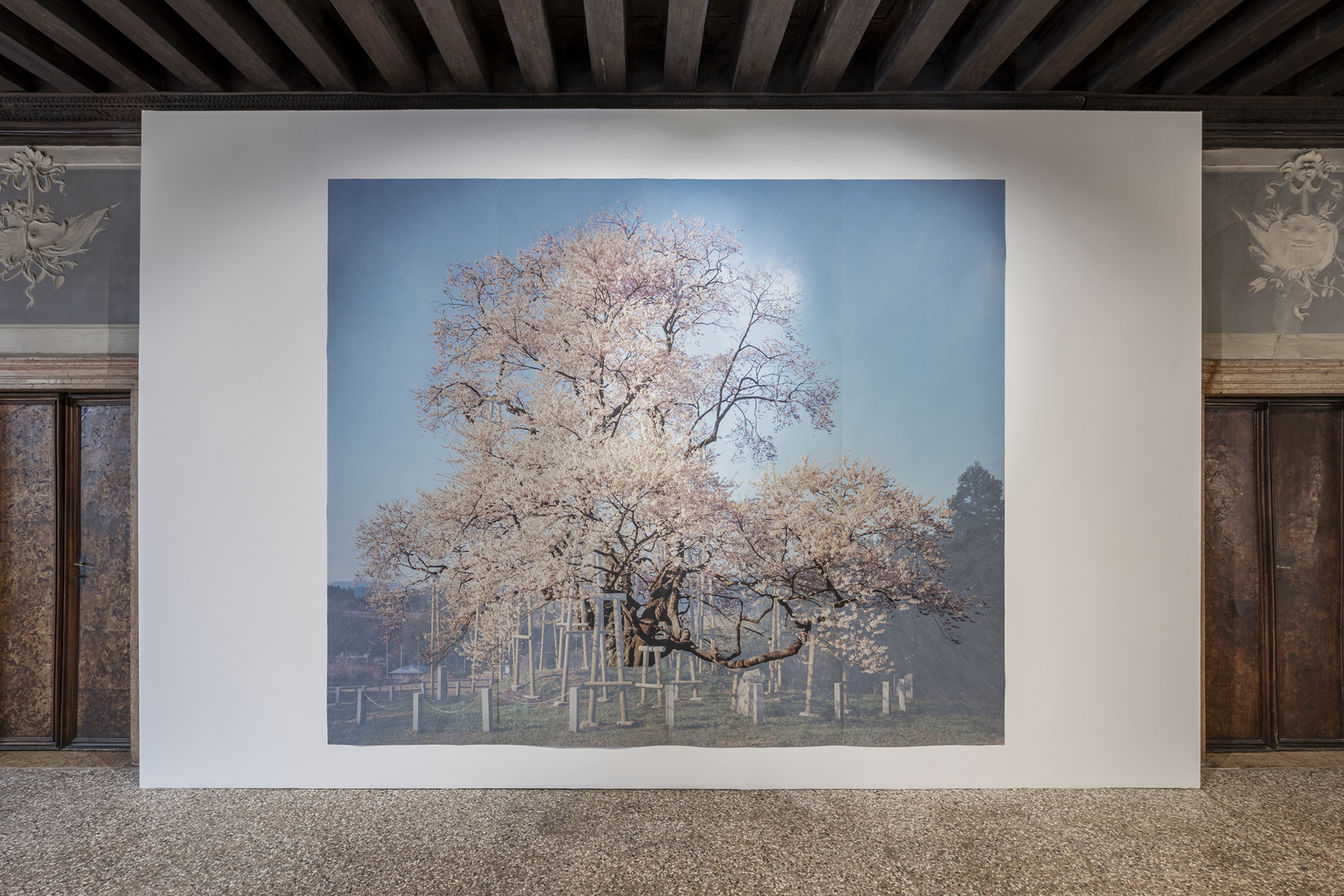
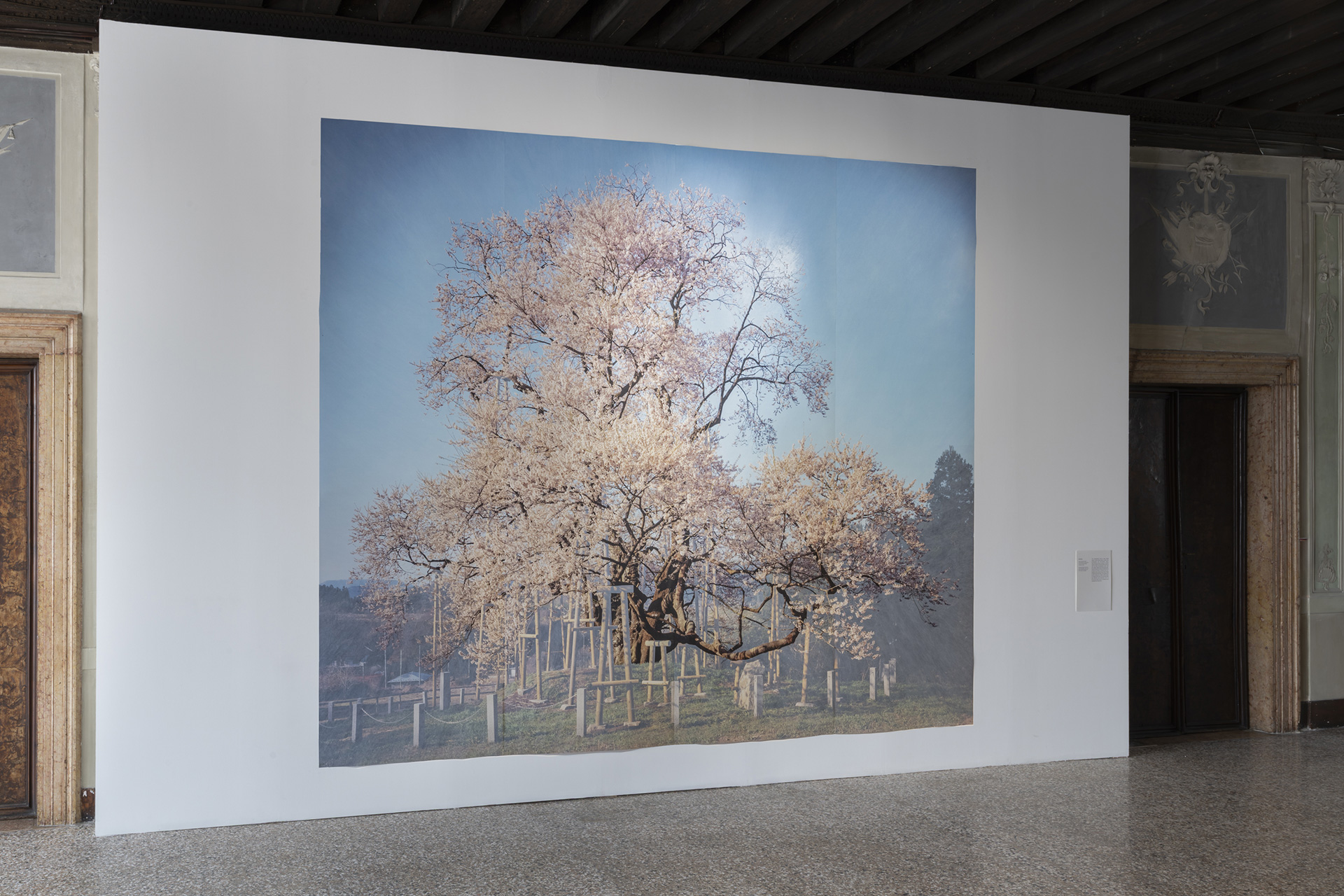
The photographic work is from Tacita Dean’s long-running series in which she photographs and over-colours centuries-old sakura trees in blossom. A careful support system for the branches prevents very old trees frombreaking under their own weight, helping them live a long, dignified life. Despite the almost instantaneous production process, in Tacita’s work photography is like a performance. Each image is made photochemically. The background is then colored out in white or pink crayon to foreground the tree. The process takes time, attention, and endurance. And it is from all this that the joy of presence and coexistence is often born.
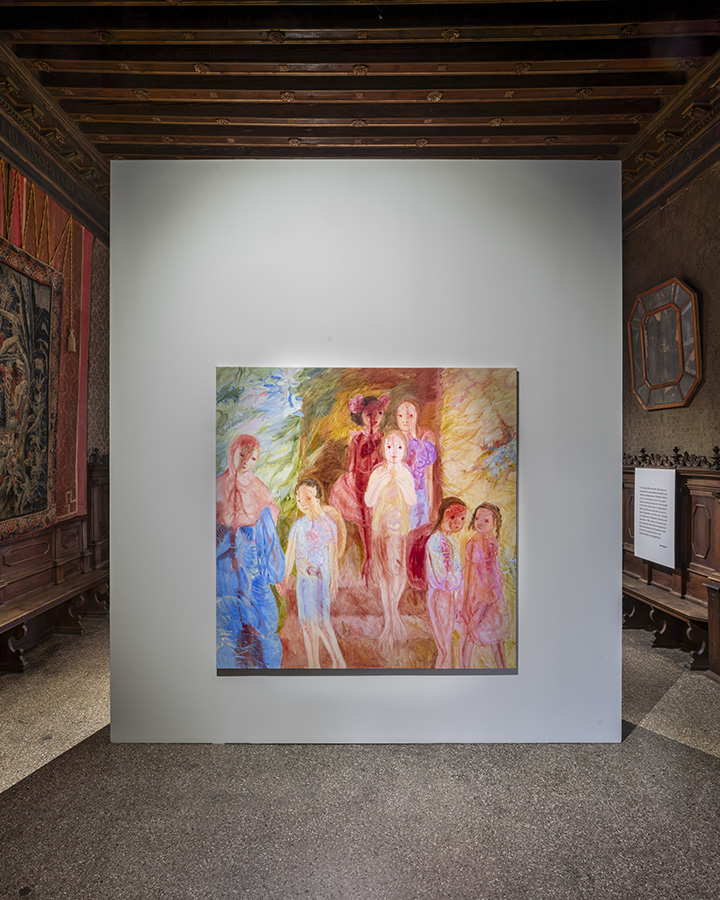
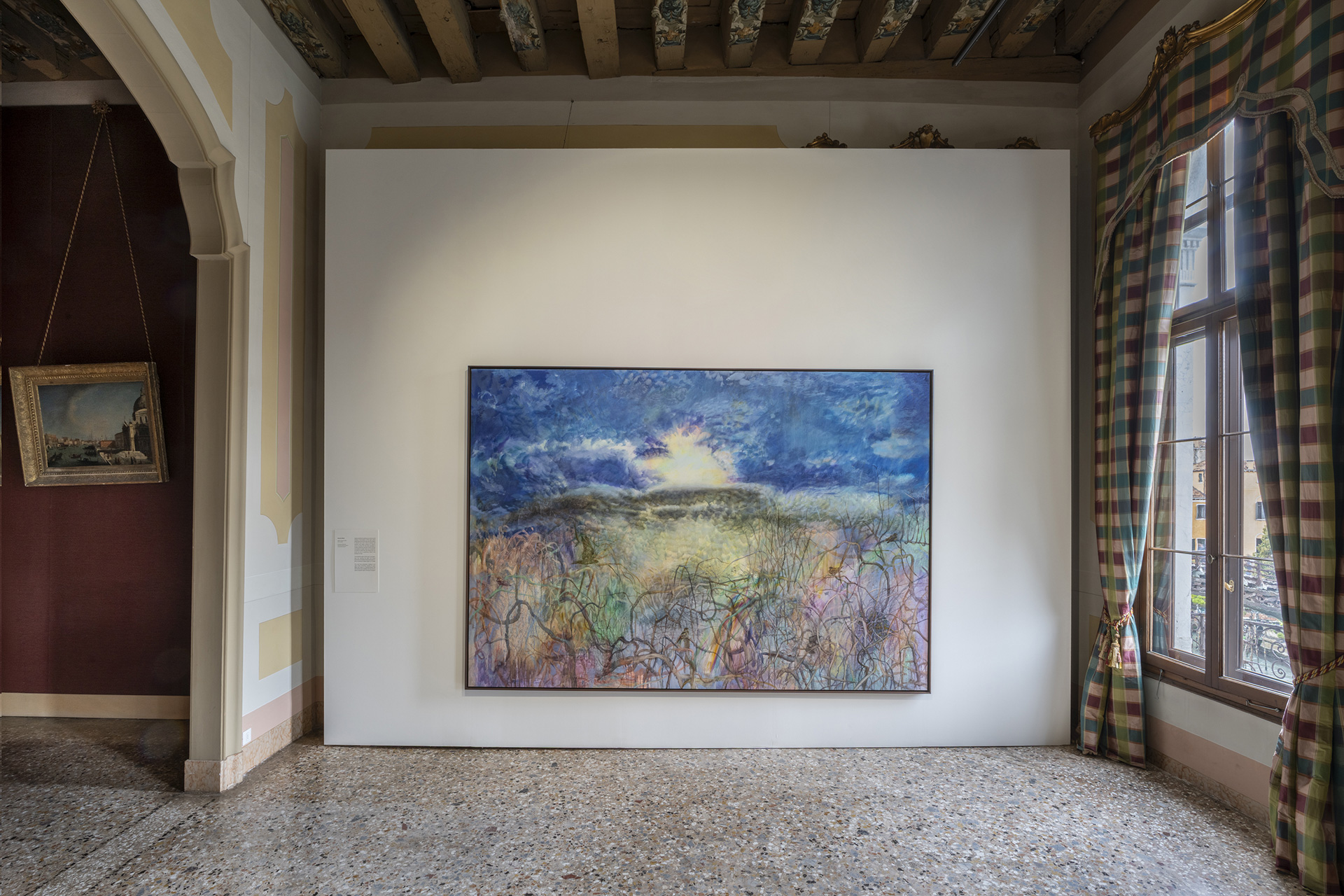
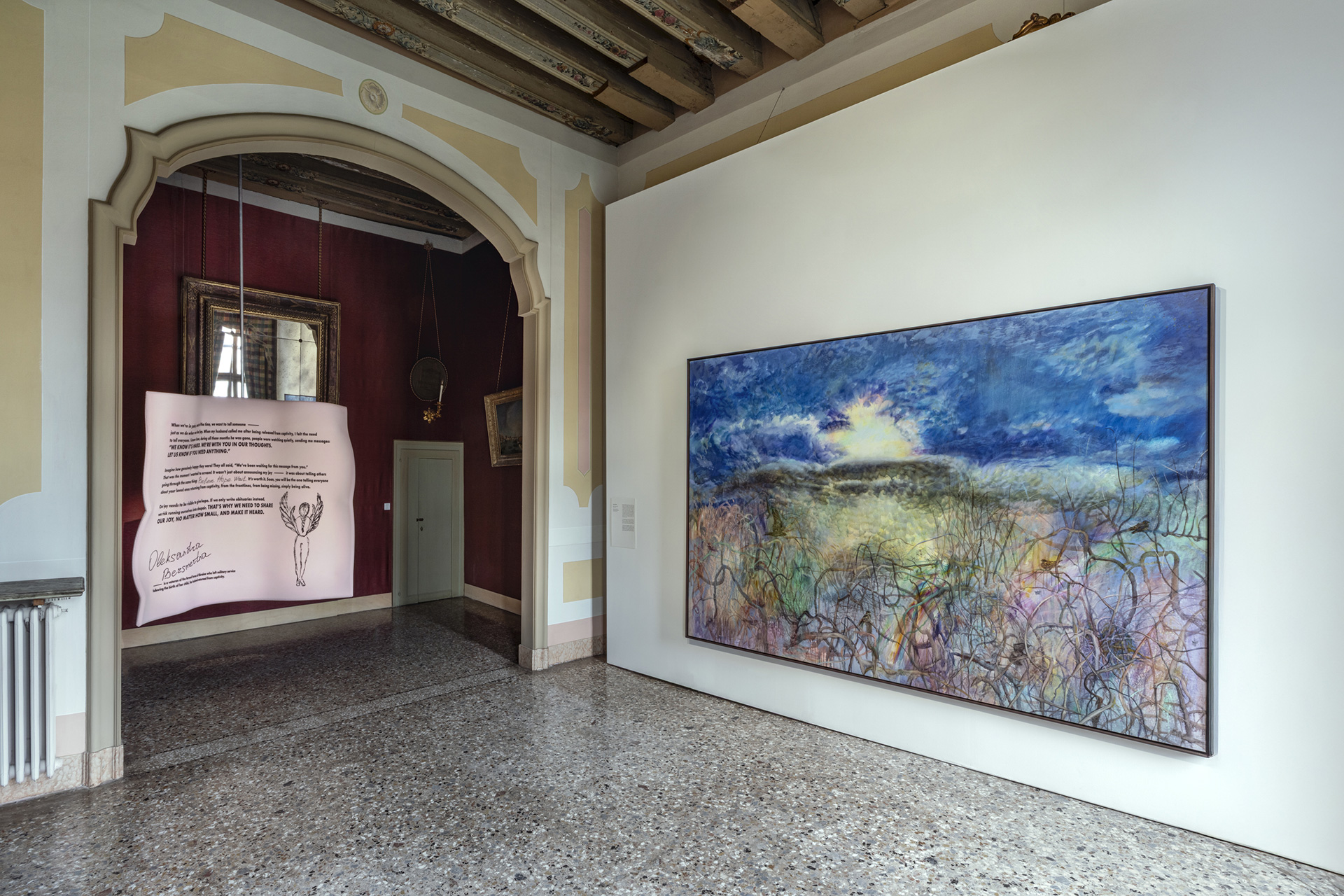
Kateryna Aliinyk
Night in Heaven, 2026
oil on canvas
Courtesy of the Artist
Produced with the support of PinchukArtCentre
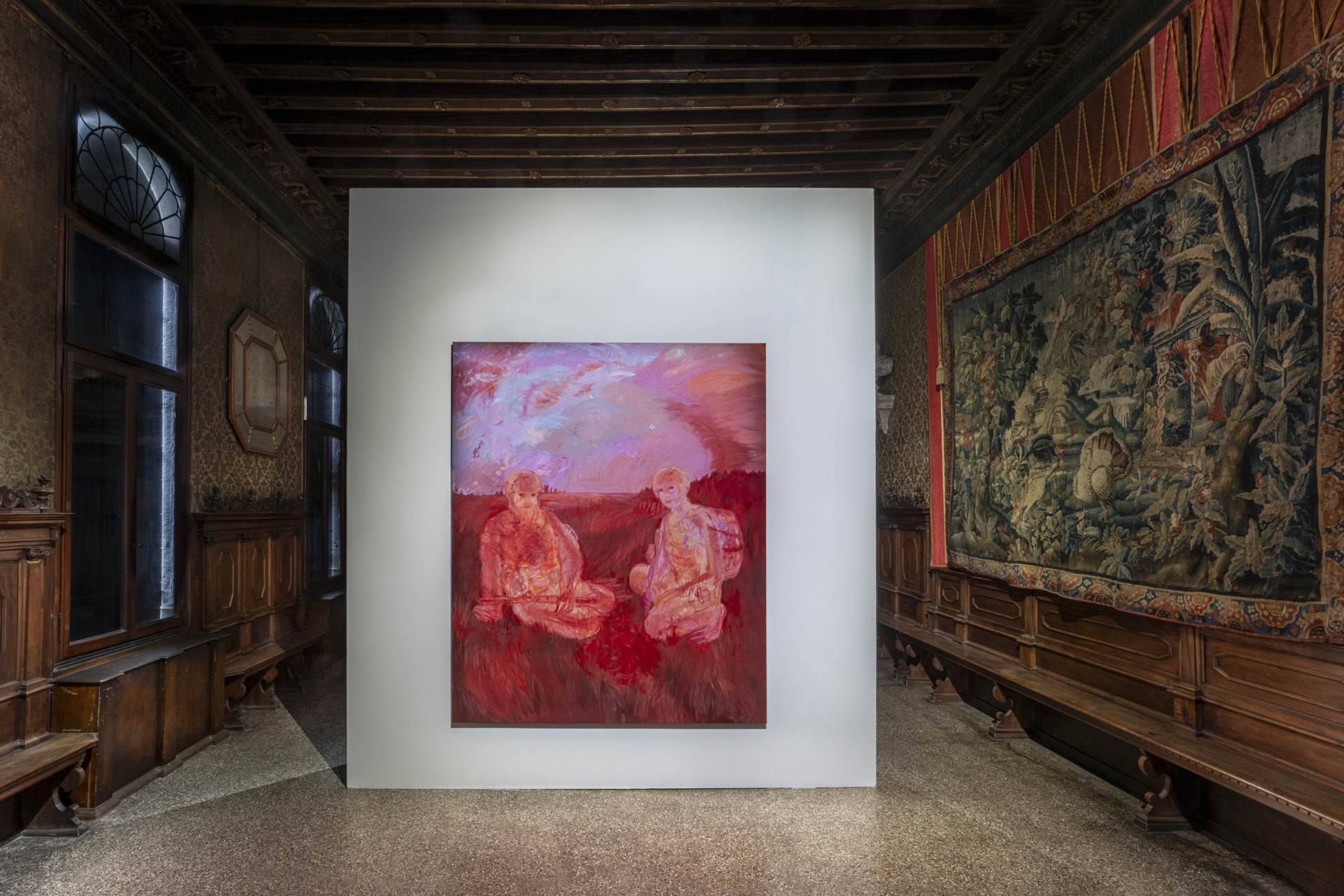
Kateryna Aliinyk’s painting is a memory and fantasy of the beauty of the night, which exists beyond human pain and loss. Nights in Ukraine are now a time of danger and shelling, and being outdoors is restricted by a curfew. For the artist, paradise is a place where the natural course of things is possible: at night, there is a concentrated silence where the only things that can scare you are a mysterious rustle in the bushes or a bat.
The explosive glow of the moon, the green-blue sky, teeming life within the dense branches, and iridescent shimmering all create an excessive image, similar to a mirage.
This work thus embodies a fantasy of the night where everything reaches its peak. Night here takes on a dazzling beauty that both attracts and unsettles. How can one imagine a peaceful night in the face of danger?
Yurii Gruzinov and Oleksiy Sai
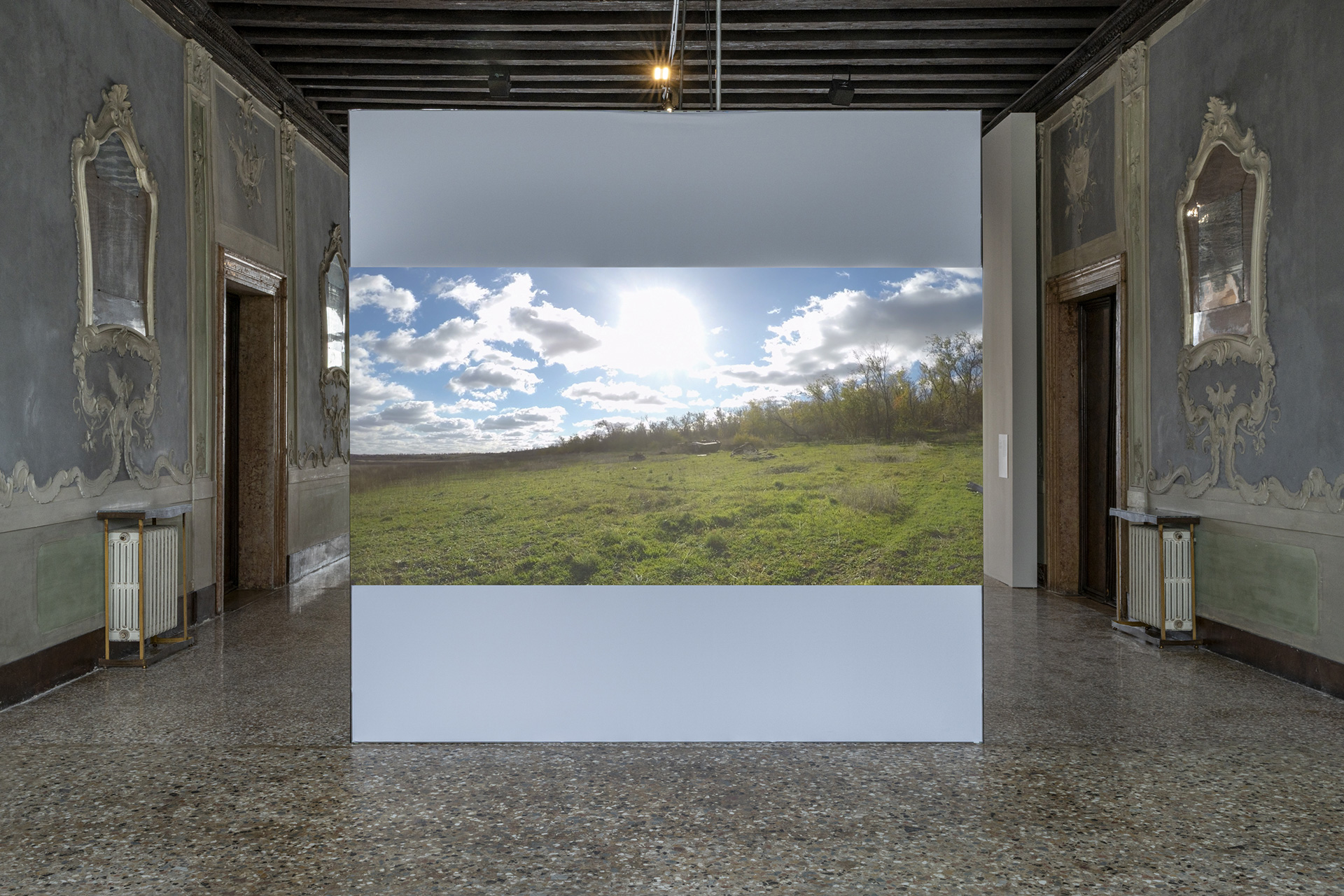
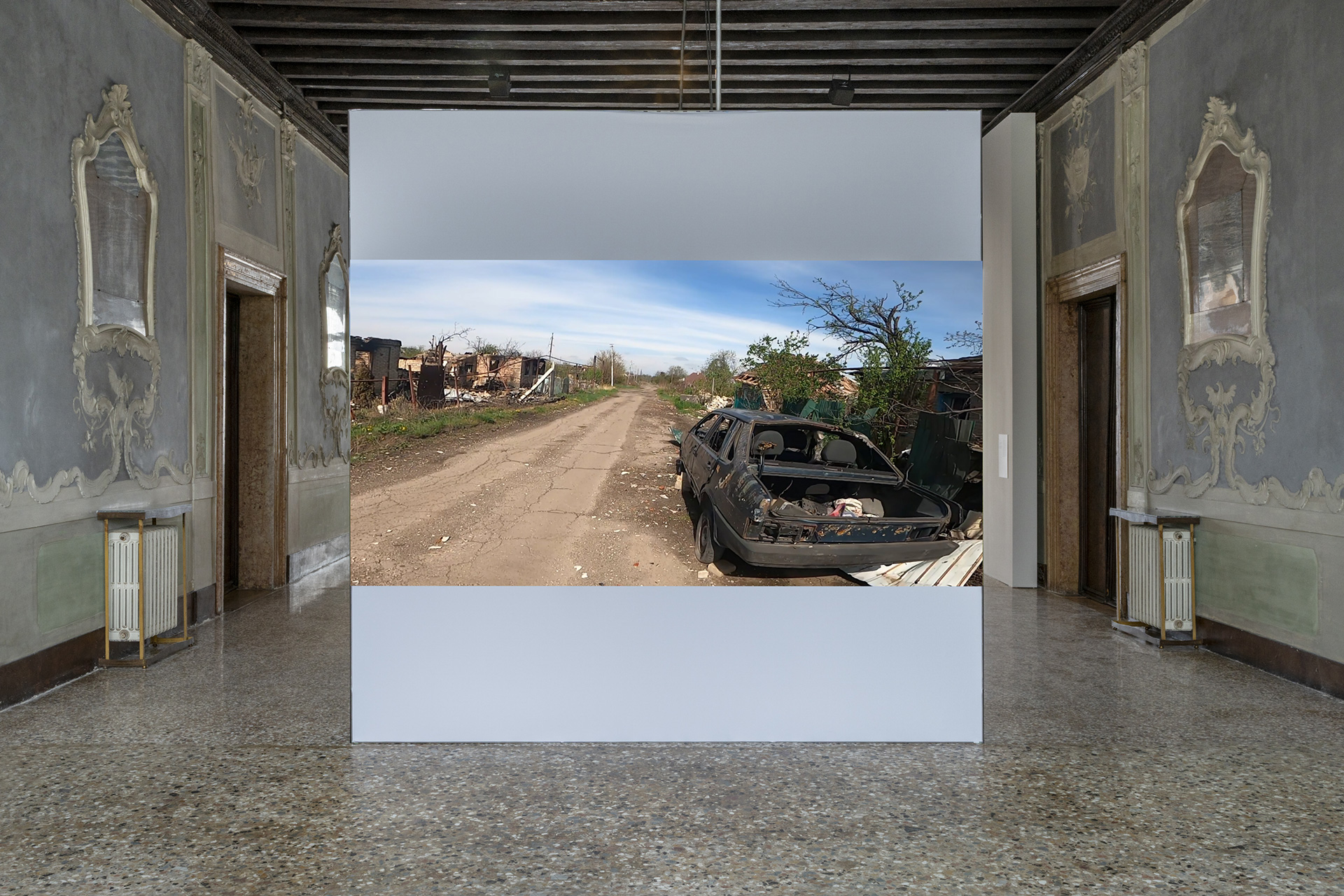
Land, 2026
video, 17ʼ30ʼʼ
Courtesy of the Artists
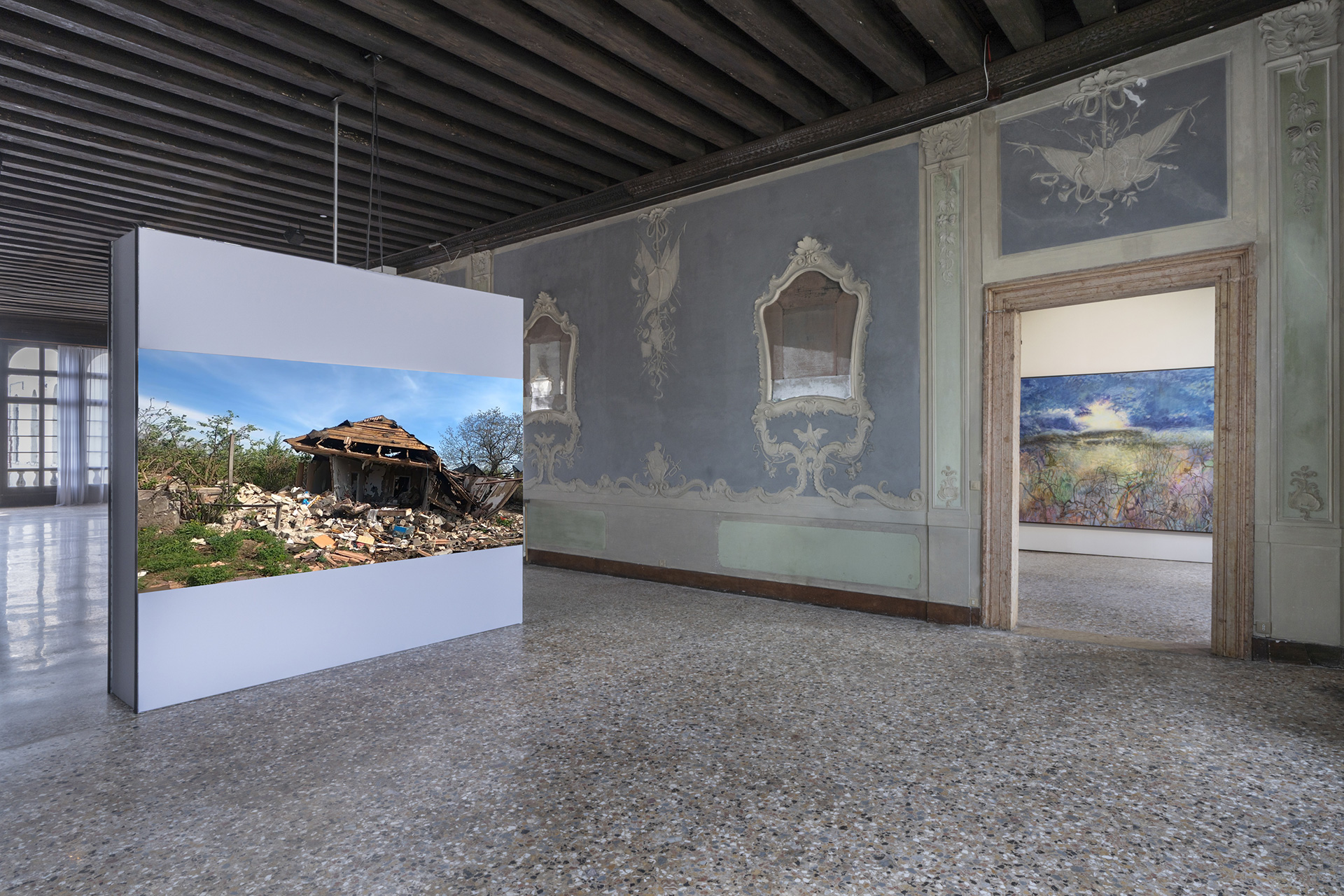
The work of Yurii Gruzinov and Oleksiy Sai is a video created from bodycam footage of the members of Ukraine’s Main Directorate of Intelligence (HUR MO) — recon experts operating in enemy-controlled territories. This brings together videos from soldiers who go in first and face the greatest danger.
The camera acts as an extension of the body, capturing its rapid breathing, every sharp movement and its tense gait that sometimes breaks into a run. This is in contrast to eerily quiet fields and forests devoid of human presence. These places have acquired a kind of peace while simultaneously becoming threatening to anyone who sets foot there. The recordings capture a collision of temporalities: a frozen environment and a person for whom the time has accelerated. In a dialogue with Ryan Gander’s work in the next room, the work represents the special flow of a lifetime that can be interrupted at any point.
Pavlo Kovach
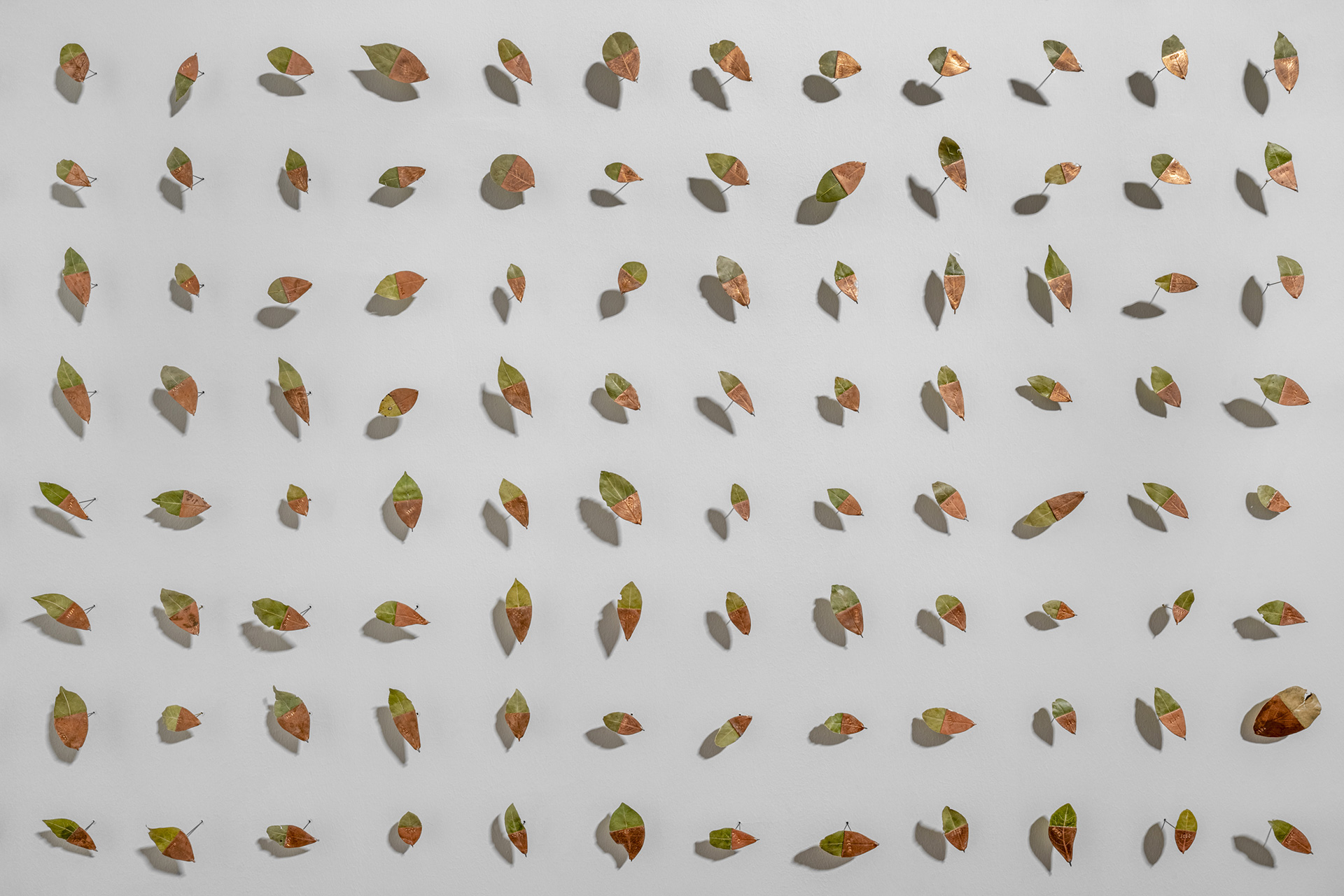
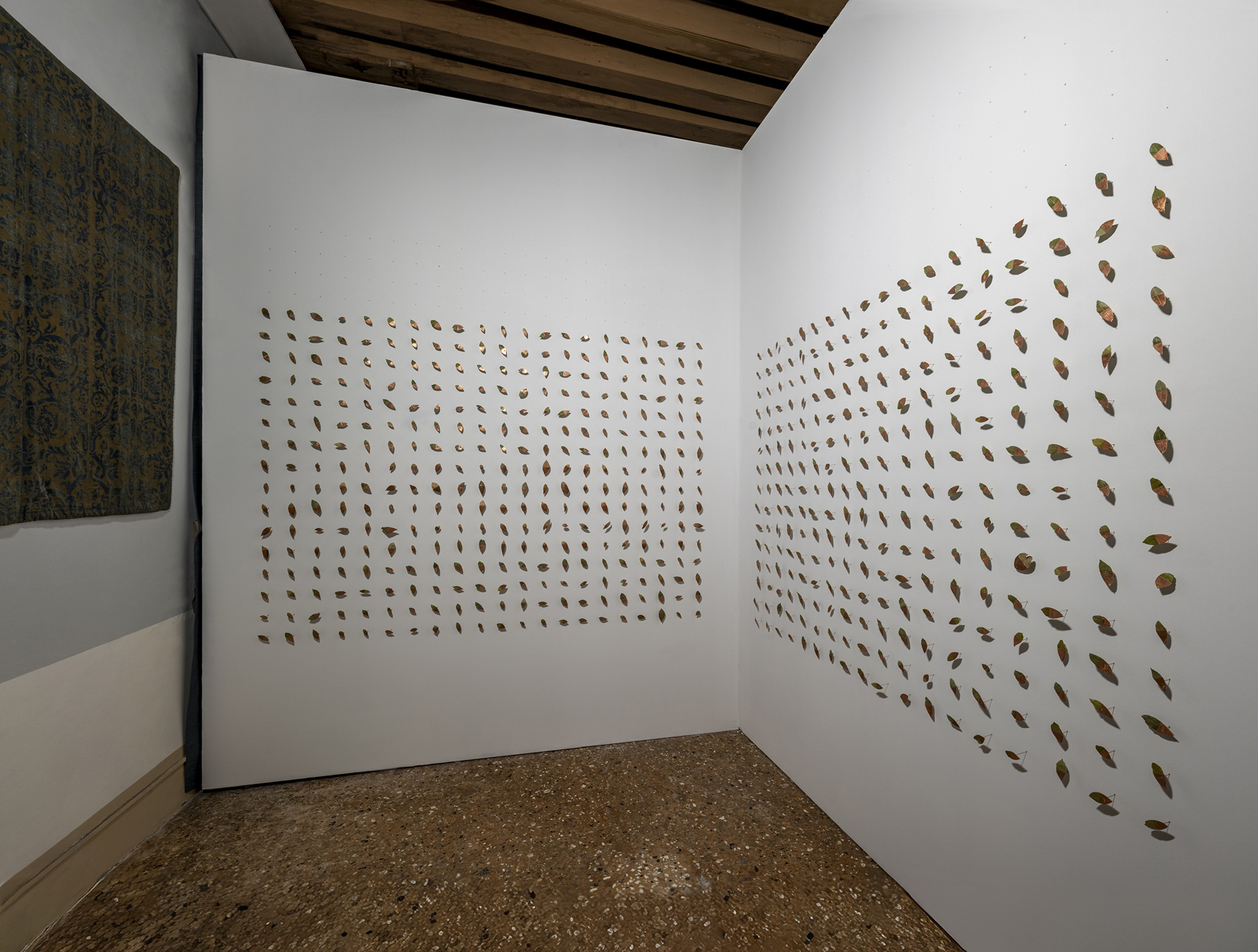
Laurel Leaf in the Mouth, You Will Receive a Message, 2026
brass, laurel leaves
Courtesy of the Artist
Produced with the support of PinchukArtCentre
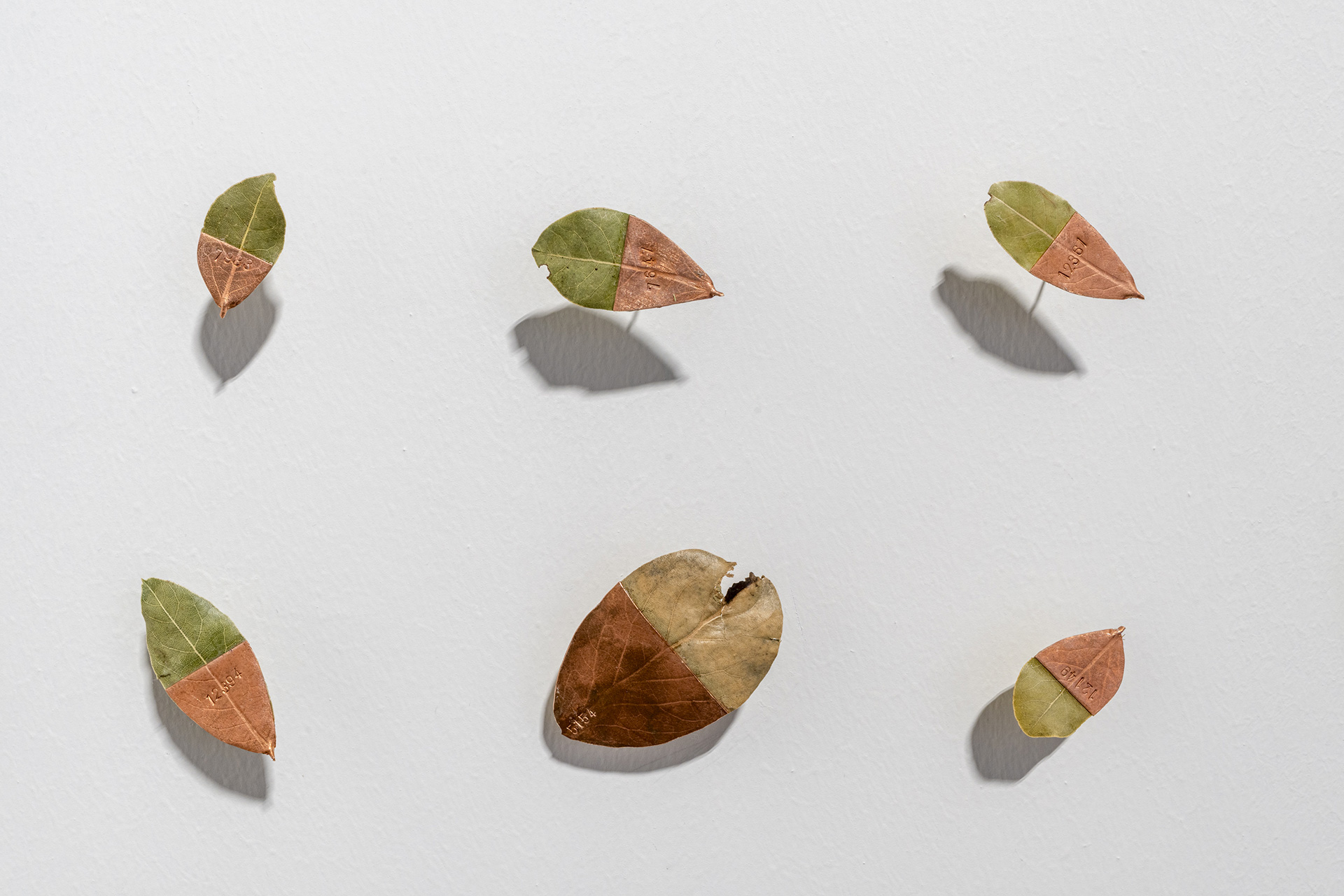
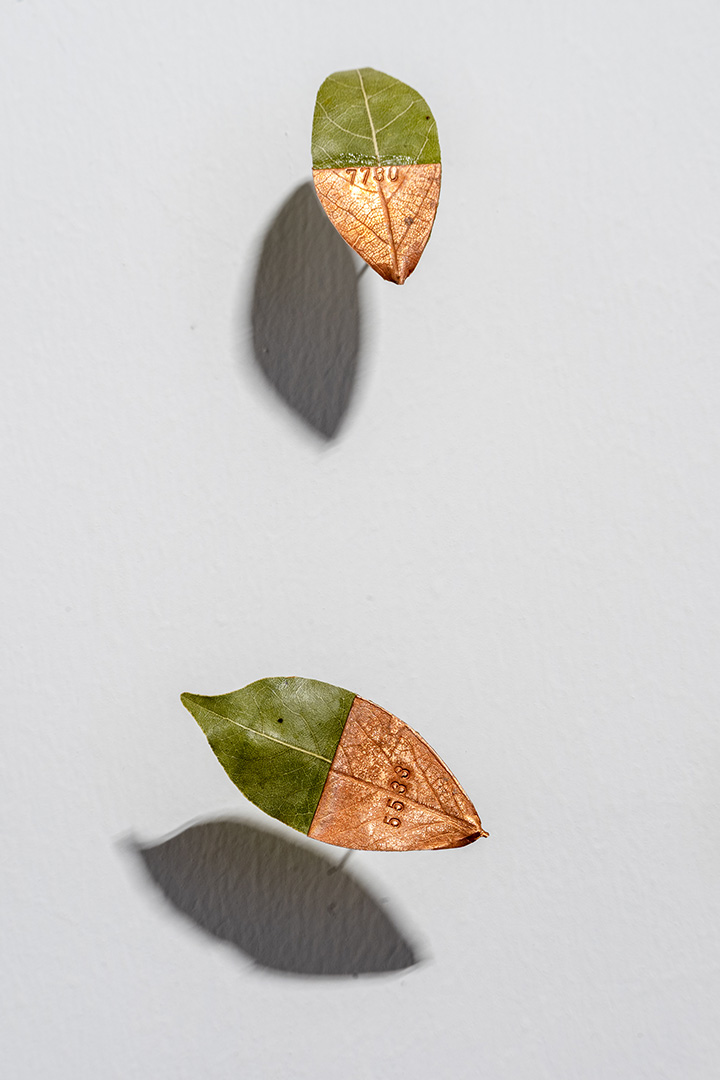
This work by artist and serviceman Pavlo Kovach is a monument of hope. Each laurel leaf here is partially covered in brass, and the case number of a missing soldier is engraved on its surface. Brittle, dry leaves that seem to have fallen acquire longevity — this is how fragile sculptures capture a disappearing presence. The title of the work refers to a folk belief: if you find a bay leaf in your soup, you will get good news.
The laurel, which is typically used to celebrate winners, here embodies expectation and quiet reverence. A field made of hundreds of leaves is a landscape of loss, open to the experience of both grief and hope. In most such cases, the person is declared deceased, but there is always a chance for a different outcome. This expectation is contained in every leaf, which, along with the case number, also records the fate of the soldier.
The work captures the state of uncertainty between life and death, hope and memory. Here, they coexist, just like in the feelings of those who await news about their loved ones.
Julian Charrière
Where Waters Meet, 2026
site-specific multichannel sound installation
Courtesy of the Artist
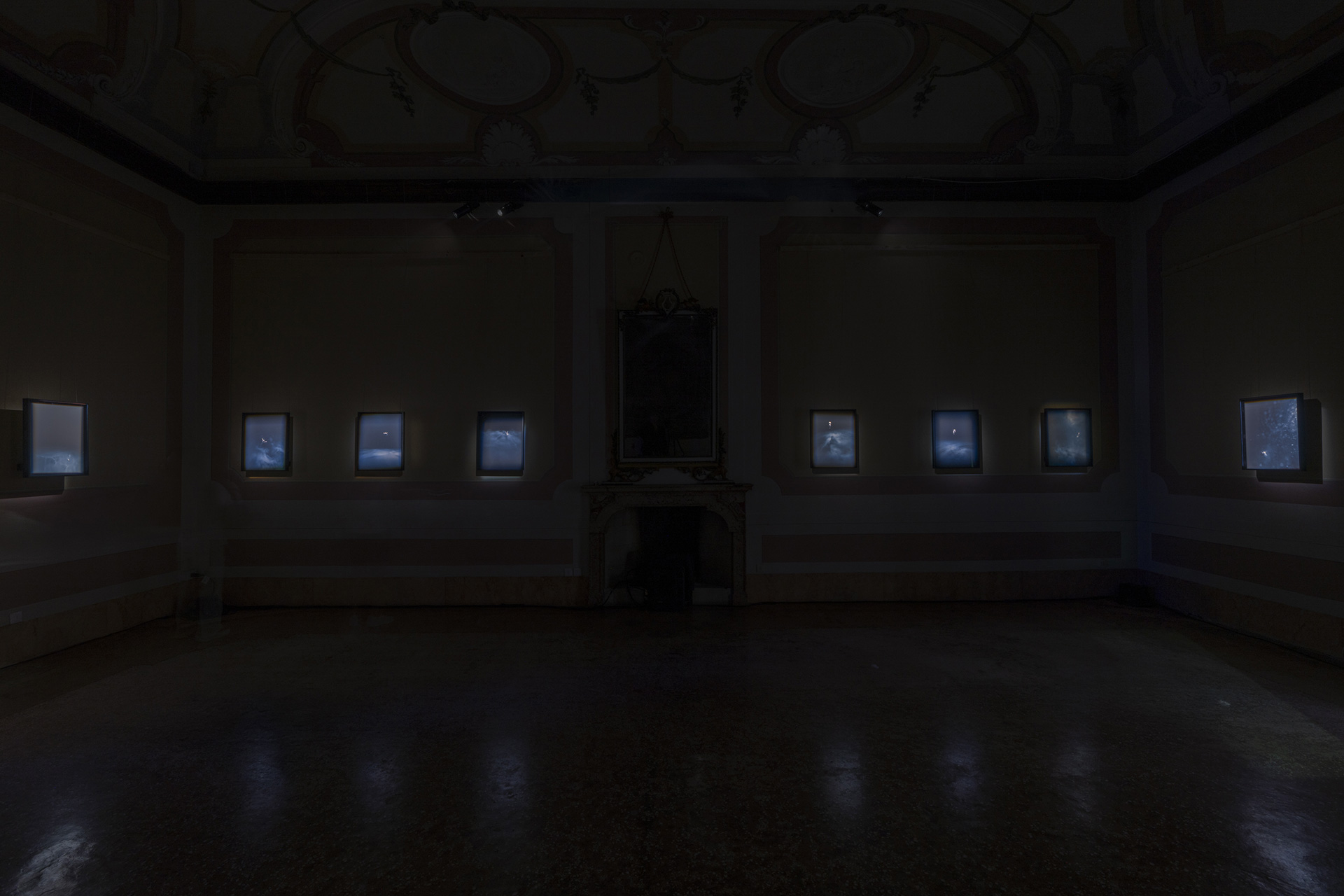
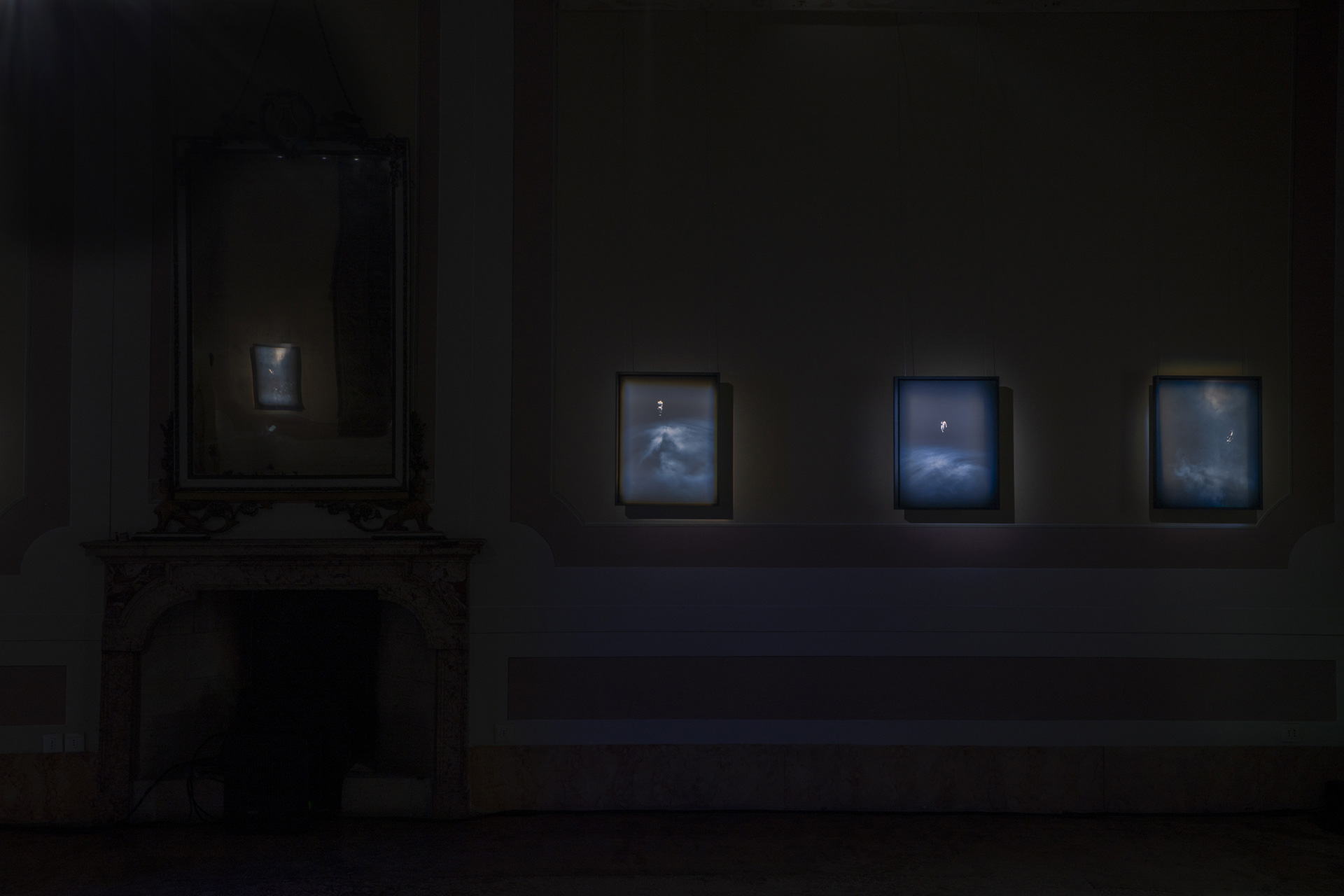
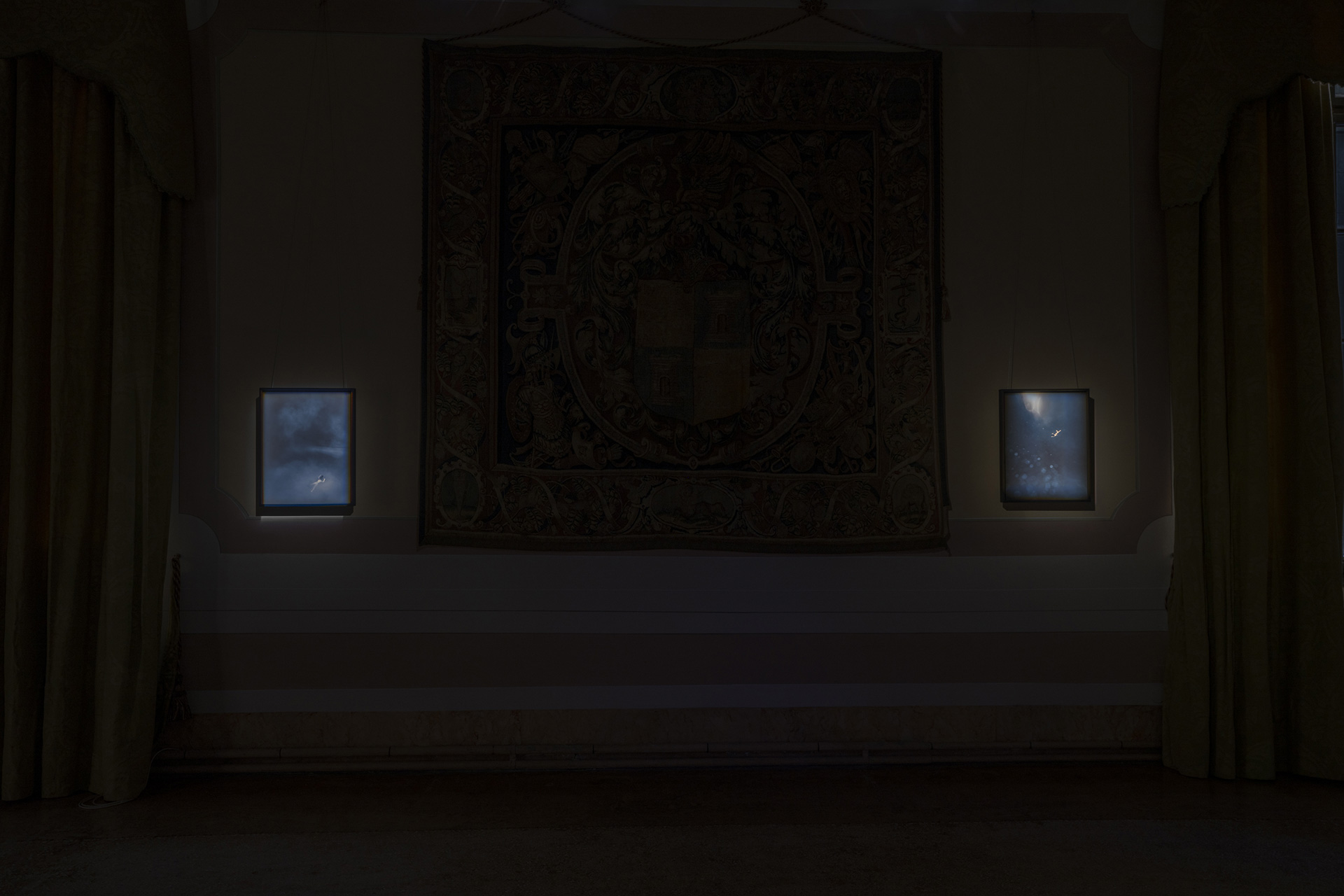
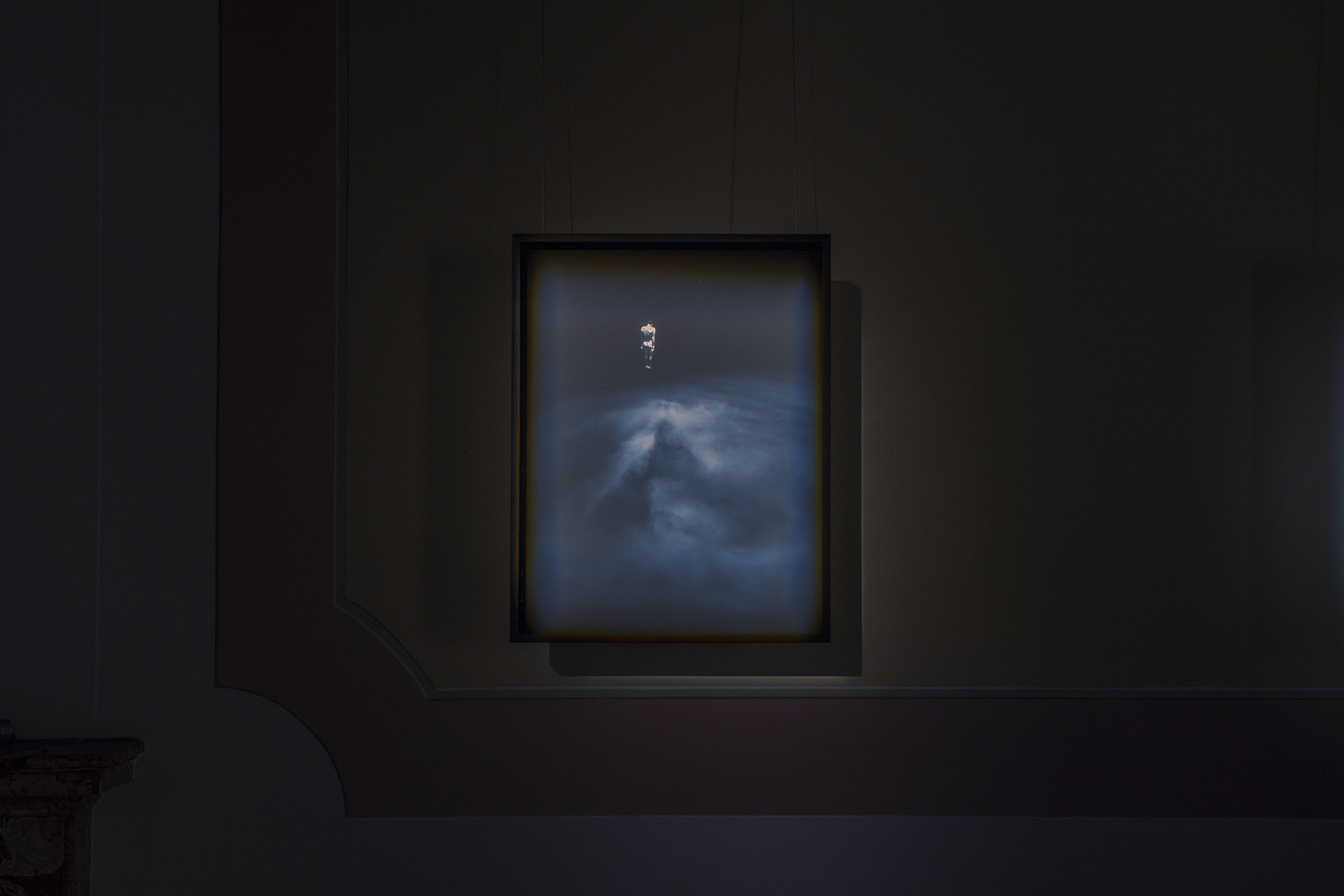
Where Waters Meet is a spatial continuation of the photographic series of the same name, bringing to the surface the bioacoustic landscape of coral reefs. Therein, the visitor becomes a diver drawn into an elusive yet oneiric realm paced by the rhythm of slow human breath as well as layers of oceanic sounds. It is an encounter which challenges the persistent misconception of these submerged regions as silent. From the rhythmic clicks of crustaceans to the harmonic calls of fish, the distant songs of whales to the crackling static of microbial life, Where Waters Meet reveals an environment where auditory conversation is as vital as light in shaping life.
The arrangement begins naturalistically, as though the listener were just dipping beneath the surface of a shallow sea. Yet as it progresses, an intensifying uncanniness reveals the temporal dissonance between sound in water and in air — traveling 4.3 times faster in the former — while subtly reconfiguring the listener’s own sense of orientation.
Where Waters Meet further reflects on the regenerative potential of sound, through a process known as acoustic enrichment, where recordings of thriving reefs are broadcast into damaged or abandoned underwater systems, forming feedback loops that encourage marine life to return, resettle, and regenerate what once seemed irrevocably lost. The work, oscillating between the poetics and politics of the sea, stages an intangible yet deeply physical dialogue between presence and absence, past and future, inviting land-dwellers to think through water, and to meet the deep halfway.
Nikita Kadan
After All, 2026
charcoal on paper
Courtesy of the Artist
The exhibition closes much as it began: with a scene from the dark room during the rave, where bodies become a landscape carrying the weight of history. Across its layers, Still Joy emerges as a lived response to the world — fragile yet resilient, joy lasts. A dramatic scene created by Nikita Kadan engages in a tense dialogue with the tradition of European history painting.
A classical orgy scene, recognizable through its compositional logic and the sculptural treatment of bodies, is rendered in Kadan’s characteristic medium — charcoal on paper — with all its starkness, contrast, and uncompromising black-and-white intensity. Bodies intertwine, movements are at once passionate and aggressive, and the boundary between celebration and violence becomes almost imperceptible. The work is accompanied by club-style lighting, creating the atmosphere of a large rave.
Viewers are placed in a state of uncertainty: is this a scene of ecstatic celebration or of catastrophe? Or could it be both at once? Within the context of Still Joy, the work acts as a radical commentary on the very idea of joy — where ecstasy and destruction, pleasure and violence, become almost inseparable. Kadan raises questions about whether culture can distinguish celebration from tragedy, and what happens to the body — both individual and collective — in moments of historical rupture.